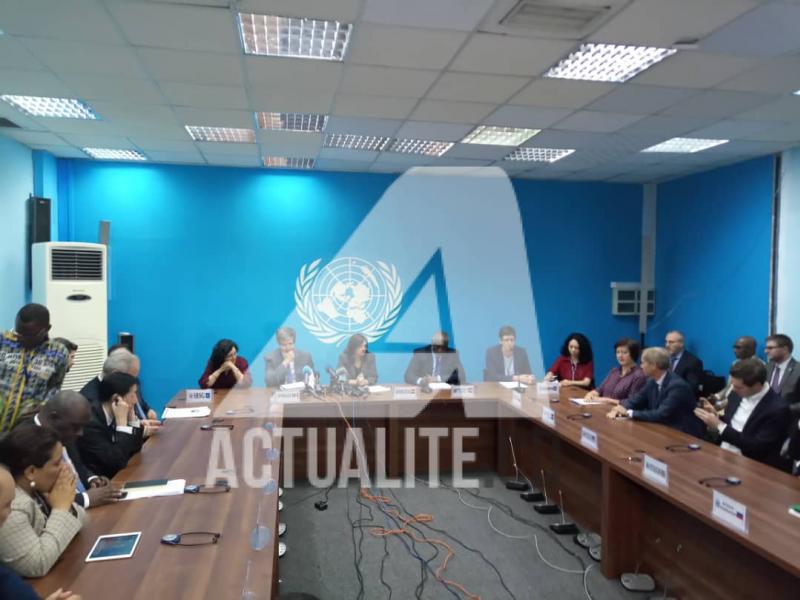
France fully supports DRC’s diplomatic push for natural resource governance at UN
- International Relations
The Democratic Republic of Congo (DRC), currently presiding over the United Nations Security Council for July, has made it a priority to address what it views as a critical factor in modern conflicts: the governance of natural resources. On Monday, July 13, Kinshasa organized a high-level Arria-formula meeting in New York focused on the intersection between natural resource exploitation and peacebuilding. This diplomatic initiative will culminate on July 22 with a high-level debate chaired by President Félix Tshisekedi, themed “Natural Resource Governance as the Foundation for Peace, Security, and Prosperity.”
The Congolese Ministry of Foreign Affairs, led by Thérèse Kayikwamba Wagner, has framed this effort as addressing a critical “normative gap” in how natural resources are governed in conflict and post-conflict settings. Current systems—including mineral traceability, corporate due diligence, and conflict financing prevention—are seen as fragmented and inconsistent. The DRC is advocating for a more integrated international framework that connects resource governance with conflict prevention and international security.
This approach challenges the traditional view of natural resources as purely economic assets, positioning them instead as strategic peace and security concerns that deserve a permanent place on the UN Security Council’s agenda. The initiative has gained significant traction, particularly with France, which has publicly pledged its full support.
“Natural resources must serve as drivers of sustainable and equitable development for the communities and countries that possess them. They must be protected from exploitation and misuse that fuels instability. France fully endorses the DRC’s objective to strengthen and harmonize international initiatives ensuring the responsible use of these resources. We are ready to actively contribute to the Security Council’s work supporting the high-level debate that the DRC will host next week in the presence of President Félix-Antoine Tshisekedi,” stated Jérôme Bonnafont, France’s Permanent Representative to the United Nations.
The DRC’s diplomatic push aligns with its broader agenda during its Security Council presidency. This follows a July 8 briefing on conflict-related sexual violence, chaired by Prime Minister Judith Suminwa Tuluka, which highlighted the human cost of war economies and the urgent need for prevention, survivor protection, accountability, and reparations.
These efforts occur amid strategic partnerships, including a U.S.-DRC agreement on critical minerals and the Washington Accord with Rwanda, which includes measures for de-escalation, phased withdrawal of Rwandan forces from Congolese territory, and the neutralization of armed groups in eastern DRC—particularly the FDLR, which Rwanda considers a security threat. Despite these diplomatic advances, the security situation remains precarious. The Doha process, brokered by Qatar to facilitate dialogue between Kinshasa and the AFC/M23 rebellion, has yet to yield tangible results.
The AFC/M23 rebels, accused by Kinshasa, the UN, and international partners of receiving Rwandan support, continue to control key cities like Goma and Bukavu, as well as other areas in North Kivu and South Kivu. Ongoing clashes underscore the persistent gap between announced diplomatic progress and ground realities.