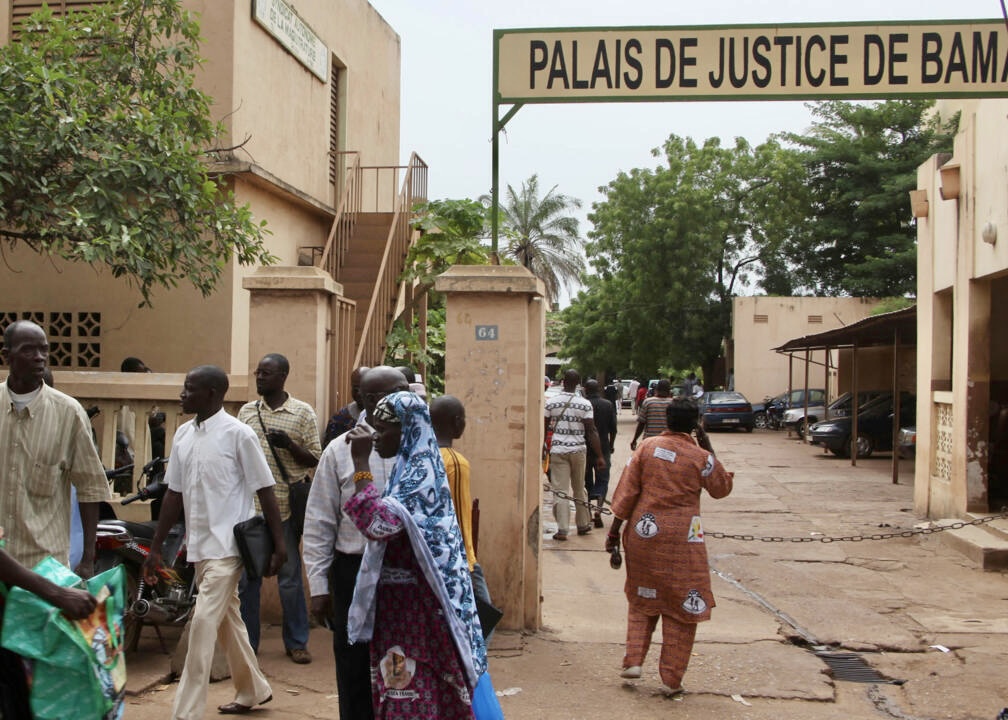
The Malian judiciary has handed down a 20-year prison sentence to French national Yann Vezilier, convicted of allegedly plotting to destabilize the transitional government led by General Assimi Goïta. The verdict, delivered by the criminal chamber of the anti-terrorism unit, follows a trial held behind closed doors, with the judgment announced publicly on Friday.
Vezilier, who was arrested in August 2025 during a coordinated operation by Mali’s State Security (SE) services, was initially charged with conspiring against state institutions. His arrest coincided with that of several Malian military officers, who have since been dismissed from service and remain unprosecuted. These officers stand accused of operating an espionage network aimed at overthrowing the transitional authorities, a move that would have triggered a constitutional crisis in a nation already grappling with deep political instability.

Diplomatic tensions rise amid legal dispute
In response to the verdict, officials from the French Ministry of Foreign Affairs reiterated their stance, labeling the allegations against Vezilier as baseless. A statement released by the Quai d’Orsay emphasized that their agent was engaged in legitimate security cooperation activities and had no involvement in any plot against Malian sovereignty. The ministry also underscored that France maintains no direct or indirect role in such destabilization efforts.
The convicted individual faces additional penalties, including a 20-year ban from entering Mali and a fine of €5,400. The case has drawn international attention, particularly as it unfolds against the backdrop of Mali’s shifting geopolitical alliances. Over recent years, Bamako has distanced itself from its former Western partners, including France, in favor of closer ties with Moscow, a decision that has reshaped the country’s diplomatic landscape.
Security crisis fuels political instability
Mali has faced persistent security challenges since 2012, exacerbated by jihadist violence linked to Al-Qaïda and the so-called Islamic State, as well as intercommunal clashes. The ongoing turmoil culminated in two military coups in 2020 and 2021, which installed the current transitional government. The ruling junta has since prioritized national security, launching sweeping reforms to curb insurgent activities while navigating complex regional dynamics.