Gabon asserts digital sovereignty amid global tech giants
Libreville, Tuesday, July 14, 2026 — The digital economy, once seen as a borderless virtual space, is entering a new phase where nations are reclaiming control over citizen protection, content regulation, and global platform accountability.
During the AI for Good global summit and the World Summit on the Information Society in Geneva, Gabon sent a firm message to tech giants: the country is determined to defend its digital sovereignty while embracing the opportunities of the digital revolution.
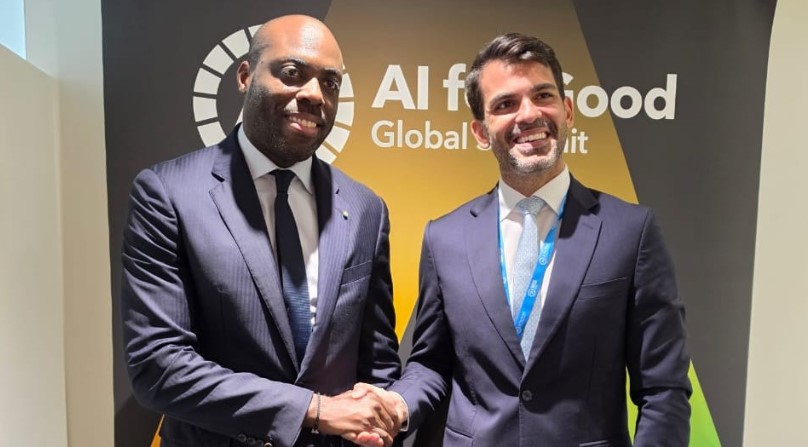
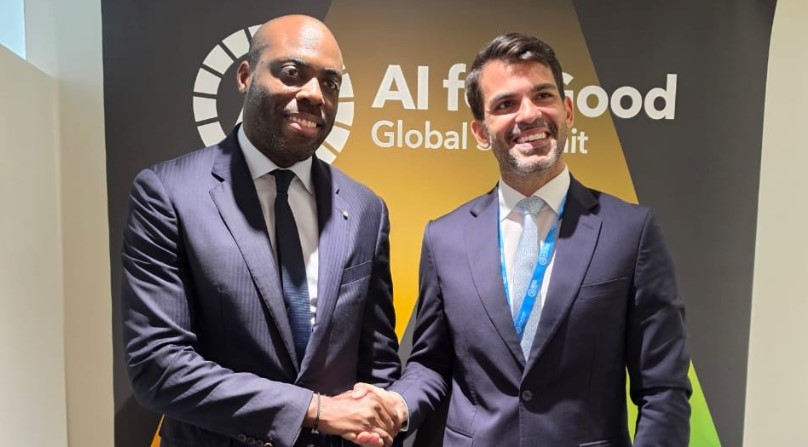
The high-level meeting between Gabon’s Minister of Digital Economy, Mark-Alexandre Doumba, and TikTok’s regional director, Emir Gelen, was far more than a routine institutional exchange. It marked the beginning of a new chapter in Libreville’s relationship with one of Africa’s most influential platforms among young users.
From confrontation to collaboration
The timing of this meeting could not be more significant. Just months after tensions led to the temporary suspension of several social networks in Gabon in February 2026, authorities and TikTok officials chose to restart dialogue with a shared goal: building a safer, more responsible, and better-regulated digital environment.
For Libreville, this is no longer just a technological issue. Misinformation, hate speech, cyberbullying, information manipulation, and exposure of minors to inappropriate content are now public safety challenges as much as societal concerns.
In response, Minister Doumba emphasized to TikTok’s leadership that protecting the mental health of Gabonese youth, combating digital violence, and preserving social cohesion are top priorities for the government. This stance aligns with Gabon’s broader national strategy for digital sovereignty.
TikTok reveals its moderation scale in Gabon
In addressing Gabon’s concerns, TikTok presented transparency in figures. According to data shared during the Geneva talks, the platform removed 23,504 videos and posts deemed sensitive or against its community guidelines in Gabon during the first quarter of 2026.
Beyond removal volumes, TikTok highlighted the speed of its technological systems. Nearly 99.8% of illicit content was reportedly detected automatically before any user reports. Even more impressively, 92.9% of these posts were removed before being viewed by any audience.
These numbers reflect the heavy reliance on artificial intelligence in detecting, filtering, and removing sensitive content. They also showcase how rapidly global platforms are adapting their moderation tools to meet growing state demands.
Digital sovereignty takes center stage
The Geneva meeting between Gabon’s minister and TikTok’s regional director comes as Libreville recently strengthened its legal framework for regulating digital platforms. The new ordinance on digital governance gives large international platforms one year to comply with national requirements on security, data protection, and content moderation.
Libreville’s message is clear: technological innovation cannot thrive without social responsibility. Global platforms can no longer operate merely as content hosts. They are increasingly becoming key players in social stability, information security, and protecting vulnerable populations.
This shift extends far beyond Gabon. Around the world, nations—from the European Union to Australia, Brazil, and multiple African countries—are now pushing for stricter rules on American and Chinese tech giants.
Gabon appears determined to play a role in this global redefinition of digital governance. Rather than perpetual confrontation or blanket restrictions, Libreville seems to favor a co-regulatory strategy built on dialogue, shared responsibility, and measurable outcomes.
The stakes are high. In a continent where over 70% of the population is under 30, the battle for digital sovereignty will likely shape the political, economic, and cultural landscape for decades.
This Geneva meeting may well be remembered as a pivotal moment in shaping Gabon’s new digital doctrine. One that doesn’t aim to stifle innovation but to guide it, not to block platforms but to hold them accountable, and not to pit the state against tech giants but to forge a new balance between digital freedom, collective security, and national sovereignty.
Gabon has now launched a project whose impact will extend far beyond its borders, potentially inspiring other African nations facing similar challenges.