Gabon rejects Trump’s migrant relocation plan with firm sovereignty stance
Libreville, June 4, 2026 — Gabon’s President Brice Clotaire Oligui Nguema has taken a bold stance against a controversial U.S. proposal to relocate migrants facing deportation, sending a clear message about the nation’s commitment to sovereignty and national interest.
The decision, announced during a high-profile interview, underscores Gabon’s evolving diplomatic strategy, which prioritizes balanced international relations while firmly protecting domestic priorities. President Oligui Nguema did not mince words when addressing the proposal, making it clear that Libreville would not entertain Washington’s request.
« We did not reach an agreement on this issue. I did not accept these migrants in our country, and I say so openly. Gabon will not sign an agreement that does not serve our interests — this is definitive, » the President stated, leaving no room for ambiguity.
The timing of this refusal is particularly significant, as Western nations, including the U.S., have intensified efforts to outsource migration management to third-party states. Gabon’s position contrasts sharply with other African nations that have previously agreed to similar arrangements, such as Rwanda’s cooperation with the United Kingdom.
Global migration pressures and Africa’s stance
Migration has emerged as one of the most pressing geopolitical challenges of the 21st century, with Europe, North America, and emerging economies seeking to shift responsibility to partner states. While some African countries have engaged in such arrangements, Gabon’s refusal signals a potential shift in the continent’s approach to these demands.
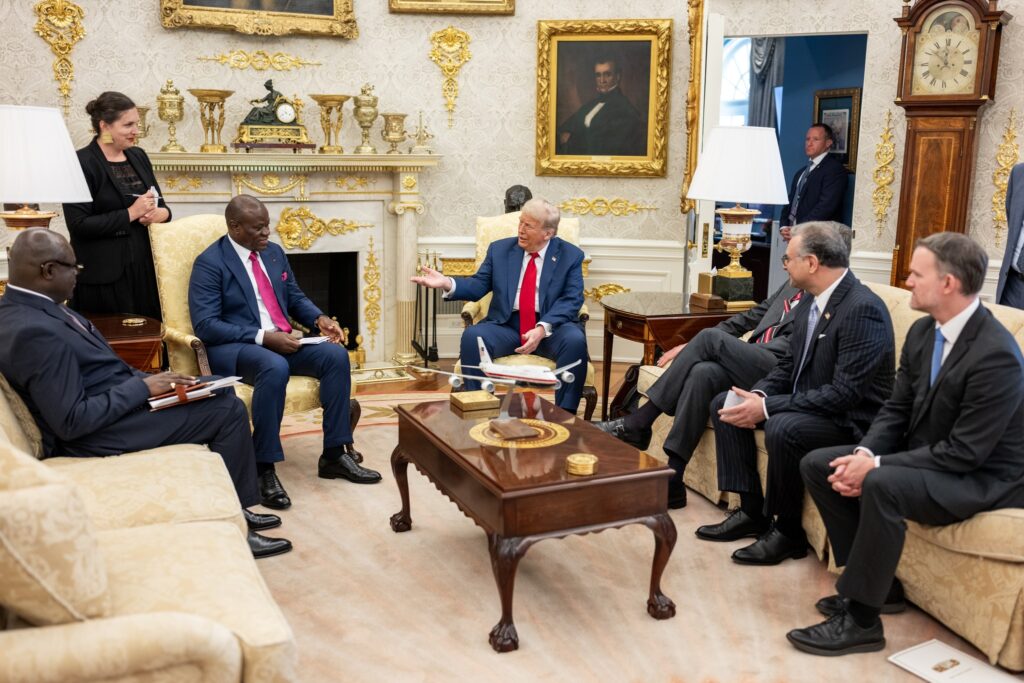
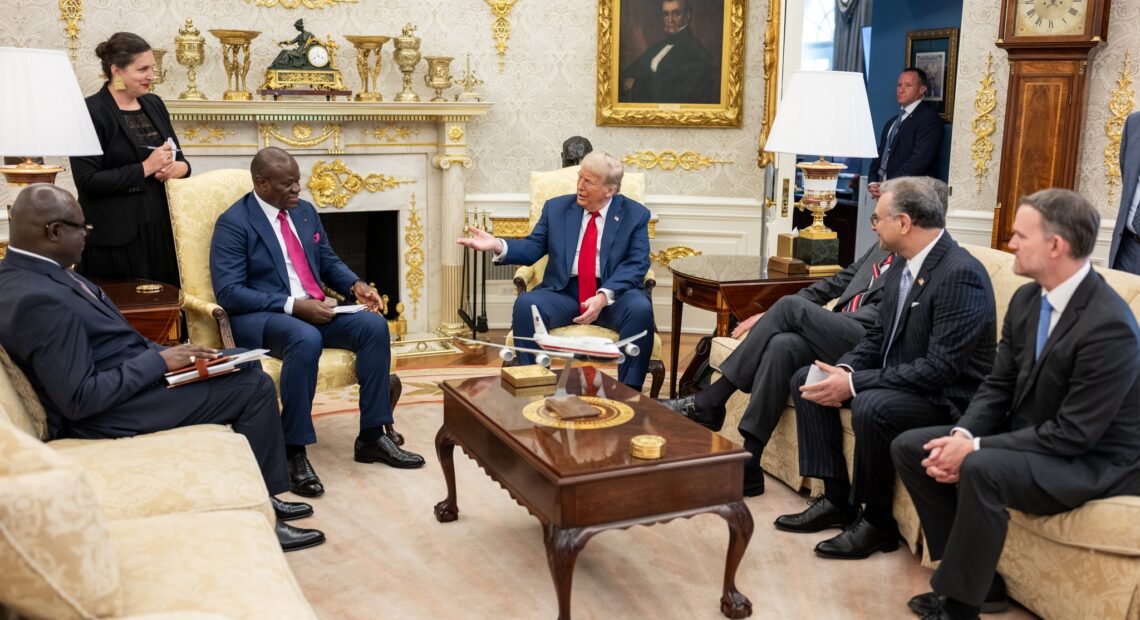
Despite this firm stance, President Oligui Nguema was careful to emphasize that Gabon’s decision does not signal a deterioration in relations with the U.S. In fact, he went so far as to refer to Donald Trump — with whom he shares a diplomatic rapport — as « my friend with the red tie, » striking a balance between firmness and cordiality.
The message from Libreville is unequivocal: Gabon values its partnerships and is open to collaboration, but national sovereignty remains non-negotiable. This principle has guided recent policy decisions, from localizing manganese processing to renegotiating economic agreements and reclaiming the Camp de Gaulle military base.
Sovereignty as a guiding principle
For Gabon, the migration issue is not merely administrative or logistical — it is deeply symbolic. Accepting expelled migrants would have imposed significant financial, social, and security burdens on a nation already focused on economic and social modernization. Public opinion in Gabon and across Africa has widely opposed the idea of the continent becoming a dumping ground for the migration challenges of wealthy nations.
President Oligui Nguema’s administration has consistently championed a discourse centered on self-determination, rejecting external pressures that could undermine national progress. This approach reflects a growing trend among African states to assert greater autonomy in international negotiations, ensuring that partnerships serve their development goals rather than external agendas.
Diplomacy without confrontation
The Gabonese President’s handling of the situation demonstrates how a country can firmly defend its interests without resorting to diplomatic confrontation. This stands in stark contrast to other regions where migration disputes have escalated into open conflicts.
By publicly refusing the proposal while maintaining a respectful tone toward Washington, Oligui Nguema has projected Gabon as a sovereign state capable of making independent decisions. For international observers, this decision reflects a broader evolution in Africa’s relationship with global powers: partnerships are essential, but African nations are increasingly insisting on equal footing in negotiations.
In a world marked by fragmentation and shifting alliances, Gabon’s firm but diplomatic stance may well set a precedent. The message from Libreville is clear: Gabon remains open to the world, but it will not allow its future to be dictated from abroad. This commitment to sovereignty could define Gabonese diplomacy in the years to come.