
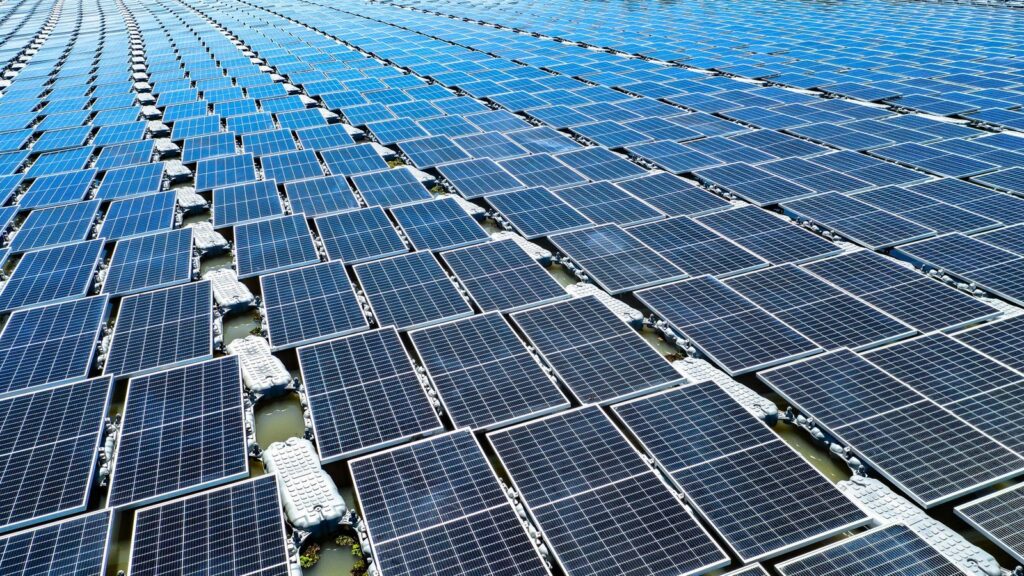
The contractual agreement linking Gabon with Karpowership, a subsidiary of the Turkish conglomerate Karadeniz Holding specializing in floating power plants, has become central to a significant budgetary and industrial dispute. Figures I’ve gathered indicate that Libreville disburses 1.8 billion CFA francs monthly for a theoretical capacity of 150 megawatts. However, the actual power delivered to the national grid reportedly hovers between 80 and 90 megawatts. This considerable disparity raises serious questions, especially as the transitional authorities actively pursue a rationalization of public expenditures, which have long been criticized for their lack of transparency.
A temporary solution that became entrenched
The initial signing of the contract with the Turkish operator was driven by immediate necessity. Confronted with a persistent power generation deficit, exacerbated by aging thermal infrastructure and the unreliable nature of hydroelectricity during the dry season, the Gabonese executive opted for the swift deployment of powerships. These vessel-mounted power stations, moored off Owendo, are designed to inject tens of megawatts into the national grid within weeks. This approach, successfully implemented in nations like Ghana, Sierra Leone, and Sénégal, offers an immediate remedy to energy crises, though typically at a higher per-kilowatt-hour cost than conventional land-based power plants.
What was intended as a temporary stopgap, however, has evolved into a long-term fixture. Despite the progressive development of local production initiatives, particularly involving dams and gas-fired plants, the Turkish contract has remained indispensable. Consequently, the Société d’énergie et d’eau du Gabon (SEEG) continues to rely on an external provider to balance its electricity supply, especially during peak demand periods. Over a twelve-month span, the accumulated cost surpasses 21 billion CFA francs—a substantial sum for a nation whose fiscal trajectory remains under close scrutiny.
An economic equation facing increasing scrutiny
The core of the contention lies in the significant difference between the billed capacity and the actual power supplied. Paying a fixed rate based on 150 megawatts while receiving only a fraction of that power inherently inflates the real cost per megawatt delivered. Numerous voices within both administrative and technical circles suggest that the existing contractual framework excessively shields the Turkish operator from fluctuations in demand and potential technical issues. The transitional government, which assumed power in August 2023, has since initiated a comprehensive audit of major public contracts inherited from the previous administration.
Karpowership is not an isolated entity on the African continent. The group operates dozens of powerships across approximately fifteen countries, with a particularly strong presence in Sub-Saharan Africa. Its primary strength lies in its ability to rapidly deploy units ranging from 30 to 470 megawatts. However, from the perspective of client states, its inherent weakness is the dependency it fosters: once a powership is connected, disengaging from the service requires readily available and reliable alternatives, otherwise the country risks a return to severe power outages.
Toward renegotiation or a structured exit
Therefore, the challenge extends beyond mere financial considerations; it is fundamentally operational. Terminating the contract without simultaneously commissioning equivalent capacities would expose SEEG to a severe supply shock. The anticipated major projects, such as the Kinguélé Aval dam being developed with Meridiam or future gas power plants utilizing national production, are not expected to be fully operational for another two to three years. This leaves little immediate room for maneuver.
Several strategic options are currently under consideration. The first involves renegotiating the financial terms, aiming to more strictly link billing to the power actually injected into the grid. A second approach favors a gradual disengagement, synchronized with the phased commissioning of new infrastructure. A third, more radical option, would entail an outright termination and engaging other suppliers, albeit with the potential risk of international litigation. The ultimate decision will have lasting implications for the credibility of Gabon’s energy policy and, more broadly, the doctrine of industrial sovereignty championed by the transitional authorities.
These critical decisions are expected to be finalized in the coming weeks, as the nation’s energy roadmap becomes clearer.

More Stories
Niger : la rue de Niamey se soulève après des tirs russes contre l’armée nationale
Burkina Faso: Ibrahim Traoré bars former prime minister Apollinaire Kyélem de Tambèla from leaving the country
Cameroun : Yaoundé mobilise 432 millions USD pour racheter Société Générale Cameroun