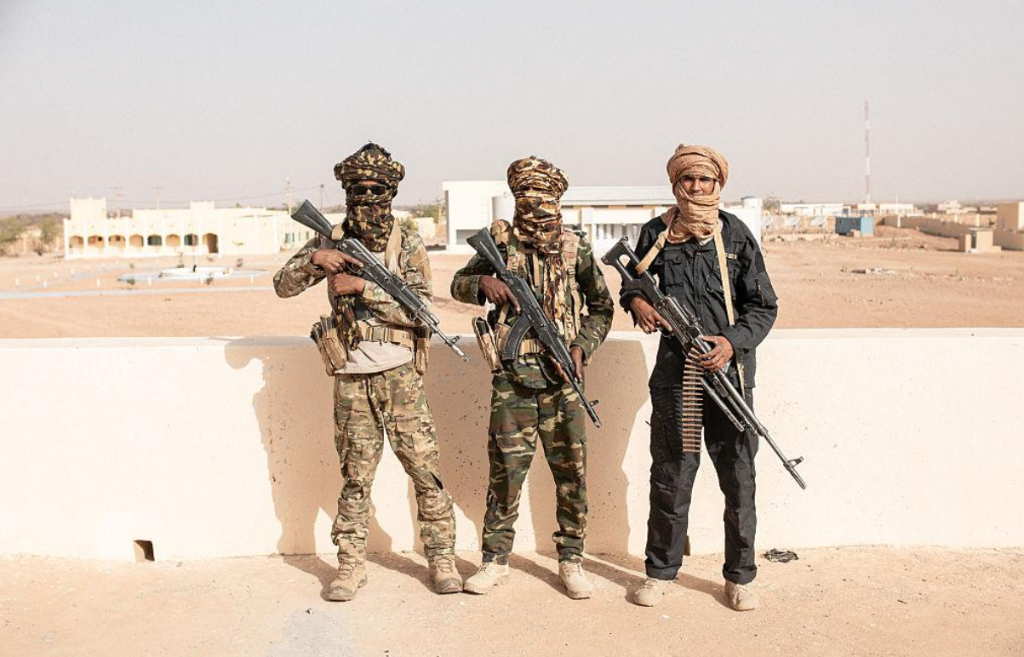
The fall of Kidal and the scramble for new alliances in the Sahel
The loss of Kidal—a once-impregnable stronghold of Mali’s Azawad separatist movement—has forced the Front de libération de l’Azawad (FLA) into uncharted territory. With their historical sanctuary in northern Mali lost to government forces in late 2026, the rebels face a stark reality: survival now hinges on forging new partnerships beyond the country’s borders. Reports indicate that the FLA has actively pursued an emergency outreach strategy, reaching out to the eastern Libyan stronghold of Benghazi and the financial hub of Abu Dhabi in a desperate bid to secure the funds and arms needed to regroup.
Kidal’s strategic importance cannot be overstated. Its fall marked not just a military turning point but a symbolic collapse for the Azawad cause. A spokesperson for the FLA described the retreat as a tactical maneuver to avoid unnecessary losses, yet the consequences have been immediate and far-reaching. Without control of the city, the rebels have lost their logistical nerve center and are now operating under severe constraints on the ground. This shift has created a geopolitical ripple effect across the Sahel, pulling neighboring countries into the conflict’s orbit and redrawing the region’s security map.
Benghazi’s shadow: Libya’s military ties and the fragile new axis
The route to Benghazi is not an arbitrary choice. The Libyan city, under the influence of Field Marshal Khalifa Haftar and his son Saddam Haftar, has emerged as a critical node in the insurgency’s new support network. A delegation from the FLA was reportedly received in Benghazi to negotiate potential arms transfers and safe havens for fighters fleeing Malian government offensives. While concrete agreements have yet to materialize, the talks highlight the rebels’ urgent need for operational alternatives in a region where national borders are highly porous and resistance networks thrive.
The proximity of eastern Libya to northern Mali offers a pragmatic advantage. The vast desert corridors between the two regions allow for discreet movement of personnel and equipment, bypassing the tightly controlled Malian airspace and checkpoints. However, this new axis of support is not without risks. The Haftar-controlled Libyan National Army (LNA) operates with its own geopolitical agenda, and any alliance with the FLA could further complicate Libya’s already volatile internal dynamics.
The FLA’s outreach to Benghazi also underscores a broader trend in the Sahel: the fragmentation of traditional security frameworks. As Mali’s transitional government consolidates control under international pressure, the rebels are increasingly turning to non-state actors and regional power brokers to sustain their insurgency. This development raises concerns across West Africa, where governments fear that such alliances could destabilize entire corridors of trade and migration, not to mention fuel further arms trafficking.
Abu Dhabi’s gambit: funding, influence, and escalating tensions
The United Arab Emirates’ growing footprint in the Sahel is no secret. Abu Dhabi has invested heavily in building economic and military alliances from the Horn of Africa to the Sahara’s southern edge. For the FLA, the oil-rich emirate represents a lifeline—potentially offering not just weapons but also financial resources and political cover in international forums. Yet, this outreach is a double-edged sword. By aligning with Abu Dhabi, the Mali rebels risk widening geopolitical fault lines that run through the region, particularly with Algeria, Mali’s northern neighbor.
Algeria views any Emirati involvement in Mali as a direct threat to its national security. The countries share a 1,300-kilometer border, and Algiers has long relied on diplomatic and military influence to prevent instability in the Sahara. The Algerian government has accused Abu Dhabi of undermining regional stability through covert support to non-state actors, including the FLA. This accusation has further strained already tense Algerian-Emirati relations, which have deteriorated over competing interests in Libya and broader North African power dynamics.
The FLA’s attempt to secure Abu Dhabi’s backing has thus injected a new layer of complexity into the crisis. While financial aid could temporarily revive the rebels’ capabilities, it may also provoke a stronger counter-response from Bamako and its allies, including regional blocs monitoring trans-Saharan security. The risk of escalation is palpable as the rebels’ survival strategy collides with the strategic imperatives of neighboring states.
Algeria’s counter-move: a diplomatic reset with Bamako and Niamey
Faced with the prospect of Emiratis and Libyan factions gaining influence at its doorstep, Algeria has launched a major diplomatic offensive. Recognizing that isolation will only embolden rival actors, Algiers has prioritized rebuilding trust with Bamako and Niamey. The goal is twofold: to prevent further fragmentation in the Sahel and to counter what it perceives as external interference in its southern backyard.
The Algerian government has intensified high-level talks with Mali’s transitional authorities, focusing on joint border security, counter-trafficking operations, and infrastructure development along the Saharan frontier. In Niger, similar efforts have led to a renewed partnership centered on trans-border cooperation and economic integration. These initiatives are not merely symbolic—they represent Algeria’s attempt to reassert itself as the region’s natural stabilizing force.
Analysts suggest that Algeria’s diplomatic reset is partly driven by fear of marginalization. With Abu Dhabi and Libya expanding their influence, Algiers risks losing its long-held role as the dominant broker of security in the Sahel. The message to Bamako and Niamey is clear: cooperation with Algiers offers stability, while alignment with external powers carries unforeseen risks.
What’s next for the Sahel?
The coming months will determine whether the FLA can translate its newfound alliances into sustainable resistance. The rebels’ ability to secure arms, funds, and safe passage through the Sahara will be critical—but so too will be the resilience of Bamako’s transitional government and its international backers. With Algeria mobilized to block external interference and the regional security landscape in flux, the Azawad insurgency faces an uphill battle.
One thing is certain: the fall of Kidal has not ended the conflict. It has merely redrawn the battlefield. As rebel leaders navigate Libya’s political labyrinth and Abu Dhabi’s financial networks, the people of the Sahel—farmers, traders, and displaced families—remain caught in the crossfire. The human and economic costs of this shifting power struggle will continue to rise unless a new equilibrium is found, one that prioritizes peace over proxy alliances.