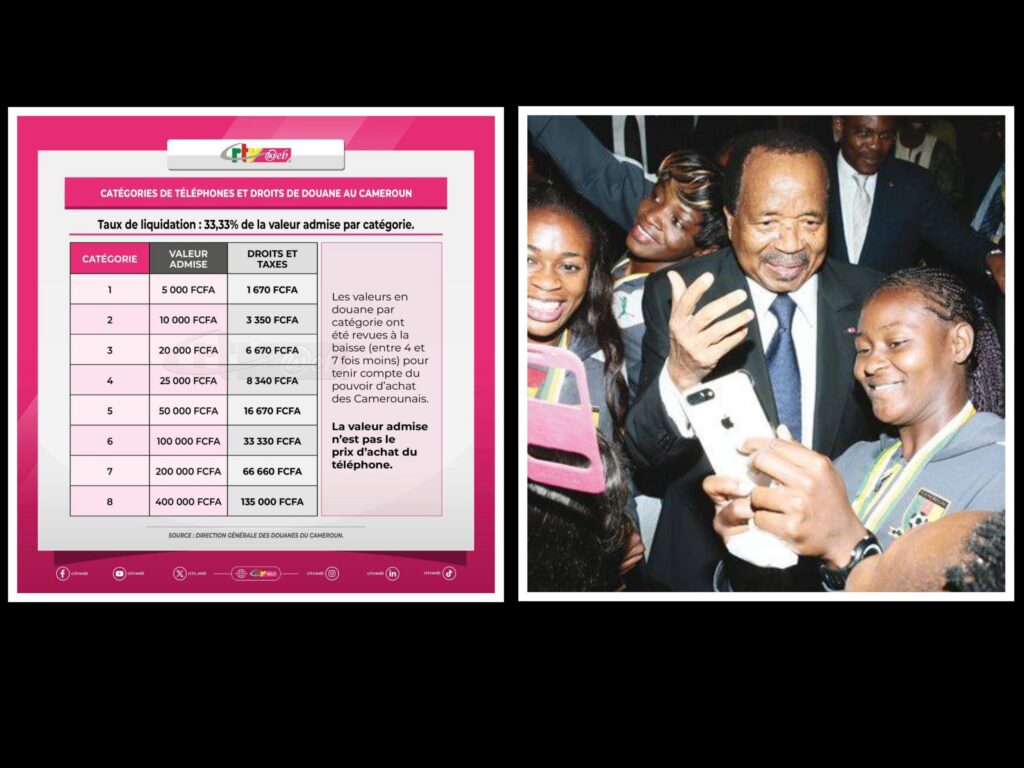
Mobile phone taxes: Cameroon’s digital ambition faces self-sabotage
Every nation that has successfully navigated a digital transition prioritized connecting citizens first, lowering technology access costs, and fostering an inclusive digital economy. Cameroon, however, is taking a different route—one that ties digital inclusion directly to a tax burden. In a country where average incomes often struggle to absorb even basic additional costs, this approach doesn’t just raise eyebrows. It risks deepening digital exclusion across the population.
“In every nation that has achieved a successful digital transition, the priority was first connecting citizens, lowering technology access costs, and transforming digital tools into drivers of economic inclusion and competitiveness. Cameroon, however, has taken a starkly different path—tying digital inclusion directly to a new tax burden. In a country where average incomes often struggle to absorb even modest additional costs, this decision carries consequences far beyond policy. It risks institutionalizing digital exclusion across the population,” argues Shance Lion.
Read his full analysis here.
Cameroon stands at a crossroads between two conflicting realities. On one side, official discourse is filled with ambitious goals: digital transformation, a thriving digital economy, nationwide connectivity, and technological innovation.
On the other, a concrete policy has just been implemented: a 33.33% tax on mobile phones, calculated as a percentage of their declared value. This means an extra cost ranging from 1,670 FCFA for basic models to 135,000 FCFA for high-end smartphones—simply for the right to use a mobile device within Cameroon’s borders.
This isn’t a digital policy. It’s its antithesis.
WHEN A COUNTRY TAXES WHAT IT CLAIMS TO PROMOTE, IT UNDERMINES ITS OWN GOALS: THE CASE OF CAMEROON
The mobile phone has become an indispensable tool for millions of Cameroonians, serving as their primary gateway to digital opportunities:
- The student accessing online courses
- The trader managing transactions via Mobile Money
- The farmer checking market prices
- The artisan connecting with clients on WhatsApp
- The informal worker accessing public services through digital platforms
For most Cameroonians, smartphones aren’t a luxury—they’re a necessity, the only bridge to the digital economy their government claims to be building. Taxing this tool doesn’t just add a financial burden; it effectively charges citizens for entry into the very digital transformation project the state has initiated.
A POLICY THAT MAKES EVEN LESS SENSE IN A COUNTRY WITHOUT LOCAL PRODUCTION
The most baffling aspect of this tax is the industrial context in which it’s being enforced. Cameroon has no domestic mobile phone manufacturing industry—not even assembly plants. There’s no local alternative in development, no plan to stimulate local production. Nothing.
Citizens are thus trapped in an impossible situation: forced to import devices they now face additional taxes for using. No alternatives exist. No loopholes remain. Only an added financial strain on a population already struggling to afford even basic devices.
When a government taxes imports to protect or stimulate local production, the logic, while debatable, is at least coherent. But when it imposes taxes without any industry to protect, without any announced industrial vision, it’s not protecting anything. It’s simply extracting revenue.
AND IF MOBILE PHONES ARE TAXED, WHAT’S NEXT? LAPTOPS? DESKTOP COMPUTERS?
The question must be asked—and answered—publicly and urgently. If the precedent set by this mobile phone tax is extended, which devices will be next? Laptops? Office equipment? Where does this fiscal trajectory end?
If a basic, widely accessible tool like the mobile phone can be taxed at 33.33%, what’s to prevent the same treatment for other essential digital tools tomorrow? Each new tax widens the digital divide, pushing more people out of the digital economy and deepening inequality between those who can connect and those who cannot.
WHILE THE WORLD MOVES FORWARD, CAMEROON CHOOSES TO STAND STILL
Cameroon’s approach to digital inclusion hinges on a new financial barrier: the tax. In a country where average incomes often struggle to absorb even modest additional costs, this decision isn’t neutral. It has a name: organized digital exclusion.
A connected citizen is a productive citizen. A connected population is a competitive economy. This isn’t ideology—it’s documented reality in every report on digital development across Africa.
Making mobile phones more expensive doesn’t just hurt affordability; it undermines Cameroon’s competitiveness. And if laptops and computers are next, the country risks not just falling behind—but forfeiting its future entirely.