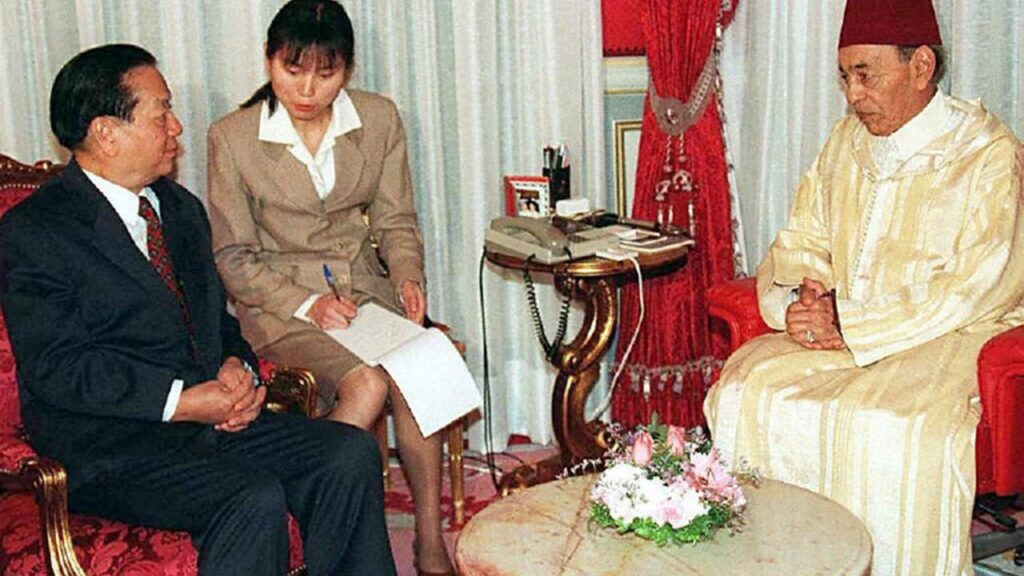
A Speech That Echoed Across Decades
Few diplomatic moments have left as deep an imprint on Moroccan-Chinese relations as the address delivered by King Hassan II at the United Nations in 1960. That historic speech, delivered at a time when global alliances were shifting, became a cornerstone for a relationship that would grow stronger over the following decades.
From Diplomatic Foundations to Strategic Partnership
The words spoken by Hassan II more than six decades ago set the stage for a partnership built on mutual respect and shared interests. Decades later, in 2016, King Mohammed VI’s state visit to Beijing formalized this bond, elevating the Morocco-China relationship to a strategic partnership. This milestone marked a turning point, reinforcing economic, political, and cultural ties that continue to flourish today.
Among the most symbolic moments in this evolving relationship was the 2024 visit of Chinese President Xi Jinping to Casablanca, where he was welcomed by Crown Prince Moulay Hassan. The occasion underscored the enduring nature of Morocco-China relations, blending tradition with forward-looking cooperation.
The Power of Symbolism in International Relations
Diplomatic gestures often carry more weight than formal agreements. The 1960 speech by Hassan II was not merely a statement of intent—it became a reference point for future generations. Sixty-four years later, the principles of solidarity and collaboration outlined in that address remain relevant, guiding the two nations in navigating global challenges and seizing opportunities.
The legacy of that speech is evident in the high-level exchanges that continue to shape the partnership. Whether through trade agreements, infrastructure projects, or cultural exchanges, the foundation laid in 1960 has proven resilient, adapting to the needs of both countries while maintaining its core values.
A Relationship That Transcends Time
The Morocco-China relationship stands as a testament to the power of long-term vision in diplomacy. From the words of Hassan II at the UN to the modern-day collaborations, this partnership has evolved without losing sight of its origins. Today, it serves as a model of how historical ties can inspire enduring alliances in an ever-changing world.