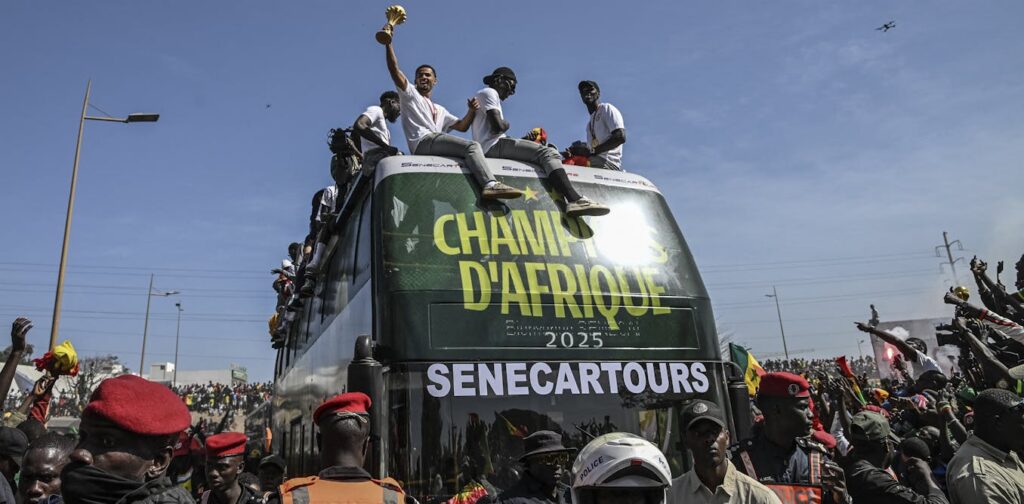
A little over two months after the TotalEnergies CAF Africa Cup of Nations (CAN) 2025 final ended on the pitch with a 1-0 scoreline, the Confederation of African Football (CAF) Appeals Jury issued a stunning verdict: Senegal’s victory was overturned, and the title awarded to Morocco with a default 3-0 win.
The CAF’s decision, grounded in Articles 82 and 84 of its regulations, directly contradicts the on-field referee’s ruling to resume and complete the match. How can a legally binding outcome on the pitch be reversed by an administrative body? What does sports law say about such disputes? And what broader implications does this ruling carry? To unpack this, we turn to Abdoulaye Sakho, a leading expert in sports law, for legal clarity.
What legal grounds justified the CAF’s controversial decision?
The Appeals Jury based its ruling on Chapter 35 of the CAN regulations, specifically Articles 82 and 84, which address team withdrawals. The jury concluded:
In accordance with Article 84 of the TotalEnergies CAF Africa Cup of Nations Morocco 2025 Regulations, the Senegal national team is declared to have forfeited the final match. The result is officially recorded as a 3-0 win in favor of the Royal Moroccan Football Federation (FRMF).
The key issue here lies in legal qualification. While many describe the incident as an “abandonment,” the jury used the term “withdrawal” as defined in the regulations. In both general and sports law, precise terminology is crucial—it determines the applicable legal framework and, ultimately, the case’s outcome. It’s akin to a doctor diagnosing an illness before prescribing treatment; misdiagnose, and the wrong remedy is applied.
Why did the CAF Appeals Jury override the referee’s decision to continue the match?
The Appeals Jury operates as an independent body within CAF, with full discretion to interpret and apply its regulations. It chose not to prioritize the referee’s decision to resume play—despite the absence of any predetermined time threshold for abandonment under FIFA/IFAB Laws of the Game.
The referee, acting under FIFA Law 5, has the authority to:
- Suspend the match temporarily
- Resume play after addressing the interruption
- Or terminate it definitively if necessary
In this instance, the referee opted for suspension and resumption rather than a definitive abandonment. The Appeals Jury, however, disregarded this discretionary power. This raises important questions about the balance between on-field authority and administrative jurisdiction in football governance.
According to FIFA Law 5: “The referee’s decisions on matters related to play are final, including the validation of a goal and the match result.”
Has a similar case ever occurred in a major African football final?
Based on available records, this is a unprecedented scenario in the history of the CAN final.
While rare, there have been other high-profile match interruptions in African football:
- 2017 World Cup Qualifiers: The South Africa vs. Senegal match was replayed after evidence emerged of referee corruption influencing the result.
- 2019 CAF Champions League Final: Wydad Casablanca refused to resume play following a disallowed goal and VAR malfunction. The match was abandoned, and the Court of Arbitration for Sport (CAS) ruled the team had forfeited by refusing to continue.
The critical distinction in the 2025 CAN final is that Senegal returned to the pitch and completed the match, whereas Wydad never resumed play in 2019.
Can Senegal challenge this decision, and what are its prospects?
Yes. Senegal has already filed an appeal, a standard procedure under sports law when a governing body issues a final ruling. The Court of Arbitration for Sport (TAS/CAS) will review the case through a formal appeal process, which includes:
- A filing fee of 1,000 Swiss Francs (≈ $1,279)
- Written submissions and oral hearings
- A final ruling expected within months
Additionally, the Senegalese Football Federation (FSF) has requested a stay of the CAF decision, allowing Senegal to retain its title until the CAS issues a definitive verdict.
This case serves as a legal landmark in sports jurisprudence, touching on:
- Interpretation of sports regulations
- Jurisdictional authority of referees vs. administrative bodies
- Principles of estoppel in ongoing legal proceedings
- Governance challenges in continental football bodies