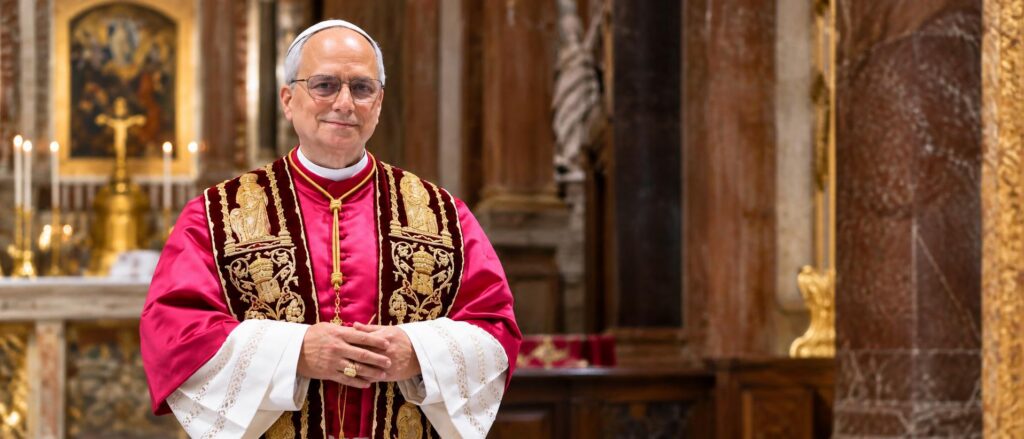
On Friday, 25 September 2026, France will become the stage for one of the most closely watched ecclesial and diplomatic events in recent memory. Pope Leo XIV arrives for his first official journey to the country since his election, a tightly packed four-day pilgrimage that will take him from the capital to Saint-Denis, on to the Marian sanctuary of Lourdes, and finally to Metz in Lorraine. The question hanging over the visit is simple to ask and hard to answer: can a single apostolic trip reshape the relationship between the Church, the French state and a continent still searching for its spiritual bearings?
A republican welcome and a demanding first day in Paris
The Holy Father is scheduled to touch down at Paris-Orly airport at 10:00 on Friday, 25 September. The moment he steps onto French soil, church bells across the country will ring out for seven uninterrupted minutes, a gesture designed to mark the historic nature of the occasion. From there, a crowded institutional and pastoral programme begins without pause.
- Diplomacy and institutions: A meeting with the President of the Republic at the Élysée Palace, followed by an address to the diplomatic corps and a highly anticipated speech at UNESCO headquarters at 15:00.
- Closeness to ordinary people: A popemobile ride through the city, from the Church of Notre-Dame des Champs to Place Saint-Michel, before the celebration of Vespers at Notre-Dame Cathedral.
- A gathering of the young: In the evening, the Pope will lead a large vigil with more than 75,000 young people at the Stade de France in Saint-Denis, during which the Holy Tunic of Argenteuil will be displayed for the occasion.
Saturday, 26 September, shifts the focus to those on the margins. The pontiff will meet vulnerable people at the Maison Bakhita in the 18th arrondissement, exchange views with the Synodal Assembly at the Institut Catholique de Paris, and then celebrate a solemn open-air Mass stretching between Place de la Concorde and the Champs-Élysées.
A memorial stop in Lourdes and a European conclusion in Metz
On Saturday evening, the Pope flies to Tarbes-Lourdes on a special Air France flight. Sunday, 27 September, belongs entirely to the Marian sanctuary: time for prayer at the Grotto of Massabielle, a Sunday Mass on the Prairie before more than 150,000 faithful, encounters with the sick, and the traditional torchlight procession. The stakes here are deeply personal for many pilgrims, for whom Lourdes remains a place of healing and hope.
The apostolic journey ends on Monday, 28 September, in Lorraine. In Metz, Leo XIV will hold an ecumenical meeting centred on “the roots of Europe, peace and unity”, before presiding over a final Mass at Saint-Étienne Cathedral and returning to Rome in the early evening.
Why this trip matters beyond the Church
Four days, four cities, and a message that reaches well past the Catholic faithful. The visit raises a strategic dilemma for both the Vatican and Paris: in a secular republic where religious practice has declined for decades, can a papal visit still move the wider public? The packed schedule suggests the Vatican believes it can. By combining high diplomacy, a massive youth vigil, a Lourdes pilgrimage and an ecumenical finale, Leo XIV is testing whether the Church can speak to a Europe that is politically fragmented and spiritually uncertain.