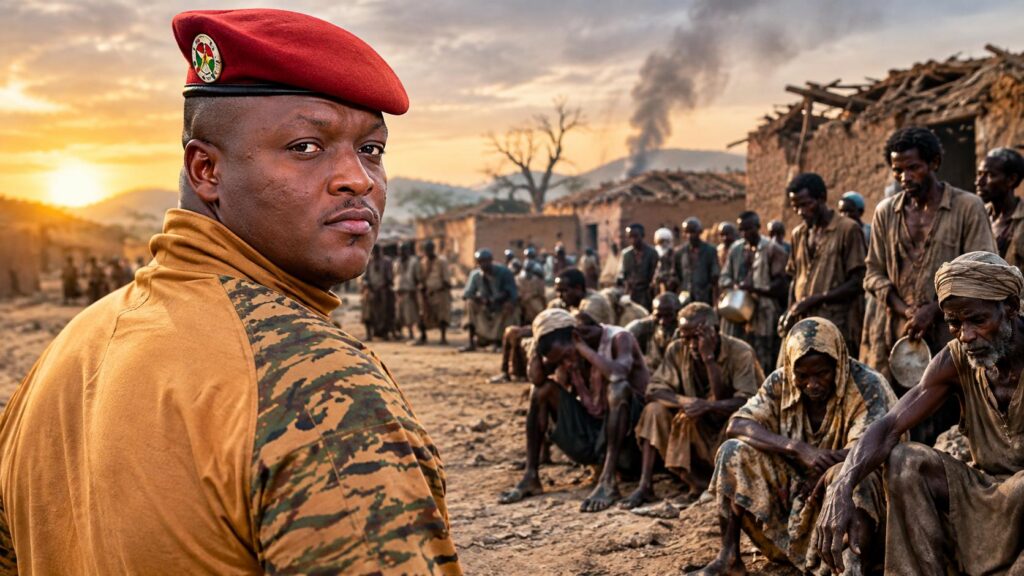
Barely 77 kilometres north-east of Ouagadougou lies Boussouma, a village now at the heart of an unprecedented humanitarian and security crisis. Once a bustling crossroads of trade and a symbol of community cohesion, the locality is today witnessing a forced rural exodus, its inhabitants driven out by the relentless advance and gradual entrenchment of armed terrorist groups.
The dismantling of traditional anchors: a green light for attackers
The security collapse stems directly from the recent reorganisation of the administrative and traditional framework imposed by the authorities. By restructuring local customary authorities and disrupting the historic administrative network – through the enforcement of legislation on the status of customary chiefdom (law No. 002-2026/ALT) and adjustments within the royal court of Boussouma – the central government broke the social shield and informal security anchor that had until then held the area together.
This institutional vacuum and the resulting loss of reference points on the ground acted as a veritable starting signal for armed groups. Capitalising on the weakening of traditional structures that had provided community relay and local intelligence, the attackers quickly moved in to impose their control.
The noose tightens around the capital
The progressive installation of armed groups and the near-total displacement of Boussouma’s population mark a critical stage in the country’s security decline. To see a village positioned less than 80 kilometres from the capital thus deserted under terrorist pressure demonstrates the scale of the state’s territorial retreat.
As displaced people flock to neighbouring localities or attempt to reach the outskirts of Ouagadougou in utter destitution, the abandonment of Boussouma sharply raises the question of whether the ongoing institutional reforms are relevant – reforms perceived by local populations as decisions disconnected from the vital emergencies on the ground.



More Stories
Is Burkina Faso’s anti-terror drive becoming a war on moderate imams?
Will Benin’s 1,422 new chance equality cards really deliver on their promises?
KwaMakhutha massacre: can South Africa’s police stop the gang wars bleeding KwaZulu-Natal?