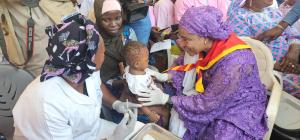
Mali leads global fight against malaria with innovative hybrid vaccination approach
The Republic of Mali has made history by becoming the first country in the world to implement a hybrid vaccination strategy against malaria. This groundbreaking initiative was launched on World Malaria Day to protect children aged five months to three years—the age group most vulnerable to the disease.

How the hybrid vaccination strategy works
The new approach combines routine immunization with seasonal vaccination to maximize protection. Children receive their first three doses at monthly intervals throughout the year, based on age. The fourth and fifth doses are administered seasonally in May or June—just before the peak transmission period from July to December.
This strategy aligns with Mali’s highly seasonal malaria transmission pattern, ensuring peak vaccine efficacy coincides with the greatest disease risk. Evidence from Mali shows this method significantly enhances the vaccine’s impact, reducing malaria cases by up to 75% in high-transmission areas.
Mali’s malaria burden and the vaccine’s role
In 2023, Mali accounted for 3.1% of global malaria cases (8.15 million) and 2.4% of global malaria deaths (14,328). The country ranks among the 11 nations with the highest malaria burden worldwide, with cases rising by 1.4 million between 2019 and 2023.
The R21/Matrix-M vaccine, prequalified by the World Health Organization (WHO), targets Plasmodium falciparum—the deadliest malaria parasite in Africa. Clinical trials show it can reduce malaria cases by over 50% in the first year and extend protection with a fourth dose in the second year.
Collaborative effort to roll out the vaccine
The rollout is led by Mali’s Ministry of Health and Social Development, with support from Gavi, the Vaccine Alliance, UNICEF, and the WHO. The vaccine will be deployed in 19 priority districts across five regions: Kayes, Koulikoro, Mopti, Ségou, and Sikasso. Mali has received 927,800 doses for this initial phase.
Addressing the launch, Colonel Assa Badiallo Touré, Mali’s Minister of Health, emphasized the importance of this milestone: “This achievement is a testament to our collective efforts in combating malaria. While the vaccine is a powerful tool, it must be part of a broader strategy that includes prevention measures like insecticide-treated nets and seasonal chemoprevention.”
Global malaria vaccine deployment accelerates
Mali’s initiative follows the WHO’s recommendation for the RTS,S and R21 vaccines, which have been piloted in Ghana, Kenya, and Malawi since 2019. Over two million children have been vaccinated, reducing child mortality by 13%. As of 2025, 24 million vaccine doses have been distributed across Africa, with 20 countries now incorporating malaria vaccines into routine immunization programs.
The RTS,S/AS01 and R21/Matrix-M vaccines are safe and effective, with trials demonstrating their ability to halve malaria cases in the first year. When administered seasonally in high-risk areas, they reduce malaria cases by up to 75%.
Future plans and challenges
Gavi aims to scale up vaccination programs, protecting an additional 50 million children by 2030. However, securing funding remains a critical challenge. Dr. Sania Nishtar, Gavi’s CEO, stressed the need for sustained investment: “Every life saved and every case prevented brings us closer to ending malaria’s devastating impact on families and communities.”
UNICEF Representative Dr. Pierre Ngom highlighted the vaccine’s potential while noting it’s not a standalone solution: “The malaria vaccine is a game-changer, but it must complement existing prevention methods. Community engagement, including digital outreach via U-Report, is essential to combat misinformation and ensure high vaccination coverage.”
Why focus on children?
Children under five are the most vulnerable to malaria, accounting for over 75% of global malaria deaths. Unlike adults, young children lack partial immunity, making them highly susceptible to severe disease and death.
Key facts about malaria vaccines
- Efficacy: RTS,S/AS01 and R21/Matrix-M reduce malaria cases by over 50% in the first year and up to 75% when administered seasonally.
- Safety: Both vaccines are WHO-prequalified and have undergone rigorous clinical trials.
- Target: The vaccines focus on P. falciparum, the most prevalent and deadly malaria parasite in Africa.
- Coverage: Mali’s hybrid approach ensures long-term protection by combining routine and seasonal vaccination.
Mali’s malaria prevention strategy
The vaccine complements Mali’s existing malaria control measures, including:
- Insecticide-treated nets
- Seasonal malaria chemoprevention
- Intermittent preventive treatment in pregnancy
- Indoor residual spraying
As malaria cases rise in Africa, Mali’s hybrid vaccination strategy offers a scalable model for other high-burden countries. With 13 million additional children expected to be protected by the end of 2025, this initiative represents a major step toward reducing malaria’s global impact.