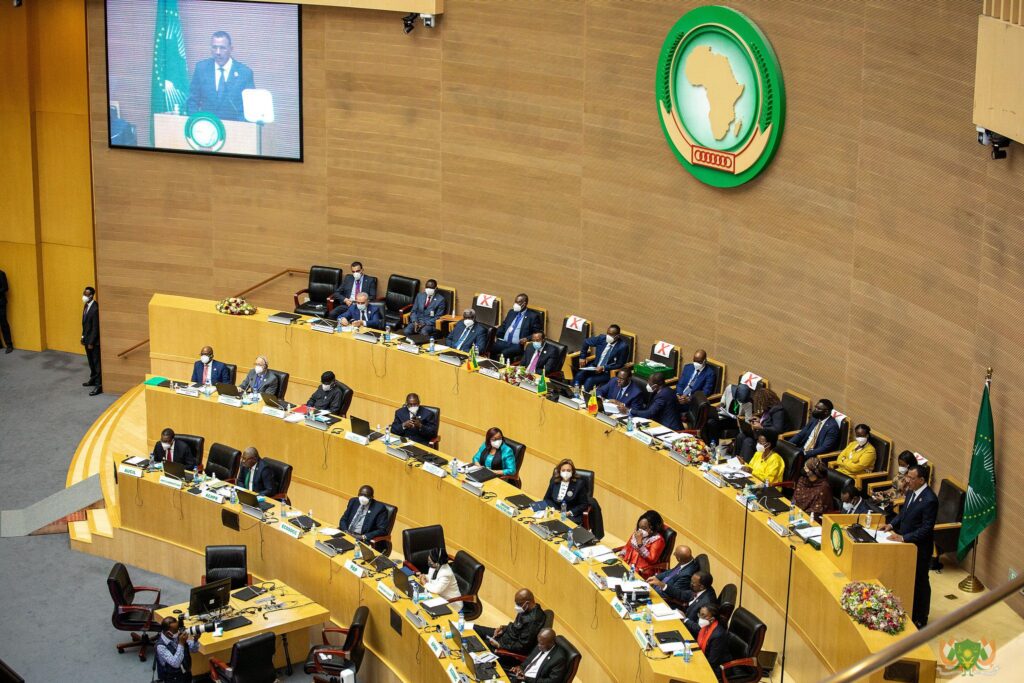
Marrakech — Morocco has once again demonstrated its unwavering commitment to Mali, reaffirming its solidarity before the African Union Peace and Security Council following a series of devastating terrorist and separatist attacks that struck the country over the weekend.
The Moroccan delegation, addressing the AU PSC session on Mali, condemned in the strongest terms the coordinated assaults that targeted both civilian and military zones. They extended heartfelt condolences to the families of the victims and the Malian people, while reiterating Morocco’s full support for Mali’s sovereignty, security, and territorial integrity.
In a call for immediate action, the delegation urged the mobilization of financial resources to enable a swift and effective response, emphasizing the importance of close coordination with Malian authorities to restore stability in the region.
Morocco’s swift and decisive stance was not the first. Within hours of the attacks, a senior Moroccan diplomatic source firmly denounced the “cowardly and criminal acts,” reaffirming Rabat’s backing for Mali’s efforts to combat terrorism and separatism across the country and the broader Sahel region.
a coordinated assault on Mali’s stability
The April 25 attacks marked an unprecedented escalation, with jihadists from the al-Qaeda-affiliated Group for the Support of Islam and Muslims (JNIM) launching synchronized offensives alongside Tuareg separatists from the Azawad Liberation Front (FLA) in seven cities, including Bamako, Kati, Kidal, and Gao.
Among the grim casualties was Malian Defense Minister General Sadio Camara, who was killed in a suicide car bomb at his residence in Kati. Meanwhile, Junta leader General Assimi Goita has remained unaccounted for since the attacks. The strategic city of Kidal fell under rebel control, with Russian Africa Corps mercenaries withdrawing under a negotiated agreement with the armed groups.
Algeria’s alleged role in Mali’s destabilization
While Morocco has stood firmly by Mali’s side, geopolitical analysts have pointed to Algeria’s calculated involvement in the country’s recent turmoil. Observers describe Algiers’ actions as part of a broader “shadow war” aimed at punishing Bamako for its strategic realignment—particularly its recent decision to withdraw recognition of the self-proclaimed Sahrawi Arab Democratic Republic (SADR) and endorse Morocco’s sovereignty over Western Sahara.
The Mouradia Palace, Algeria’s seat of power, has long relied on the Western Sahara conflict to maintain its influence in the Sahel. Bamako’s shift away from Algiers was seen as a direct challenge to Algeria’s regional dominance, prompting a swift and punitive response. Analysts argue that the coordinated attacks did not occur in a vacuum but were instead a form of retaliation for Mali’s strategic defiance.
Mali has repeatedly accused Algeria of harboring and supporting separatist factions, including the Polisario Front, which Algeria has long backed as a tool of regional influence. The same destabilizing tactics—arming proxies, providing sanctuary, and shielding them under diplomatic cover—are now allegedly being deployed against Mali, observers warn.
information warfare and Algeria’s dual strategy
In the aftermath of the attacks, Algeria’s media apparatus sprang into action, synchronizing its narrative with the actions of armed groups on the ground. Semi-official and state-aligned outlets launched a coordinated disinformation campaign, amplifying separatist propaganda, inflating casualty figures, and spreading unverified claims about key officials.
The underlying message was unmistakable: deviation from Algeria’s sphere of influence comes at a price. This propaganda blitz unfolded in stark contrast to Algeria’s own domestic policies, where the government enforces a strict blackout on terrorist incidents. Western embassies have issued travel advisories for regions like Blida, citing active security threats—yet Algeria’s media maintains a deliberate silence on such matters.
This duality—suppressing terrorism at home while fueling it abroad—highlights a cynical and deeply troubling aspect of Algerian statecraft. The abrogation of the 2015 Algiers Accord by Mali’s transitional military council further weakened Algeria’s leverage, dismantling its primary tool for maintaining political control over Bamako.
Morocco’s partnership-based approach
Morocco’s response stands in stark contrast to Algeria’s coercive tactics. In a 2024 joint press conference with Burkina Faso’s Foreign Minister Karamoko Jean Marie Traoré, Morocco’s Foreign Minister Nasser Bourita outlined a clear doctrine: “Sahel nations do not need guardians—they need partners.”
Bourita emphasized that Morocco operates on a foundation of mutual respect and sovereignty, offering expertise and support without imposing conditions or seeking political subordination. “They do not need paternalistic posturing or exploitation of their vulnerabilities,” he stated, directly critiquing Algeria’s regional approach.
As tensions rise, Morocco’s consistent and transparent support for Mali underscores its commitment to regional stability, while Algeria’s alleged role in the country’s destabilization raises serious questions about its long-term intentions in the Sahel.