Mali’s security dilemma reaches a tragic tipping point
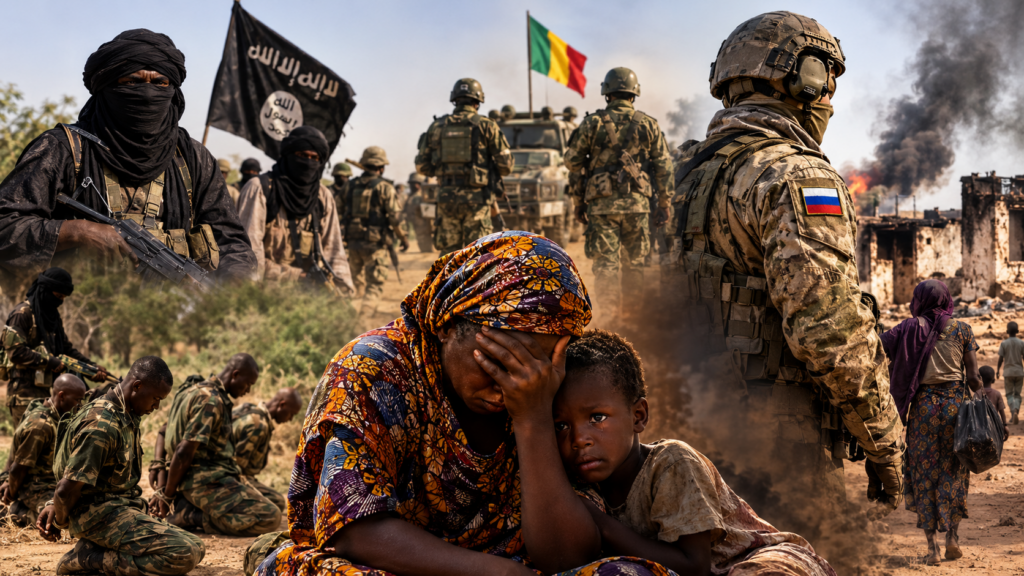
The line between defending Mali and endangering its people has never been thinner. As soldiers fall to coordinated attacks by the Group for the Support of Islam and Muslims (JNIM), fresh evidence shows civilians are paying the ultimate price not just at the hands of insurgents, but from their own government’s forces operating with Africa Corps support. This dual threat has pushed communities into a no-win situation where security operations bring little safety and lasting scars instead.
The human cost behind the battlefield victories
Mali’s military continues to suffer significant losses in ambushes and raids by JNIM operatives. Yet even in the face of these brutal strikes on its own ranks, reports demonstrate that state-backed operations are inflicting collateral damage on innocent lives. Families caught between advancing jihadist fighters and sweeping military sweeps face detention, injury, or death often without clear justification or credible oversight.
Local leaders report entire villages being cordoned off during joint operations, only for residents to return to bullet-riddled homes and emptied granaries. In one district, elders described how soldiers conducting night raids “mistook cooking fires for insurgent signals,” resulting in multiple civilian deaths and no formal acknowledgement. Such incidents erode what little trust remains in a state struggling to maintain authority.
Why foreign support doesn’t guarantee safer outcomes
The integration of Africa Corps personnel into Mali’s counterterrorism strategy has been framed by Bamako as a path to regained stability. However, as scrutiny intensifies over collateral harm in military campaigns, questions arise about accountability. Russian-affiliated advisors are cited in operational planning, logistics, and even frontline support in some regions. Critics argue that the opaque nature of these joint missions makes it difficult to determine who bears final responsibility when civilians are harmed.
International observers have warned that heavy-handed tactics such as indiscriminate air strikes and night raids can radicalize civilian populations further. In some areas, displaced persons report being profiled as “JNIM sympathizers” based on ethnicity or mosque attendance, only to face detention or worse. The partnership, intended to bolster Mali’s sovereignty, now risks becoming part of the problem.
The eroding promise of protection
A government’s first duty is to safeguard its people. Yet Mali’s current strategy is increasingly defined by contradictions: public announcements of territorial recovery contrast sharply with private accounts of families fleeing their homes due to military operations. Senior officials defend the offensives as necessary to weaken JNIM’s grip, but with no transparent investigations into civilian deaths, skepticism grows.
Civil society groups have documented dozens of cases where women and children were killed during so-called “clearing operations.” In one documented case, a grandmother and two grandchildren died when a projectile struck their home during a joint patrol. Authorities attributed the strike to “misidentification,” but no follow-up investigation has been made public.
A call to rebalance the fight for security
No counterterrorism campaign can succeed if it sacrifices civilian life for short-term gains. Mali’s future stability depends not on the volume of operations launched, but on whether its leaders prioritize human rights, accountability, and the restoration of public trust. The deaths of soldiers at JNIM’s hands must be met with justice. But so too must the loss of unarmed farmers, teachers, and mothers killed in their villages or on the road to safety.
The time has come for Mali to demand more from its partners and from itself. A truly effective security strategy is measured not by battlefield announcements, but by the lives it saves.
The critical questions Mali must answer today
How transparent are joint military operations with Africa Corps?
Will independent probes be launched into civilian killings attributed to state forces?
Can a counterterrorism model centered on repression truly protect those it claims to serve?
What comes next for Mali’s civilians?
Without urgent reforms and real accountability, the cycle of violence will continue fed by both extremists and the very institutions meant to counter them. The people of Mali deserve better. Their survival must not be a casualty of war.
By Marguerite Ndongo — Journalist