The Oumar Mariko mediation: a humanitarian act with political consequences
In Mali, the release of 17 hostages by the Group for the Support of Islam and Muslims (JNIM), an Al-Qaeda affiliate in the Sahel, has sent shockwaves through the country’s transition. While the rescued civilians represent a glimmer of hope, the mediation led by opposition figure Oumar Mariko—currently living in exile—has laid bare critical weaknesses in Bamako’s authority.
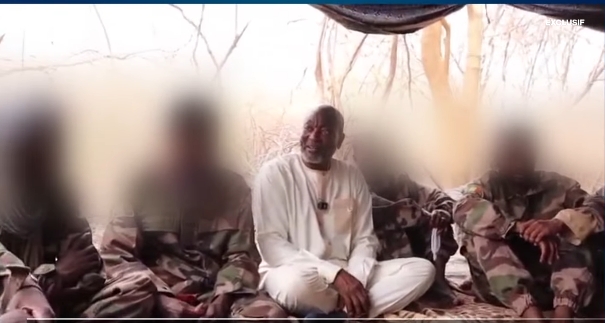
A single photograph, widely shared across Malian social media, captures the moment: Mariko standing alongside freshly freed hostages, all released under the JNIM’s watch. The image speaks volumes, illustrating a stark reality—the Malian state’s inability to secure its own people.
Where was the Malian government?
The central question emerging from this episode is not the hostages’ freedom, but the circumstances of their liberation. How did an exiled political opponent, long at odds with Bamako, manage to negotiate and secure their release in areas where state security forces have repeatedly failed?
This private mediation underscores a troubling erosion of sovereignty. In vast swathes of Mali, the ability to move freely and engage in dialogue appears to rest with informal actors rather than official institutions. For analysts, this is symptomatic of a state in retreat, its authority ceding ground to decentralized power structures.
The JNIM’s calculated propaganda victory
The terror group’s involvement in the hostage release was no act of benevolence. Instead, it was a meticulously planned public relations maneuver designed to serve two strategic purposes:
- Rebranding as a legitimate actor: By participating in filmed negotiations and the handover of hostages, the JNIM seeks to project itself as a pragmatic, almost statesmanlike force, capable of governance.
- Eclipsing state authority: In regions where the group holds sway, it increasingly replaces local officials—mayors, prefects, and judges—positioning itself as the de facto authority. This not only undermines Mali’s republican institutions but also chips away at their legitimacy in the eyes of rural populations.
“Sovereignty is not declared in speeches from Bamako; it is proven by the state’s ability to protect its citizens without intermediaries.”
The hidden costs of shadow diplomacy
While families celebrate the return of their loved ones, the long-term implications of such negotiations are deeply concerning:
- Fueling insurgency: These releases are rarely free. Though never officially acknowledged, the payment of covert ransoms provides the financial lifeblood for future attacks against Malian armed forces.
- Legitimizing armed groups: Seeking leniency from terrorist leaders implicitly validates their control over territory. It signals weakness on the part of the state and reinforces the insurgents’ standing among rural communities.
Two Malis: one in name, divided in reality
Mali today is a nation fractured along two distinct lines:
- The institutional Mali: Centered in Bamako, where official narratives speak of military progress and territorial reconquest.
- The rural Mali: In the countryside, communities abandoned by the state have little choice but to navigate a brutal reality—one where survival often depends on coexistence with armed groups.
The urgent task of reclaiming state authority
The Mariko-mediated hostage release is more than a humanitarian footnote; it is a stark warning. By allowing private actors and opposition figures to handle matters as critical as national security, Mali risks deepening its fragmentation. For Bamako, the challenge is no longer merely military—it is a political reckoning. Restoring state authority will require more than speeches; it demands reclaiming the monopoly on violence and dialogue in every corner of the country, under the shadow of the gun.