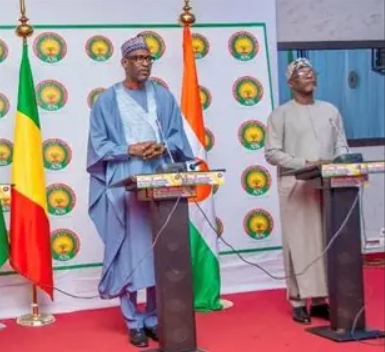
The foreign ministers of Niger and Mali have recently made statements that raise eyebrows. On one side, they vehemently accuse neighboring West African nations within the Economic Community of West African States (ECOWAS) of supporting terrorism. On the other, they express willingness to “cooperate” with these same countries on select issues. This inconsistent stance, swinging between confrontation and collaboration, reveals a harsh truth: severing ties with a regional bloc cannot be done overnight.
the contradiction trap: accuse or cooperate, make a choice
The accusations leveled by Mali and Niger against ECOWAS members are severe, alleging that these nations aid armed terrorist groups. Yet, they subsequently propose collaboration with the very same countries.
- credibility matters: International relations thrive on consistency. If a nation officially brands its neighbor an accomplice to violence against its soldiers, it defies logic to seek economic partnerships the following day.
- reputation risk: By adopting this contradictory approach, Sahel leaders risk appearing unreliable to the global community. Development negotiations cannot thrive with parties labeled as national adversaries.
geography’s unyielding grip: the realities of trade and survival
The withdrawal from ECOWAS was framed as a move toward “total independence.” However, geography cannot be overridden by political rhetoric.
- strategic port dependence: Mali and Niger are landlocked nations, entirely reliant on coastal ports in Cotonou, Lomé, or Abidjan for essential imports, including rice, sugar, medications, and cement.
- economic strain: Without cooperation from these neighbors, transportation costs would skyrocket, triggering unbearable price hikes for already struggling populations. The ministers’ call for cooperation implicitly acknowledges that the Alliance of Sahel States (AES) cannot function in isolation.
the paradox of leaving but keeping the keys
Departing from ECOWAS was a bold political statement to appease domestic sentiment. Yet, the notion of retaining technical advantages without adhering to the bloc’s rules is a fallacy.
- political rupture vs practical needs: Leaders aim to demonstrate a break from the old order but still depend on seamless movement of goods and capital.
- trust and cooperation: A trade partnership cannot survive severed political ties. By rejecting the regional framework, Sahel nations undermine the legal security of their own traders and investors, jeopardizing future economic stability.
from anger to pragmatism: the path forward
Outrage may resonate in the moment, but it does not constitute foreign policy. While venting frustrations against neighbors may be cathartic, it fails to address critical challenges like hunger or insecurity.
- transboundary threats: Terrorism ignores borders. Effectively combating it demands genuine collaboration among regional intelligence services and military forces. Fueling divisions among neighboring states only emboldens terrorists, who exploit such rifts.
sovereignty goes beyond rhetoric
Niger and Mali are learning the hard way that a full exit from ECOWAS poses immense economic hurdles. True sovereignty transcends symbolic independence—it hinges on a nation’s ability to feed its people, heal its sick, and protect its cities. Good neighborliness isn’t optional; it’s a necessity. Pretending otherwise prioritizes propaganda over the lived realities of citizens.