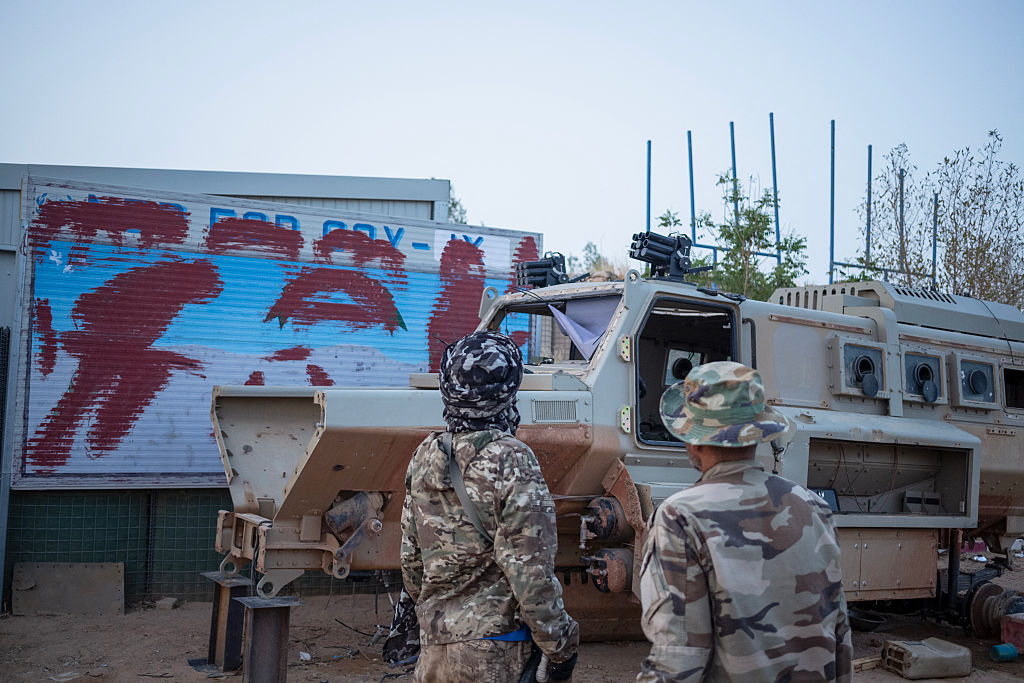
When Mali’s military leadership invited Russian mercenaries into the country in 2021, their primary focus shifted toward subduing Tuareg rebels in the northern regions. This strategic pivot, however, inadvertently created a vacuum that allowed jihadist factions—namely the Group for the Support of Islam and Muslims (GSIM) and the Islamic State in the Greater Sahara—to expand their influence unchecked. Analysts now argue that this miscalculation has not only fueled insurgent growth but also crippled the nation’s economy through targeted blockades on trade routes.
Military crackdowns and civilian backlash
The deployment of Africa Corps mercenaries alongside Malian troops led to aggressive counterinsurgency operations, resulting in thousands of civilian deaths under the guise of targeting rebels or terrorists. Many of these operations involved extrajudicial killings, particularly in ethnic Fulani communities, which only served to radicalize locals and swell the ranks of militant groups. As analyst Wassim Nasr noted, “While the junta concentrated firepower on desert outposts, GSIM militants grew bolder in the capital’s outskirts. Their strategy backfired spectacularly.”
Broken promises and abandoned peace accords
In January 2024, Mali’s transitional government abandoned the Algiers Accords, a 2015 peace agreement brokered with Tuareg factions under the Azawad Liberation Front (FLA). This move followed a November 2023 military offensive in Kidal, where Malian forces, backed by Wagner Group mercenaries, reclaimed the rebel stronghold. Meanwhile, jihadist groups tightened their grip on central Mali, encircling Bamako and disrupting critical supply chains from Senegal and Côte d’Ivoire.
Mali’s pivot toward Russian mercenaries came after severing ties with France, which had led counterterrorism operations Barkhane and Serval for over a decade. The French mission had previously helped stabilize northern regions, laying the groundwork for the Algiers Accords. By late 2023, Mali also expelled the United Nations Multidimensional Integrated Stabilization Mission in Mali (MINUSMA), replacing peacekeepers with Russian mercenaries and Malian troops in brutal anti-jihadist campaigns.
The most infamous of these was the three-day assault on Moura in central Mali, where Wagner fighters executed hundreds of Fulani civilians. These massacres eroded public trust in the junta and mercenaries alike, pushing more locals into the arms of GSIM, ISGS, and FLA. Nasr observed, “The junta’s only agenda boiled down to anti-Western rhetoric. They built no schools, no roads—just hatred toward former allies.”
Strategic failures and mercenary retreat
The Africa Corps’ campaign ended in humiliation in July 2024 near Tin Zaouatine, where Tuareg fighters ambushed a joint Malian-Russian force, forcing them into GSIM territory. The ambush left nearly 50 soldiers and over 80 mercenaries dead. “Wagner ceased to be Wagner,” Nasr remarked, adding that the group soon announced its withdrawal from Mali. The Africa Corps, now staffed by Wagner veterans, took over—but with diminished confidence.
By late April 2024, Africa Corps troops fled during a GSIM-FLA assault on Kidal, allowing the FLA to seize the city. The same day, a separate attack claimed the life of Mali’s Defense Minister. With battlefield losses mounting, Africa Corps shifted its focus to protecting the junta, including securing Bamako’s international airport and smuggling fuel past GSIM blockades. The government shows no interest in negotiating with militants, clinging instead to mercenary support for survival.
“They have no choice—they’re cornered. The Africa Corps is their lifeline, even at a cost of $10 million a month.”