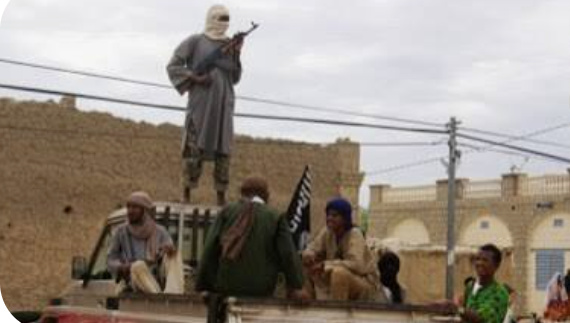
Despite Mali’s transitional authorities placing their hopes in a strengthened military partnership with Moscow to restore peace, the security landscape has deteriorated sharply. On April 25, the nation faced a paradox: while a contentious evacuation deal was being struck between Russian paramilitaries and rebels in Kidal, renewed clashes erupted just 15 kilometers from the capital, in Kati—the heart of Mali’s power structure. This juxtaposition has laid bare the flaws in the so-called ‘all-military’ strategy, now heavily reliant on Russian support, and raised urgent questions about its long-term viability.
diplomatic maneuvering in Kidal: a fragile ceasefire amid distrust
In a surprising turn of events, reports indicate that Russian forces—operating under the Africa Corps banner—entered into negotiations with Tuareg rebel factions in the Kidal region. The alleged agreement, framed as a humanitarian gesture to reduce civilian casualties, allows for the safe withdrawal of Russian personnel from key zones. Yet beneath the official narrative lies a stark admission: external military intervention, whether from Western powers or Moscow, has failed to deliver lasting stability in one of Africa’s most volatile regions.
For Bamako, which had staked its legitimacy on reclaiming full control over Kidal, the sight of Russian negotiators brokering an exit strategy with rebels underscores a harsh truth. Sovereignty cannot be restored—or maintained—through foreign firepower alone. The episode reveals not just tactical missteps but a deeper strategic vulnerability: Mali’s growing dependence on a single external actor whose priorities may not align with the country’s long-term stability.
kati under siege: when insecurity knocks at the door of power
While the Kidal accord unfolded in the north, violence flared anew in Kati, a strategic garrison town and symbolic bastion of Mali’s current leadership. Once considered a secure perimeter, Kati now bears the scars of renewed fighting. Its proximity to Bamako—just 15 kilometers away—transforms it from a military outpost into a glaring indictment of the state’s eroding control. The resurgence of hostilities here signals a dangerous shift: insecurity is no longer confined to remote border regions. It has crept into the very corridors where national decisions are made, despite assurances from the Malian army and its Russian allies about improved security protocols.
why the russian military model is failing in Mali
The deployment of the Wagner Group—now integrated into the Africa Corps—was touted as a game-changer in Mali’s fight against terrorism and separatist movements. Yet, after years of collaboration, the results tell a different story. Violence has not abated; it has metastasized. Insurgent attacks now occur closer to urban centers, and the once-distant threat has moved into the heart of the country. This failure exposes a critical flaw in the strategy: brute force cannot substitute for governance, intelligence networks, or community trust—tools essential for countering asymmetric warfare in the Sahel.
Mali’s pivot away from traditional regional and international partners in favor of a single foreign actor has left it strategically isolated. Russia’s involvement, while providing immediate military support, lacks the nuanced intelligence and social cohesion required to address the root causes of instability. The current impasse reveals a hard truth: external mercenary forces cannot sustain long-term peace without a corresponding political and administrative framework. The model, once hailed as a solution, now appears increasingly unsustainable.
the path forward: beyond military solutions
The unfolding crisis in Mali serves as a sobering reminder: security cannot be purchased through mercenary contracts or foreign firepower. The stalled evacuation talks in Kidal and the renewed violence in Kati send a clear message to Bamako’s transitional leaders. A purely military approach, especially one outsourced to external actors, is insufficient to restore stability. To break the cycle of violence, Mali must prioritize inclusive governance, restore trust with marginalized communities, and rebuild national institutions capable of delivering justice and services.
Without a fundamental shift in strategy—one that moves beyond dependency on foreign forces and embraces a holistic, locally rooted solution—the country risks sinking deeper into a quagmire of instability. The international partners, including Russia, may offer temporary relief, but lasting peace demands more than guns and mercenaries. It requires leadership, legitimacy, and a renewed commitment to the people of Mali.