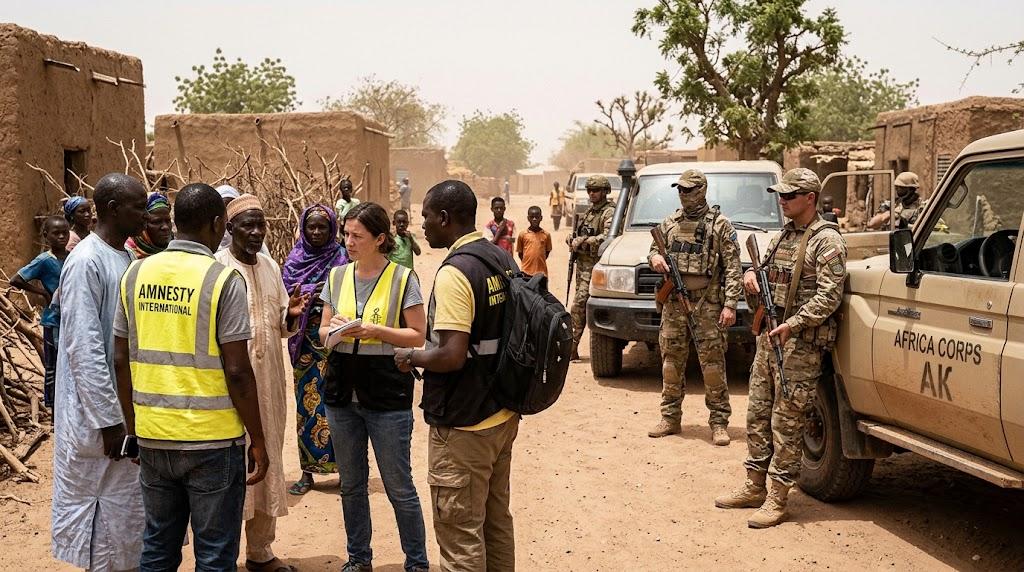
The breakthrough that wasn’t: Africa Corps deployment brings no change to Mali’s rights crisis
Despite the much-touted replacement of Wagner Group by Africa Corps in mid-2025, Mali continues to witness a disturbing pattern of violence against civilians. A string of alleged war crimes, including extrajudicial killings, torture, and indiscriminate drone strikes, suggests that foundational issues of accountability remain unaddressed. Human rights monitors warn that the shift in security partnerships has done little to break the cycle of impunity that has marred Mali’s conflict zones for years.
Civilian casualties mount under Africa Corps operations
Between June 2023 and December 2025, at least 34 civilians were killed in seven villages along the Mali-Mauritania border during joint military operations involving Malian forces and former Wagner personnel. Survivors and residents report multiple incidents of individuals being shot after surrendering or while attempting to flee—circumstances that strongly resemble extrajudicial executions. Graphic accounts describe people being slaughtered, burned alive, or subjected to other brutal methods inconsistent with the laws of war.
In a separate incident on March 16, 2025, a drone strike on a bustling market in Ejdeir claimed 16 lives. Another alleged drone attack on a residential home in Tangata in November 2025 resulted in seven fatalities. Amnesty International found no evidence of militant presence or military objectives at either location, raising serious concerns about the targeting protocols and chain of command used in these operations.
Torture and unlawful detention emerge as systemic patterns
Amnesty International has documented torture and degrading treatment in detention centers and during field operations, particularly in Léré and Nampala. Survivors describe harrowing methods: suspension from the arms, waterboarding, electrocution, beatings with batons, iron bars, and rifle butts. Sexual violence has also been reported. At least five detainees reportedly died as a result of torture or harsh conditions. Others were held for months without access to legal counsel or family communication—violations of international humanitarian law.
Testimonies indicate that Wagner-affiliated operatives, working alongside Malian soldiers, participated in interrogations and allowed abuses to occur. Independent investigations are urgently needed to determine individual and command responsibility.
Marginalized communities bear the brunt of unchecked violence
Amnesty’s findings reveal a disproportionate targeting of Fulani, Arab, and Tuareg communities, often under suspicion of collaborating with armed groups such as the Group for Support of Islam and Muslims (GSIM). Reports include cattle theft, looting of cash, jewelry and personal belongings, and the destruction of homes and farmland—actions that devastate livelihoods already under strain from displacement and conflict.
The targeting of entire communities based on ethnicity or perceived affiliation cannot be justified under any circumstances. Protecting civilians is a legal obligation, regardless of operational imperatives.
Africa Corps: from Wagner’s shadow to new abuses
Under Moscow’s direct control, Africa Corps began deploying to Mali in January 2025 and officially assumed Wagner’s role in June. Yet reports from July 2026 suggest the transition has not ushered in accountability. On July 10, in the Fulani quarter of Bombori, approximately 80 men were gathered, beaten, and interrogated about militant ties. Six who attempted to escape were shot; three more were executed on the spot. These acts call into question the oversight of Russian personnel, the transparency of joint operations, and Mali’s own responsibility in upholding human rights standards.
Impunity reigns: no justice for victims in sight
Since 2023, no judicial proceedings have been initiated against Malian government forces for civilian-targeted abuses, according to Amnesty International. This persistent lack of accountability fosters a climate of fear, suppresses testimony, and leaves victims without recourse. The limited access to conflict zones further hampers independent documentation of crimes.
Urgent action is required: authorities must open impartial inquiries, prosecute alleged perpetrators, and ensure victims’ access to justice. Transparency in security agreements with Africa Corps and strict operational oversight are essential to prevent further violations and restore public trust in Mali’s fight against insurgency.
Key takeaways: why the shift to Africa Corps failed to protect civilians
- The replacement of Wagner by Africa Corps did not reduce civilian casualties or abuse patterns. Attacks on markets, homes, and civilian gatherings continue with high lethality.
- Torture, unlawful detention, and sexual violence remain systemic, with both Russian-affiliated units and Malian soldiers implicated.
- Ethnically targeted abuses persist, deepening mistrust and displacement among Fulani, Arab, and Tuareg populations.
- No accountability exists for state forces or foreign operatives, enabling a culture of impunity.
- Urgent structural reforms are needed in military doctrine, oversight, and civilian protection protocols.