Mali’s unfolding crisis: between military rule and jihadist sharia
Malians confront an agonizing dilemma, trapped between a floundering military government and triumphant jihadists vowing Sharia law. This is the anatomy of an inescapable political deadlock.
- Terrorism

Following the coordinated assaults on April 25 by the Al-Qaida-affiliated Group for the Support of Islam and Muslims (GSIM / JNIM) and the separatist Azawad Liberation Front (FLA), Mali’s junta leader, General Assimi Goïta, resurfaced three days later. He offered no explanation for his brief absence. In his April 29 address, Goïta insisted the “situation is under control,” even as the FLA re-established itself in Kidal and the JNIM initiated a blockade around Bamako. General Goïta resorted to rhetorical assurances, claiming his administration possessed the military might to soon defeat non-state armed groups. Yet, he failed to clarify why, six years post-coup, his regime remains on the defensive against these hostile entities, which now dictate the pace for the national army and the entire nation. As the military balance of power increasingly favors these armed factions, many Malians are now contemplating the grim prospect of the JNIM and its allies seizing state power. This portends a catastrophic turn of events.
The deadlock: between junta and sharia
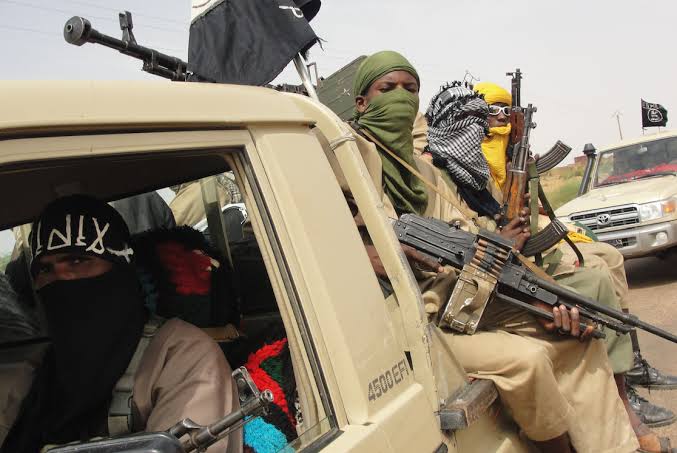
This grim scenario gains traction as the JNIM openly declares its intention to deliver a decisive blow to the ruling National Committee for the Salvation of the People (CNSP) junta. This objective was affirmed in a communiqué where the JNIM explicitly stated that, upon assuming control of the state, an “essential priority will be the establishment of Sharia law.” This message leaves no room for doubt. Indeed, in regions of the country currently under jihadist command, residents already endure the strictures and demands of Islamic law.
For weeks, certain opponents of the military regime have attempted to persuade themselves that a temporary alliance with the JNIM might lead the group to temper its Sharia agenda. These factions hope to depose the junta by striking a deal for a “soft Sharia”—a minimalist interpretation of Islamic law they believe they could accommodate. However, nothing in the statements from the terrorist organization, now spearheading the offensive against the junta, suggests their “victory” would usher in a secular or democratic future. Trapped between a military government that has engineered Mali’s current chaos and ascendant jihadists, citizens yearning for change find themselves in an impossible predicament. It is a precise deadlock: Sharia versus the junta.
This confrontational dynamic was inadvertently engineered by the CNSP putschists. By seizing state power and systematically suppressing all political opposition—imprisoning dissenting voices without compunction or forcing them into exile—General Assimi Goïta’s CNSP has, ironically, empowered the most formidable challenge to its authority. As nature abhors a vacuum, it is now armed movements and proponents of violent extremism who are poised to dislodge an illegitimate regime that proclaimed absolute power.
The JNIM’s vision for a “new Mali”
As the JNIM enforces a road blockade on the capital, Bamako, threatening to suffocate the national economy, leading figures within the junta remain entrenched in denial, issuing purportedly triumphant pronouncements. While banking on the loyalty of supporters, whose faith increasingly wavers, the regime intensifies its repressive actions. In what appears to be an internal purge, several military personnel were arrested following the joint JNIM and FLA offensive on April 25. A stark symbol of this desperate escalation was the abduction on May 2 of Mountaga Tall, a prominent lawyer and political figure, by masked individuals—a modus operandi bearing the hallmarks of Bamako authorities.
Responding to these developments, Ousmane Diallo, a senior researcher with Amnesty International, stated: “We have observed a pattern of abductions in Mali, carried out by agents of the State Security Agency. Authorities must cease their restrictions on civic space and human rights abuses, and uphold the country’s human rights obligations and commitments.” The junta’s entrenched practices persist. The abduction of Mountaga Tall adds another chapter to the lengthy record of abuses attributed to a regime that has consistently sown the seeds of its own destruction.
In a communiqué released just before their April 25 offensive, the JNIM jihadists unveiled the new direction of their agenda: “We call upon all sincere patriots, without distinction, to rise and unite our forces in a common front, including political parties, national armed forces, religious authorities, traditional leaders, and all segments of Malian society. It is imperative to end the junta for a peaceful and inclusive transition towards a new Mali.” The military putschists had also once promised a “new Mali” to their compatriots. What would the JNIM’s version entail? In its endeavor to forge a hypothetical compromise between its maximalist demands for Sharia implementation and the suppressed grievances of traditional political oppositions, the JNIM, much like the junta, provides no assurance of a return to ordinary constitutional order. The protracted saga of the military regime, which replaced political virtues with the mere rule of arms, has ultimately exposed the populace to a multi-faceted tragedy. Presently, no clear path emerges for a favorable resolution to this existential challenge confronting Mali.