Senegal’s democracy faces a critical challenge in women’s leadership
Despite Senegal’s reputation as a democratic leader in Africa, the country continues to grapple with persistent gender imbalances in decision-making roles. Recent data reveals a notable decline in female political representation, with only 18 women serving as mayors out of 558 communes and just three women leading departmental councils out of 43.
These figures reflect broader systemic challenges, including structural barriers, cultural resistance, and persistent inequalities in access to political funding, media visibility, and decision-making spaces. Yet, Senegalese women remain the backbone of the nation’s progress—leading communities, driving local economies, championing social causes, and fostering peace. The question is no longer whether women are capable of governance, but why political systems continue to restrict their leadership potential.
Legislative setbacks highlight the urgency of change
Recent legislative elections in November 2024 underscored this decline. Female representation in the National Assembly dropped from 44.2% to 41%, while women headed only 13% of electoral lists. The situation is even more stark at the local level: out of 558 communes, just 18 are led by women, and only three departmental councils are presided over by women. These numbers are not mere statistics—they expose deep-rooted obstacles that hinder women’s political participation.
Bator Seck, Senegal’s focal point for the Réseau des femmes leaders pour le développement (RFLD), emphasizes that while Senegal has made progress—such as the 2010 parity law, the 2001 Constitution guaranteeing gender equality, and ratification of international human rights conventions—these legal advances have yet to translate into meaningful representation.
A regional initiative aims to shift the paradigm
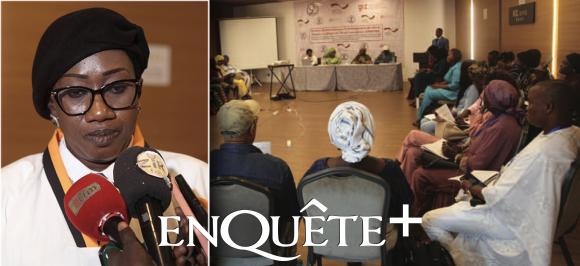
To address this gap, the RFLD is hosting a two-day seminar in Dakar focused on enhancing women’s political participation in francophone West Africa. The initiative, part of the Afrofeminist Initiative for Human Rights Development in Francophone West Africa, brings together 30 Senegalese women leaders—including parliamentarians, party heads, local officials, activists, and civil society leaders—representing diverse generations, political affiliations, and social backgrounds. Their shared goal: to transform women’s political engagement in Senegal.
The seminar provides a platform to share experiences, analyze challenges, and build strategies to strengthen women’s influence in public policy and electoral processes. “A democracy cannot be complete when women remain underrepresented in decision-making spheres,” Seck asserts. “The future of Senegal’s politics cannot be built without women—or worse, for women, rather than with them.”
Confidence and capacity-building: key pillars for change
Maman Diouf Fall, representing the Minister of Family and Social Solidarity, highlights another critical hurdle: the need to bolster women’s self-confidence and leadership skills. Many women possess the competence and legitimacy to lead but hesitate due to societal pressures, entrenched stereotypes, and a lack of structured support.
She stresses the importance of targeted training programs in leadership, political communication, negotiation, public governance, public speaking, and organizational management. Without sustained investment in women’s human capital, progress will remain limited. “Women must be equipped not only with ambition but with the technical and professional skills required to navigate today’s complex political landscape,” she notes.
Fall also underscores the importance of equitable access to capacity-building opportunities, particularly for women in rural or marginalized areas. Many training programs are concentrated in urban centers, excluding those who are deeply engaged in their communities but lack resources. Additionally, she calls for mentorship programs and intergenerational support networks to guide young women aspiring to leadership roles.
The Ministry of Family and Social Solidarity has launched initiatives to strengthen women’s and girls’ leadership, including sensitization campaigns, civic education, human rights training, and psychosocial support for vulnerable groups. These efforts aim to empower women economically, socially, and politically while addressing issues such as child marriage, gender-based violence, and girls’ education.
A collective responsibility to advance gender equality
Fall concludes with a call to action: “Beyond legal frameworks and political commitments, our collective responsibility is to create conditions for women’s full, free, and effective participation in public life. This requires continuous social transformation, community sensitization, and support for young women entering decision-making spaces.”
The RFLD’s work, recognized at both continental and international levels—including observer status with the African Commission on Human and Peoples’ Rights—demonstrates the potential of collective action. By combining advocacy, community organizing, data-driven strategies, and financial support, the network is paving the way for a more inclusive and equitable political future in Senegal.