In the arid frontier zone between Mauritania and Mali, nearly 300,000 Malian refugees cling to hope while bracing for fresh waves of displacement. Their fragile optimism stems from recent battlefield reverses suffered by Mali‘s junta—backed by Russian paramilitaries—at the hands of a rebel coalition that includes the Front de libération de l’Azawad (FLA) and the Jama’at Nusrat al-Islam wal Muslimin (JNIM, Al-Qaeda affiliate).
«If the Russian mercenaries leave, we will go home,» declares Mosso*, a 57-year-old Tuareg herder who fled central Mali‘s Mopti region three weeks ago. His voice cracks as he recounts how Russian-speaking fighters—locally known as Wagner—arrived in his camp, seized men, and executed his brother in front of his 14-year-old son a year prior. «It was Goïta who brought Wagner to our land,» he asserts, referring to Mali‘s coup leader Assimi Goïta.
Voices from Fassala: echoes of violence and displacement
The dust-choked border town of Fassala has become a temporary sanctuary for refugees who remember all too well the brutal tactics of the Russian contingent now rebranded as Africa Corps. «The junta’s alliance with Wagner has poisoned our communities,» says Ahmed*, a 35-year-old Tuareg who settled in the Mauritania‘s Mbera camp with his family. «We fled the army’s indiscriminate labeling of our people as collaborators.»
Human rights groups have documented widespread reprisals against civilians accused of supporting opposing factions. In late April, three civil society organizations filed complaints with the African Court on Human and Peoples’ Rights, citing alleged atrocities by Mali‘s armed forces and Wagner affiliates.
FLA-JNIM alliance: a paradox of liberation and terror
Not all refugees welcome the FLA’s recent capture of Kidal, a strategic northern city. Abdallah*, a 77-year-old Tuareg elder, voices skepticism about the alliance between secular separatists and jihadists. «JNIM’s agenda contradicts our peaceful Islamic values,» he states, his weathered face reflecting deep concern. Meanwhile, refugee flows have surged by nearly 14,000 since October, as JNIM’s blockades choke off vital supplies to civilian populations.
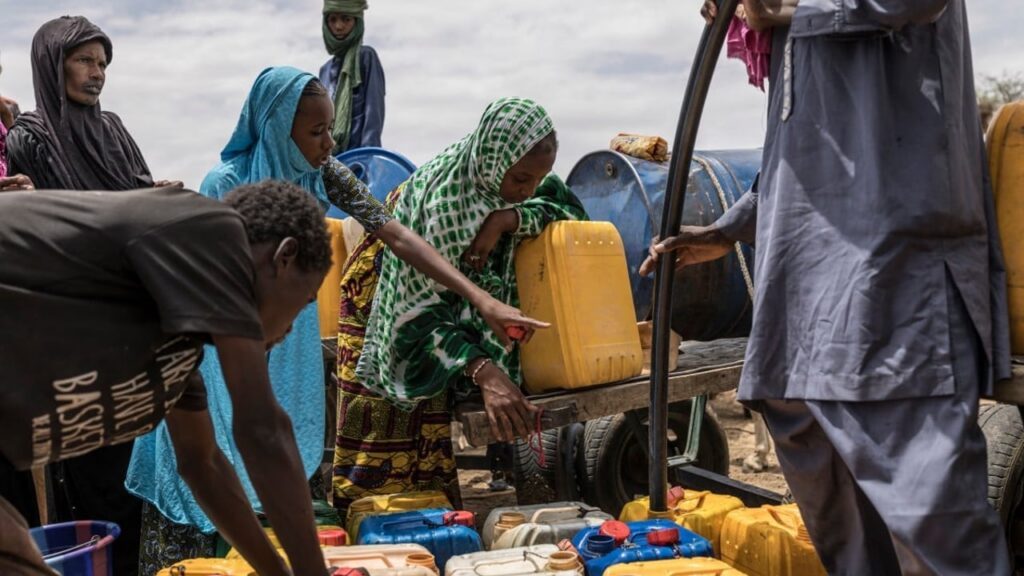
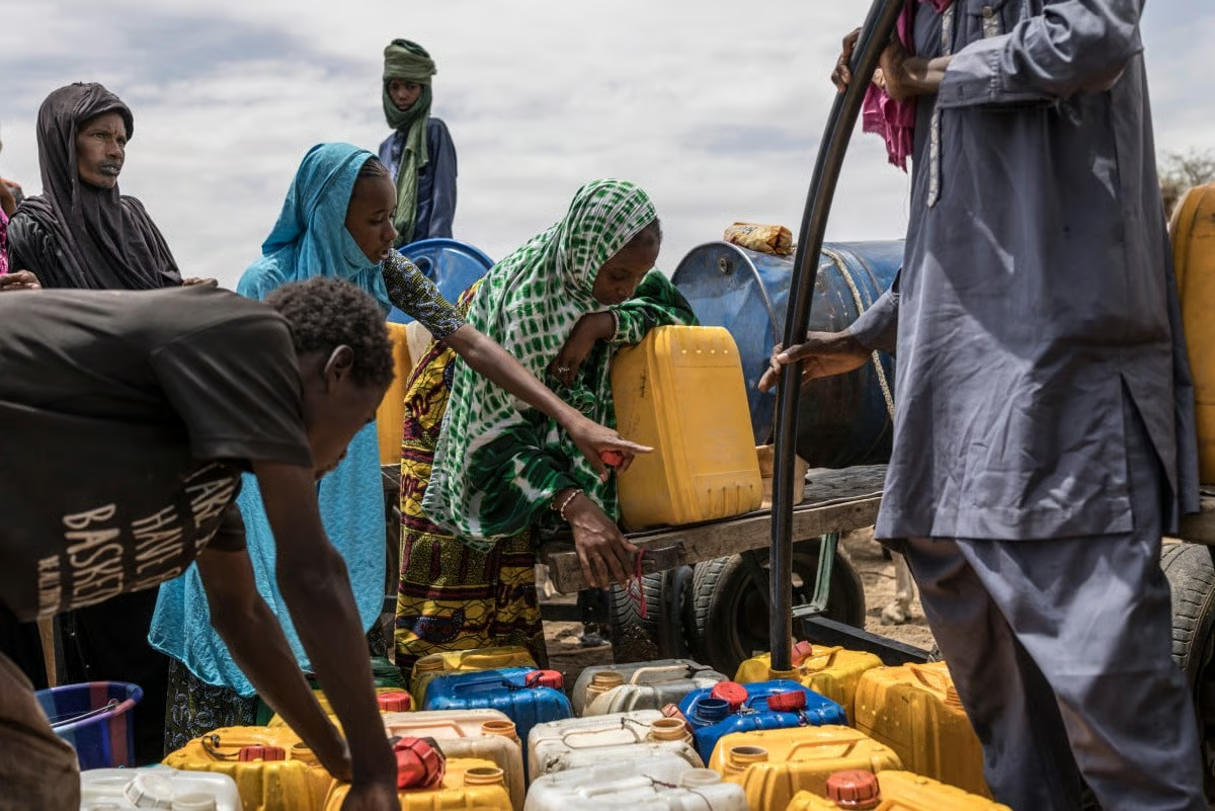
Mauritania, often praised for its relative stability in a volatile Sahel, now faces mounting strain. «The influx has overstretched our already scarce grazing lands, water resources, and basic services,» explains Cheikhna Ould Abdallahi, mayor of Fassala, which hosts 70,000 refugees. Omar Doukali of the UNHCR in Mauritania adds, «We are watching the situation with grave concern as new hostilities threaten to trigger further displacement.»
Tilleli*, a 22-year-old mother cradling her one-year-old, shares a chilling account of her recent escape from central Mali‘s Mopti region. «Russian fighters and soldiers burned our village,» she recounts, her eyes welling with tears. «I will not return until Wagner is gone from our country.» Her words encapsulate the widespread sentiment among refugees: hope for peace is overshadowed by lingering uncertainty and fear of renewed violence.