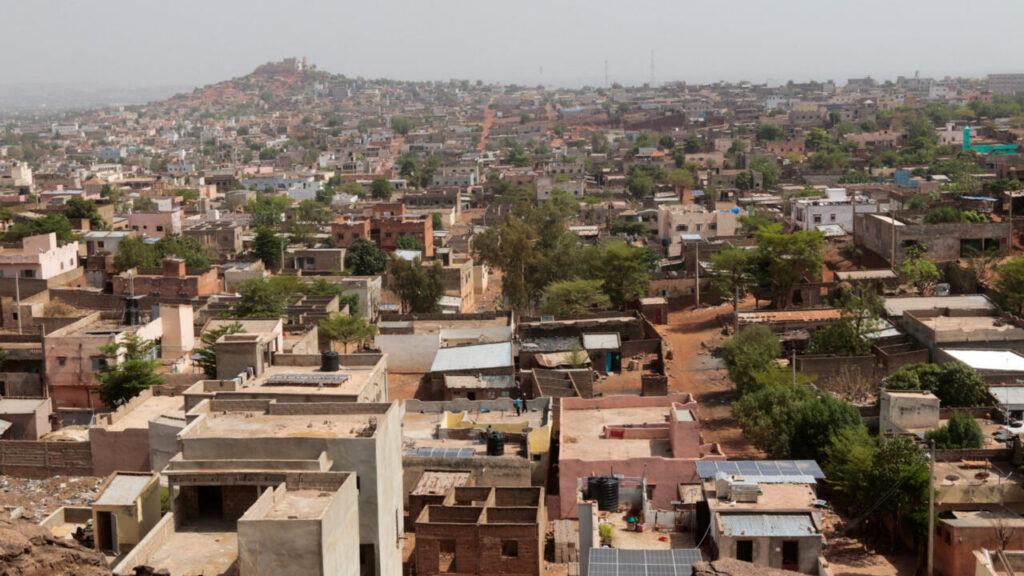
Global headlines often highlight Mali for its ongoing security challenges, yet one critical aspect remains overlooked: the country’s rapidly diminishing media landscape. As violence from jihadist groups and separatist factions continues to dominate news cycles, a parallel crisis unfolds—one where independent journalism is systematically silenced.
the Sahel’s information blackout
When jihadist and Tuareg separatist forces launched coordinated attacks across Mali on April 25, 2026, the country’s already fragile media ecosystem faced another blow. Most francophone outlets—including international broadcasters—were suspended under accusations of “disinformation.” This crackdown mirrors similar measures taken in neighboring Niger and Burkina Faso, where juntas have systematically restricted independent reporting. The result? A deliberate erosion of press freedom across the Sahel, transforming the region into what human rights observers now describe as “an information gulag.”
Ousmane Diallo, a researcher at Amnesty International’s West and Central Africa office, warns of a “zombification” of Sahelian citizens. “We are acutely aware of being watched,” he explains. “Across Burkina Faso, Mali, and Niger, journalists face threats, intimidation, and worse. The message is clear: dissent will not be tolerated.”
Moscow’s shadow over Bamako
In Bamako, the government’s alliance with Moscow has become sacrosanct. Any criticism of this partnership is swiftly crushed. Take the case of Ibrahima Tamega, a pro-democracy activist arrested on May 23 for allegedly spray-painting anti-Russian graffiti. Held for days in Bamako’s third district police station, his detention sends a chilling signal: opposition to the Kremlin-friendly narrative will not be permitted.
The message is unmistakable. Since severing ties with Paris, Mali’s military junta has positioned Russia as its “sovereign partner,” one that “respects Bamako without lecturing.” There is no room for alternative perspectives. The police response to Tamega’s graffiti—an act of defiance in an already restricted space—exemplifies how dissent is being systematically stifled, with protesters now facing severe penalties for even minor acts of resistance.
power concentrated in one man’s hands
Meanwhile, the concentration of authority under transitional leader Assimi Goïta has reached alarming levels. The general, who simultaneously serves as head of state and defense minister, has centralized decision-making around personal loyalty rather than institutional efficiency. This approach weakens Mali’s military structure, prioritizing the protection of Goïta’s regime over operational effectiveness.
According to political analysts Salah Ben Hammou (Rice University) and Hiba Naciri (University of Montreal), this “personalization of power” threatens long-term stability. “As power consolidates around a single figure, they argue, “military reforms are driven less by strategic needs and more by the imperative to safeguard the leader from internal rivals.” The consequences are stark: coordination falters, operational responses grow sluggish, and insurgent violence continues unchecked.
The situation in Mali today is a paradox. While the world focuses on the country’s security crisis, an equally dangerous erosion is taking place—one that threatens democracy, press freedom, and Mali’s future stability.