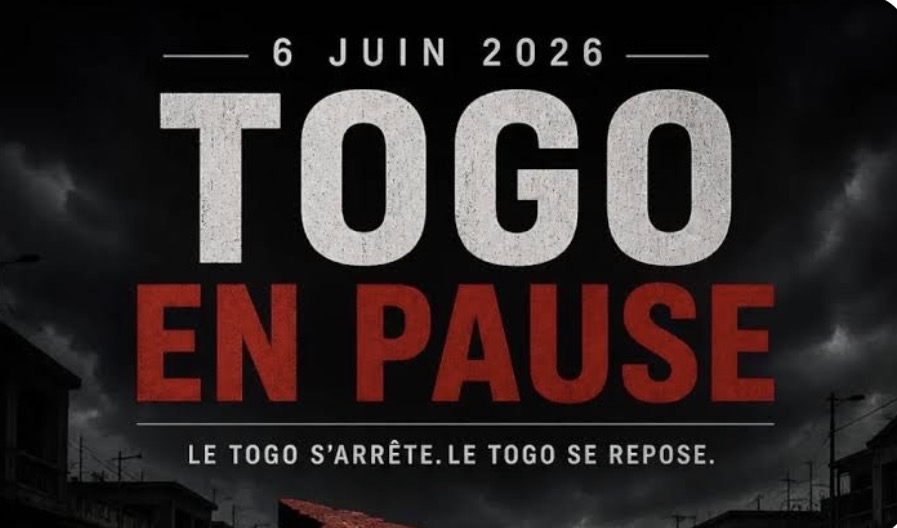
June 6, 2026, marks more than a protest—it’s a deliberate break. For nearly six decades, Togo has operated under a rigid system where power is not held by one person or family, but by a deeply entrenched network of military, political, and ethnic loyalties. The Togo en Pause movement, led by the M66 coalition and supported by the entire Togolese resistance, introduces a bold strategy: stepping away from the game rather than playing the role of extras.
Elections, institutions, and official rhetoric no longer fool anyone. Power circulates, reshuffles, yet never relinquishes control. The suppression of dissent, the silencing of critics, and the curtailment of freedoms are not anomalies—they are the system’s very foundation, designed to perpetuate itself.
a generation defies the status quo
The youth of Togo have inherited a country where genuine alternatives are rare. They’ve heard the regime’s promises but rarely the voices of their own people. They’ve witnessed marches dispersed by force, leaders targeted, and media outlets muzzled. They’ve endured territorial inequalities, social fractures, and systemic discrimination—yet they refuse to surrender.
With Togo en Pause, they embrace a peaceful yet unyielding resistance: no longer filling the streets, but creating a void. A void that forces the regime to confront its own reality.
Staying home, halting daily routines, and refusing to sustain the system isn’t withdrawal—it’s a direct challenge. It’s a silent declaration: “If you won’t listen, feel our absence.” On June 6, every closed door, every empty stall, and every silent street becomes a political statement.
a system built on exclusion
For decades, power has been concentrated in the hands of a militarized ethnic and civilian elite. The military, security forces, public administration, and state-owned enterprises are all staffed by those bound by loyalty rather than merit. Equity is not the goal—preservation of power is.
Both citizens and the diaspora recognize this reality. Behind the facade of modernization and international partnerships, the structures remain unchanged. Poverty persists, inequalities deepen, and opportunities remain scarce.
Togo en Pause represents a collective act of clarity: refusing to normalize the intolerable.
a mobilization that unites
The strength of this call lies in its universality. It invites everyone—workers, traders, students, civil servants, artisans, farmers, and the diaspora—to participate by pausing their contributions to the system. Each person, in their own way, can take part.
June 6 isn’t just another day. It’s an assertion of dignity. Participating means rejecting empty political rituals, broken promises, and cycles of stagnation. It’s saying: “We are not extras in your script.”
a collective act of defiance
Choosing to stay home, not to work, and not to move about is a bold decision. It risks financial loss, retaliation, and uncertainty—challenges that test years of conditioned resignation. The question is simple: continue tolerating the system, or embrace the uncertainty of change?
The message isn’t tied to a slogan or a single organization. It’s rooted in a long history of unspoken frustrations and generations of suppressed voices. It’s a demand that transcends time.
On June 6, Togo en Pause isn’t the beginning or the end—it’s a moment of truth.
It’s when the Togolese people declare they will no longer perpetuate a system that has defined their nation for over six decades.
On June 6, Togo pauses.
To rise stronger.