Executive summary
Following a series of military coups in Burkina Faso, Mali, and Niger, the state of press freedom across these three Sahel nations has experienced a significant decline. Independent journalism in the region faces dual threats: from authoritarian regimes and from the pervasive insecurity caused by terrorist groups. Under the guise of counter-terrorism efforts and safeguarding national sovereignty, military authorities have engaged in arbitrary arrests of journalists, imposed blockades or suspensions on media outlets, and even enforced military conscription on critics and dissidents. Journalists who report critically on the region’s security landscape, including human rights violations and the regimes’ inability to control the situation, are particularly targeted. This climate has fostered widespread self-censorship within the media, creating a void of independent information on security and human rights developments with profound regional and global implications. This void is increasingly filled by state-controlled narratives.
Introduction and key findings
In the years following a succession of military takeovers across Africa’s Sahel, the limited democratic progress previously achieved in the region has been severely reversed, leading to serious consequences for both regional and global stability. Violent extremist organizations have exploited the political instability and weakened governance that emerged after coups in Mali, Burkina Faso, and Niger to establish new strongholds.
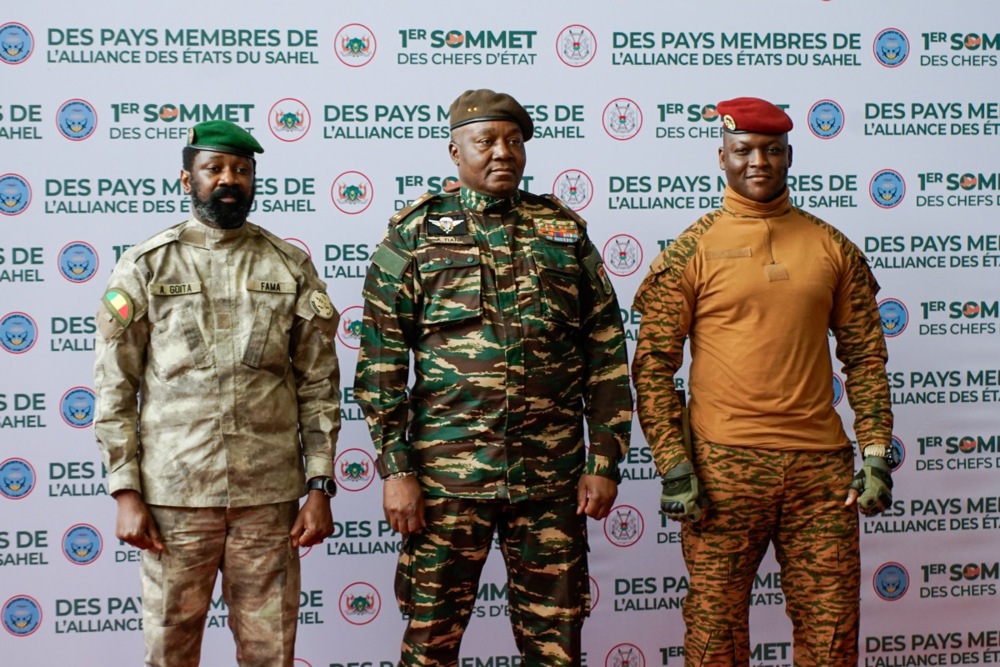
Significant geopolitical shifts and realignments have further exacerbated regional insecurity. The newly installed military leaders in the Sahel have moved to terminate defense agreements with U.S. and European partners, and withdrawn from regional cooperation forums such as ECOWAS and the G5 Sahel. Instead, they have formed a new regional bloc, the Alliance of Sahel States (AES).
Amidst a diminishing international presence, the Wagner Group, a Russian paramilitary organization, has solidified its position, advancing the Kremlin’s strategic interests throughout the region. The Sahel’s military rulers frequently cite national sovereignty and the fight against terrorism as justifications for increasingly authoritarian governance, with devastating effects on media freedom. Journalists who offer critical perspectives on the region’s security situation, including alleged human rights abuses and the military regimes’ failure to restore stability, have encountered a broad spectrum of repressive actions from both state and non-state actors.
Monitoring reports indicate that state actors are primarily responsible for violations of press freedom, often misusing cybercrime and national security legislation to detain, harass, and imprison journalists covering politically sensitive subjects. Instances of terrorist groups kidnapping journalists, and in some cases, committing murder, have also been documented.
Foreign journalists have also faced heightened risks, as rising anti-Western sentiment and growing alliances with Russia and China have fueled a backlash against international reporting. Journalists associated with Western outlets who have critically reported on the region’s military regimes have been subjected to sudden deportations, and entire media organizations have faced suspensions by state media regulatory bodies. Local media outlets and press associations have also experienced crackdowns, with numerous local news organizations ceasing operations.
As the landscape for independent reporting has shrunk across the Sahel nations, many journalists interviewed for this report have resorted to self-censorship to avoid repercussions. Some have chosen to live and work in exile for their personal safety. Others are silenced, steering clear of sensitive topics—such as regime claims about regional security and counter-terrorism efforts—to evade detention and harassment. As one Malian journalist remarked, “We live in a police state where people are very wary of strangers and of expressing our opinions openly.”
This pervasive atmosphere of fear has created a chilling effect, resulting in a dangerous information gap in the Sahel, with both regional and global consequences. As the flow of critical news dwindles, an information blackout emerges, allowing regime actors and violent extremist groups to carry out repression with minimal accountability. The crackdown also complicates efforts to assess the region’s security situation, as military regimes repeatedly target journalists who report on terrorist attacks or question official statements regarding security developments.
Civilians are left increasingly isolated and vulnerable, with limited access to vital information, while local and international watchdogs struggle to document human rights abuses and hold perpetrators accountable. External actors, notably Russia and China, have already capitalized on this information vacuum, alongside increasing anti-Western sentiment, to advance their regional interests through disinformation and propaganda.
This report aims to heighten international awareness regarding the increasingly dire conditions for independent journalism in the Sahel. Without urgent intervention to address the state of press freedom in the region, the erosion of independent reporting risks plunging the area into deeper insecurity, authoritarianism, and unchecked repression, leaving millions without access to independent, quality news and information.
The data presented in this report stems from monitoring of attacks and threats to press freedom across the Sub-Saharan region, specifically within the Alliance of Sahel States—Burkina Faso, Mali, and Niger. Direct interviews were also conducted with individual journalists throughout the region, as well as sources within local and regional press groups, who recounted the personal risks and dangers encountered while conducting critical journalism. To protect these journalists from further threats, their identities remain anonymous in this report.
Arrests and jailings: abuse of cybercrime laws
Military regimes in the Sahel have weaponized legal frameworks to arrest, harass, and imprison journalists covering politically sensitive subjects. Cybercrime laws, in particular, have become a powerful tool to suppress undesirable reporting, reflecting a global pattern. Previous investigations have shown that governments worldwide are misusing overly broad cybercrime legislation—often enacted under the pretext of national security or combating harmful speech like disinformation and hate speech—to target and silence the press.
Among the Sahel countries, Niger has recently become the primary jailer of journalists. Authorities in Niger frequently invoke the nation’s cybersecurity law to harass and imprison journalists, particularly those reporting on security-related matters. Prior to the coup, the government of President Mohamed Bazoum had amended the cybercrime law to eliminate prison sentences for offenses such as defamation. However, under the military regime, these fragile advancements were reversed and replaced with more severe penalties.
Examples include:
- In January 2026, DW journalist Gazali Abdou was arrested and charged with “dissemination of reports that could disturb public order” under Niger’s cybercrime law. His arrest followed his reporting on the deplorable living conditions of Nigerian refugees in the capital, Niamey.
- Journalists Ibro Chaibou, Youssouf Seriba, and Oumarou Abou Kané have been incarcerated since last November on accusations of “attempting to disturb the public order” under Niger’s cybercrime law.
- In May, Hamid Mahmoud, Massaouda Jaharou, and Mahaman Sani – journalists with Sahara FM in Agadez – were arrested and detained for broadcasting an article on the termination of cooperation between the Russian paramilitary group Wagner and the Nigerien authorities. Massaouda Jaharou was released, but the other two were charged with “undermining national defense” and “conspiracy against state authority”.
This trend has spread throughout the region. Mali’s cybercrime law has frequently been misused to target journalists and critics on charges of undermining state credibility, defamation, and false news. Those targeted can face up to 10 years in prison.
Mali’s cybercrime enforcement unit targeted journalists Alfousseni Togo, Issiaka Tamboura, Youssou Traoré, and Kassim Traoré over online publications that criticized Mali’s judicial system, including questioning a minister’s claim about public trust in the judiciary. Togo was arrested on charges of defamation, insult, and undermining the state’s reputation and sentenced to a fine and an eight-month suspended prison sentence. In July 2025, Tamboura, Traoré, and Kassim were charged with online defamation by the authorities’ cybercrime unit following a complaint by a local magistrate, who objected to their social media coverage of an altercation between the magistrate and a prosecutor. While Youssouf Traoré and Tamboura were acquitted, Kassim Traoré received a six-month suspended sentence and a fine.
In another instance, journalist Boubacar Traoré of the newspaper L’Empire was detained on defamation charges under Mali’s cybercrime law after reporting on a land dispute involving the owner of the Petro-Bama company.
Journalists in Burkina Faso have also faced legal repercussions. In 2025, several journalists were detained and interrogated by security forces in connection with a leaked interview with military leader Ibrahim Traore, which commemorated the third anniversary of the military coup.
Media blackout: blocking and suspension of foreign and local media outlets
Following military takeovers, authorities in the three countries have drastically reduced the independence of media regulatory bodies. These bodies have, in turn, been utilized to suppress critical media coverage, particularly concerning security issues and human rights violations.
In Burkina Faso, authorities modified the law to enable the head of state to directly appoint the president of the Higher Council for Communication (CSC), thereby eliminating the previous system where the CSC president was elected by their peers. This change ended a period of relative independence for the CSC. In January 2026, authorities merged the CSC with the Data Protection Authority (FIL), paving the way for tighter control over the new combined institution.
Last September, military authorities in Niger established a new, state-controlled media regulatory body, the Observatoire Nationale de la Communication (ONC), replacing the previously independent Conseil Supérieur de la Communication (CSC).
In Mali, in February 2025, authorities adopted two decrees that sharply increased media license fees by 900%. This move was widely perceived as an attempt to compel local media to align with state-controlled narratives.
Concurrently, regulatory authorities in the three nations have suspended both local and foreign media, especially French and other Western outlets. In most cases, the media were targeted for critical reporting on the military regimes, security challenges, and alleged human rights violations.
Mali:
- Radio France Internationale (RFI) and France 24 were suspended in 2022 for reporting on alleged killings of civilians by the armed forces.
- LCI (La Chaîne Info) has faced multiple suspensions, including a two-month ban in 2024 after authorities accused it of broadcasting “false accusations” regarding alleged atrocities committed by Malian armed forces and Russian partners. Both LCI and TF1 were blocked over their coverage of a fuel blockade imposed by an al-Qaeda-linked armed group in 2025. Both channels remain inaccessible.
- France 2 was banned for four months in 2024 due to its reporting on the security situation, with authorities accusing it of “glorifying terrorism” by comparing the strength of armed terrorist groups to Mali’s armed forces.
- TV5Monde has also endured multiple sanctions. In September 2024, the channel was suspended for three months following a report on civilian deaths from drone strikes in northeast Mali. In May 2025, authorities suspended the outlet indefinitely for “flagrant manipulation” of public opinion after its coverage of a political party demonstration.
- In January 2026, authorities banned the sale and distribution of Jeune Afrique, following the pan-African magazine’s coverage of jihadist activity and the recent fuel crisis.
- Authorities in Mali also suspended local outlet Joliba TV for six months in 2024, prompted by a complaint filed on November 12 by Burkina Faso’s media regulatory body. Burkina Faso authorities objected to comments made by Issa Kaou N’Djim, a Malian political figure who had previously supported Mali’s leader, Colonel Assimi Goïta, before distancing himself. N’Djim had questioned “the umpteenth attempt to destabilize Burkina Faso,” claiming it was “nothing more than a fabrication”.
Burkina Faso:
Access to several foreign broadcasters (radio and television) was blocked due to their critical coverage:
- Similar to Mali, multiple French media outlets have been suspended. Radio France Internationale (RFI) has been suspended since December 2022 for its coverage of terrorist activity in the country. France 24 was suspended in March 2023 for reporting on an interview with the head of a local al-Qaeda affiliate. Authorities accused RFI of acting as a “mouthpiece” for terror groups, an accusation the outlet rejected. LCI (La Chaîne Info) was suspended in July 2023 for broadcasting “false information” in its reporting on the country’s volatile security situation. All three media outlets remain inaccessible in Burkina Faso.
- Authorities blocked access to Jeune Afrique in 2023, accusing the publication of attempting to discredit the armed forces after reporting on internal military tensions.
- Multiple international news outlets were indefinitely blocked in April 2024 after covering a Human Rights Watch report that alleged mass civilian killings by the country’s armed forces. The blocked outlets included BBC, Voice of America, Deutsche Welle, The Guardian, and Le Monde. Many of these outlets remain inaccessible.
- Local radio broadcaster Omega FM was suspended twice: in August 2023 for hosting a critic of the military coup in Niger, and again in August 2025 after a Facebook publication, deemed by the regulatory body to contain “malicious and discourteous remarks directed at the Burkinabe authorities,” following the death of a pro-military regime supporter in Côte d’Ivoire.
Niger:
- Authorities blocked Radio France Internationale and France 24 following the 2023 military coup.
- The BBC was suspended for three months in December 2024 for “spreading fake news” after the outlet reported on attacks by jihadist groups that reportedly killed soldiers and civilians.
Beyond media bans, authorities have also expelled individual foreign journalists. Burkina Faso expelled French journalists Sophie Douce and Agnès Faivre from Le Monde and Libération, respectively. Libération linked the expulsion to its investigation into a video depicting the killing of children at a military barracks. In Mali, Benjamin Roger, a French reporter for Jeune Afrique, was expelled in February 2022, less than 24 hours after arriving in Bamako. Authorities cited a lack of proper accreditation, despite his holding a valid visa.
Cross-border repression
Notably, the Sahel region has also witnessed a cross-border crackdown, with journalists targeted for their reporting or commentary on friendly neighboring military regimes. This has included charging journalists with “insulting” foreign heads of state. Examples include:
- In March 2026, Malian journalist Youssouf Sissoko, editor of the newspaper L’Alternance, was sentenced to two years in prison and a fine for criticizing Niger’s military leader, General Abdourahamane Tiani.
- In May 2025, Malian journalist Seydou Oumar Traore was sentenced to one year in prison after criticizing Guinean military leader Mamadou Doumboya.
- In November 2024, Joliba TV in Mali was suspended following a complaint by Burkina Faso authorities.
Journalist safety under threat: kidnappings and forced conscription
The security threat for journalists operating in the Sahel region from non-state actors—primarily jihadist groups—continued to worsen after the military coups.
The kidnapping of journalists remains a significant concern, especially in Mali, though this threat is not new. In 2013, French journalists Ghislain Dupont and Claude Verlon of RFI were abducted and killed in northern Mali. The full circumstances surrounding their deaths are still unclear, and calls have been made for French authorities to declassify remaining documents to advance justice for Dupont and Verlon.
In November 2023, the Islamic State in the Sahel group abducted two journalists from Radio Coton d’Ansongo, Saleck Ag Jiddou and Moustaph Koné, while a third journalist, Abdoul Aziz Djibrilla, was killed in the attack. The two abducted journalists are still believed to be in captivity. In October 2025, a terrorist group, thought to be the al-Qaeda-linked jihadist group JNIM, kidnapped two journalists, Daouda Koné and Salif Sangaré, from the Malian state broadcaster ORTM, in northern Mali. They were freed at the end of December. In another case, journalist El Bachir Thiam was kidnapped in May and later released in September. State security forces are suspected of having been responsible for his enforced disappearance.
In Burkina Faso, journalists have also been subjected to enforced military conscription. In 2023, the military regime issued a decree, in response to escalating attacks by terrorist groups, allowing the state to forcibly conscript civilians. Authorities have used this decree to target journalists and critics of the military government.
At least seven journalists have been forcibly conscripted and sent to fight terrorist groups after reporting critically on the military authorities’ handling of security challenges. In July 2025, several journalists, including the president of the Burkina Faso Journalists Association, returned home after having been forcibly conscripted. The fate of two journalists believed to have been conscripted—Serge Oulon and Moussa Serab—remains unknown, highlighting the inherent risks.
Pressure on civil society: shuttering of press associations
Military authorities in all three countries have intensified pressure on civil society groups dedicated to defending press freedom and freedom of expression.
In Niger, authorities suspended Maison de la Presse, a local press association representing over 30 media organizations, from conducting any activities.
In Burkina Faso, authorities dissolved the Burkina Faso Journalists Association in March 2025, citing its failure to comply with the 2015 law governing associations. Earlier this year, Burkina Faso also dissolved all political parties.
In Mali, the Maison de la Presse (Press House) faced extensive government pressure after criticizing a directive from the media regulatory body that prohibited media outlets from reporting on political party activities. While Maison de la Presse remains operational, its capacity to function as a press freedom watchdog has been severely diminished.
Call to action
Given the deteriorating conditions for journalism in the Sahel nations, urgent international pressure is essential to ensure that authorities in Niger, Mali, and Burkina Faso commit to respecting media freedom and upholding their obligations to protect journalist safety.
These crucial steps must include:
- Ending all forms of harassment—including arrests and jailings—of journalists in response to their reporting.
- Reforming existing legislation, particularly cybercrime laws, to implement robust safeguards against abuse.
- Allowing both local and international media to freely report on developments of public and international concern without fear of retaliation.
- Rescinding bans on local and foreign media outlets and individual journalists.
- Restoring the independence of media regulatory bodies.
- Investigating all attacks on journalists and holding those responsible accountable.
- Allowing civil society organizations, including those dedicated to protecting the press, to operate without hindrance.