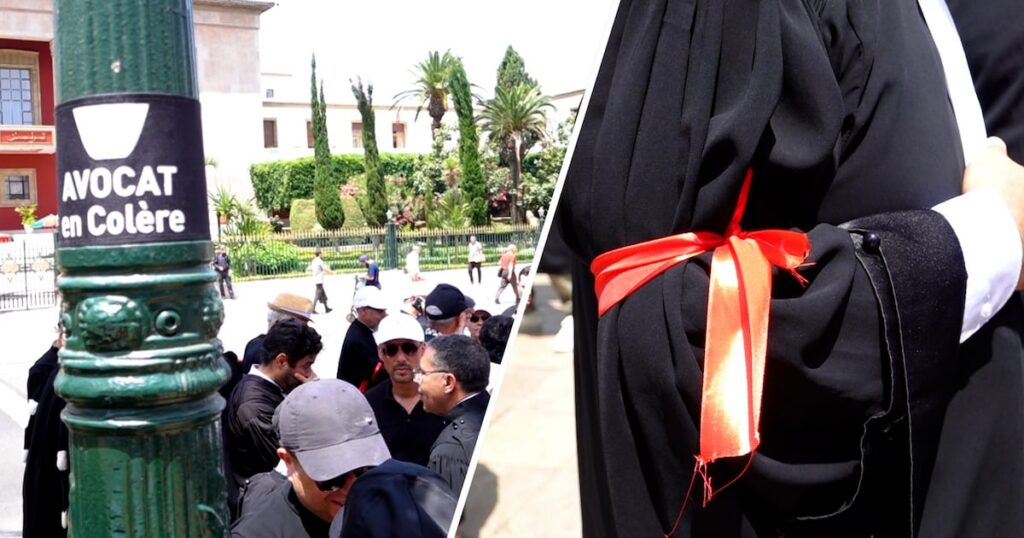
With red armbands wrapped tightly around their sleeves, lawyers have maintained their indefinite strike over the past several days, gathering once again on Monday, July 6, in front of the Parliament building in Rabat. Their resolve remains unshaken as they voice growing concerns over what they describe as a democratic setback, continuing to demand the complete withdrawal of the proposed law regulating their profession.
The sea of black robes visible at the protest underscored the gravity of their concerns. Lawyers argue that the draft legislation threatens their independence from the Public Prosecutor’s Office and the Ministry of Justice, particularly through provisions governing disciplinary measures. They also oppose the transfer of authority over lawyer training to the Ministry of Justice and criticize new conditions for entering the profession, including a reduction in the minimum age requirement for qualification exams.
A week earlier, during a previous gathering outside Parliament, leaders of the profession had struck a defiant tone, declaring that the fight has only just begun and warning that their actions would escalate unless the bill is scrapped.
Aziz Rouibah, President of the Rabat Bar Association, emphasized the profession’s unwavering stance in an interview, stating, “Our very existence is under threat.” He accused unnamed actors of attempting “a symbolic execution of our profession.” Rouibah added, “It is our moral duty to confront this relentless legislative assault against the legal profession.”
Me Mounir Belghiti, a member of the Rabat Bar Council, framed the ongoing protest as “a final appeal” to lawmakers, whose decisions will determine its duration. He stressed that any future legislation must reflect “the nation’s priorities and collective future,” rather than being driven by “personal grievances.”
Belghiti framed the standoff as a crisis of trust, warning that “if we allow laws to be shaped by exceptions rather than consensus, the very foundations of democracy will crumble.”
The legislative debate is expected to resume this week in the Chamber of Advisors. If amendments are introduced, the bill will be sent back to the Justice Commission of the Chamber of Representatives for further review.
In the meantime, Morocco’s courts remain severely disrupted by the strike. The prolonged action has left many litigants in limbo, particularly those held in pre-trial detention, whose cases have been delayed for nearly a month.
The Moroccan Bar Association (ABAM), also known as the National Association of Moroccan Bar Associations, serves as the umbrella organization for all legal orders across the Kingdom.