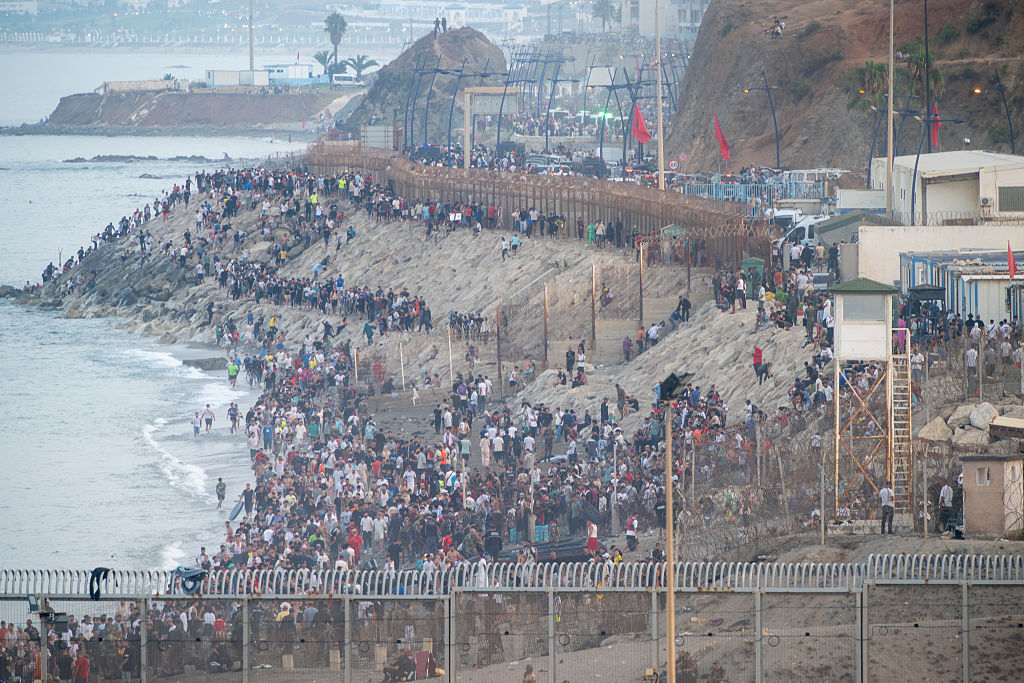
Morocco refuses to drop Ceuta claims amid Spain tensions
Former Spanish ambassador warns Madrid of Rabat’s strategic maneuvering
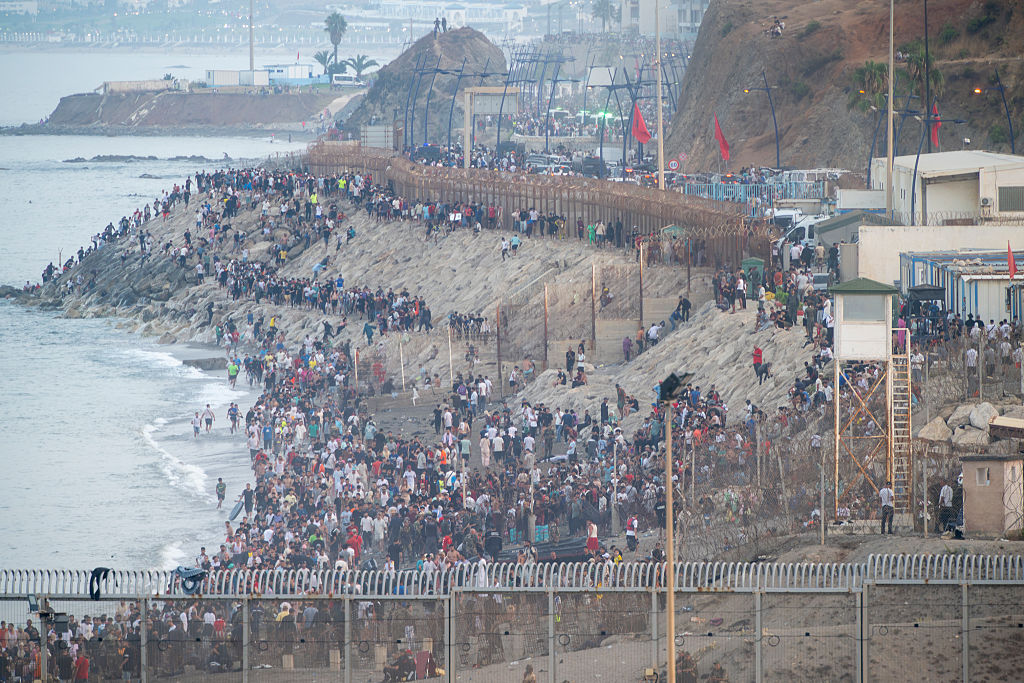
A former Spanish ambassador to Morocco has highlighted the North African kingdom’s persistent territorial claims over Spain’s North African enclaves as a key factor behind the recent migrant surge in Ceuta. The unprecedented arrival of at least 72,000 migrants in late July sent shockwaves through Spain and the European Union while reigniting a long-standing territorial dispute.
Jorge Dezcallar, who also served as director of Spain’s intelligence services (CNI), emphasized in his assessment that Rabat has never abandoned its claims to Ceuta and Melilla. These unresolved tensions, he argued, provided the backdrop for the massive influx that overwhelmed Ceuta’s resources.
Dezcallar noted that Morocco appears to be “testing the waters” at a time when it perceives Spain’s government as “weak”. Spain’s left-wing administration under Prime Minister Pedro Sánchez has faced mounting corruption scandals involving high-ranking officials and close associates. Additionally, its progressive immigration policies and vocal criticism of the United States have frequently put it at odds with European partners.
“Spain-Morocco relations are more emotional than rational, marked by sharp fluctuations,” Dezcallar observed. Yet the two nations maintain deep economic ties and critical cooperation on migration control, counterterrorism, and regional security.
Persistent territorial ambitions
Moroccan ministers and state-aligned media have increasingly emphasized sovereignty over Ceuta and Melilla—territories that have been under Spanish control for centuries, long before modern Morocco existed as a nation.
“This issue remains alive,” declared Justice Minister Abdellatif Ouahbi in televised remarks this week. “Every time we meet Spanish officials, we raise this question.” He stressed that Morocco remains “firmly anchored” to its territories, adding: “This is a matter we will resolve through dialogue and patience.”
Spanish Defense Minister Margarita Robles swiftly countered: “Let me be crystal clear—Ceuta and Melilla are Spanish, and they are not up for discussion.” Her statement came during a visit to Ceuta, a rare occurrence in democratic Spain’s history, which some observers interpreted as an attempt to avoid further provocation.
The Spanish monarch, King Felipe VI, has never visited either enclave, while a Spanish foreign minister made the first such trip in modern democratic history just this week—widely seen as a conciliatory gesture toward Morocco.
Madrid and Rabat have both attributed the recent crisis to human trafficking networks exploiting a July Supreme Court ruling that temporarily barred immediate sea deportations of migrants arriving in Ceuta and Melilla. However, Dezcallar suggested that “there was at minimum some level of permissiveness or negligence on the part of Moroccan authorities.”
New threats loom on the horizon
Dezcallar warned that Spain lacks adequate tools to prevent future surges, noting this is not the first such incident. A major diplomatic rupture occurred in 2021 when Spain allowed the hospitalization of Sahrawi leader Brahim Ghali. Rabat responded by facilitating the arrival of nearly 10,000 migrants in Ceuta—a move Defense Minister Robles described as “blackmail.”
“One mistake can be forgiven, but not two,” Dezcallar remarked, recalling warnings from Ceuta authorities about a gradual increase in irregular arrivals the week prior. Intelligence sources recently alerted of a potential new surge targeting Ceuta on August 15, as calls to storm the city proliferated across social media. Police and Civil Guard unions have also confirmed the threat.
Concluding with a stark warning, Dezcallar stated: “Anyone who believes Morocco will abandon its claims to Ceuta and Melilla is mistaken.”



More Stories
Can Niger still call itself a state of law after jailing lawyer Abdourahamane Lirwana?
Can Benin replicate its 2023 financing success with 328 billion FCFA in 2026?
Burkina Faso: can the official narrative on four years of Ibrahim Traoré’s rule withstand scrutiny?