Tshisekedi puts faith in Gnassingbé’s mediation to revive stalled eastern DRC peace process
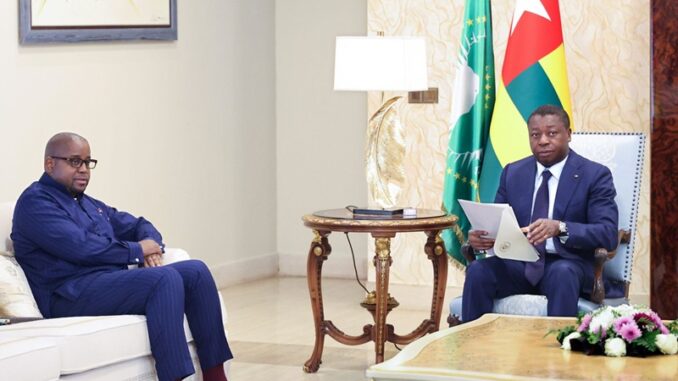
The ongoing security crisis in eastern Democratic Republic of Congo (DRC) has reached a critical juncture, prompting President Félix Tshisekedi to place renewed confidence in Togo’s mediation efforts. A high-level delegation from Kinshasa delivered an official letter to Togolese President Faure Gnassingbé in Lomé on September 29, reaffirming Congo’s commitment to the peace process in its troubled eastern provinces.
What message did Congo’s envoy carry to Togo’s president?
Floribert Anzuluni, Congo’s Regional Integration Minister, presented Gnassingbé with a direct communication from President Tshisekedi, emphasizing the urgency of addressing the deteriorating security situation in eastern DRC. The letter underscored Congo’s appreciation for Gnassingbé’s ongoing role as the African Union’s mediator in the Great Lakes region, a position he has held since April 2025 following Angola’s withdrawal from the initiative.
During the meeting, Anzuluni briefed Gnassingbé on recent steps taken by Congolese authorities to disarm rebel factions and consolidate peace. These efforts aim to curb recurring violence that has intensified since late 2021, despite previous mediation attempts, including those led by Qatar and the United States.
Why is this moment pivotal for eastern DRC’s stability?
The eastern DRC remains one of Africa’s most volatile regions, plagued by armed group activity, cross-border tensions, and humanitarian crises. While international mediation efforts have yielded limited progress, Gnassingbé’s leadership offers a fresh diplomatic approach. His mandate focuses on securing a lasting ceasefire and fostering long-term stability in the Great Lakes region—a goal that has proven elusive despite multiple negotiation rounds.
Congo’s latest overture signals a strategic shift, moving beyond stalled initiatives to leverage Togo’s neutral standing and Gnassingbé’s regional influence. The question now is whether this renewed diplomatic push can translate into tangible security gains for eastern DRC’s beleaguered communities.
Key challenges facing the mediation effort
- Armed group fragmentation: Multiple rebel factions operate in eastern DRC, complicating disarmament and demobilization efforts.
- Cross-border dynamics: Regional actors, including neighboring countries, play a pivotal role in fueling or mitigating the conflict.
- International fatigue: Previous mediation attempts by Qatar and the U.S. failed to produce lasting peace, raising doubts about the feasibility of new initiatives.
What’s next for Congo’s peace strategy?
With Gnassingbé at the helm, the AU-backed mediation now faces heightened expectations. Success hinges on several factors:
- Sustained political will from all involved parties, including Congo’s government and rebel leaders.
- Effective coordination between regional and international stakeholders to align strategies and resources.
- Transparent verification mechanisms to ensure compliance with ceasefire agreements.
The coming months will reveal whether Togo’s mediation can break the cycle of violence that has gripped eastern DRC for years. For millions of civilians caught in the crossfire, the stakes could not be higher.
More Stories
Can Kribi port be Cameroon’s gateway to industrial transformation after 15 years?
Abidjan’s bold stand: can the US bypass sovereignty to dump expelled migrants?
Can debt serve education? The question Côte d’Ivoire answered in New York