DCIM\100MEDIA\DJI_0211.JPG
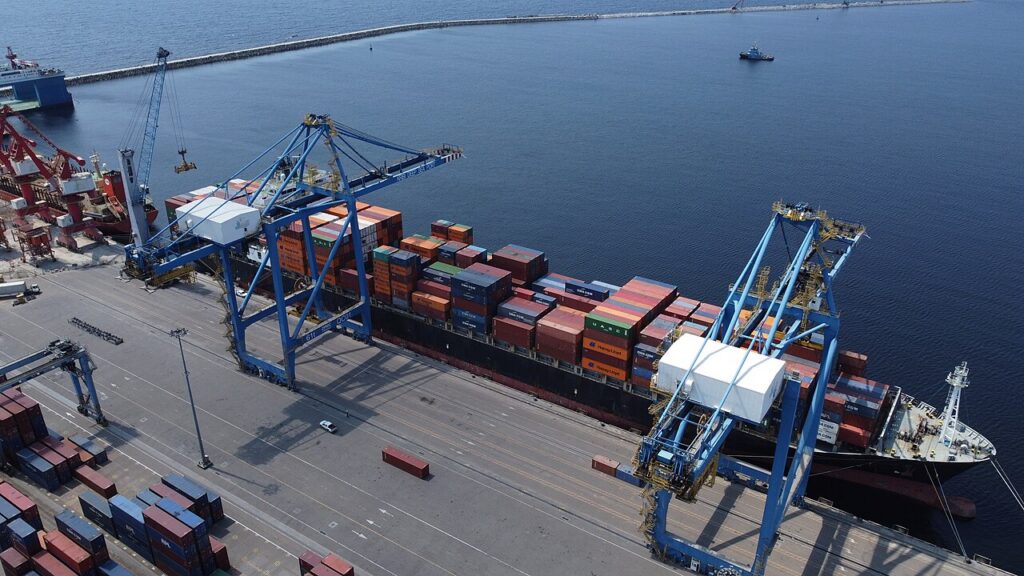
Fifteen years ago, Mboro — a small fishing village on Cameroon’s southern coast — was a forgotten settlement of winding dirt paths and rudimentary houses. Today, this coastal strip hosts one of Central Africa’s most advanced deep-water ports, igniting an economic and industrial boom that is reshaping lives across the region.
The idea of a deep-water port in Cameroon dates back to the 1970s, when planners recognized the limitations of Douala’s shallow-water port. Despite decades of discussions, it wasn’t until Chinese-backed construction began that the dream of Kribi Port started to take shape — first through its initial two phases of development.
From a sleepy village to a rising economic hub
When Gu Gaobai arrived in 2011 as part of the China Harbour Engineering Company (CHEC) team, the site was barely recognizable. “We drove along narrow dirt roads, guided only by a few reefs and a stretch of sand,” he recalls. “There were no landmarks — just open ocean and the promise of something much bigger.” Today, he serves as CHEC’s country project director in Cameroon and has witnessed the transformation firsthand.
Where once there were no proper streets, today’s asphalt roads feature pedestrian walkways and modern lighting. New neighborhoods have emerged, complete with commercial centers, hospitals, and university campuses. For locals like Jean-Kalvin Assembe, a 50-year-old resident, the changes are life-changing. “I feel fulfilled living in this city now,” he says. “Even small street vendors have steady customers, bringing real economic relief to households.”
Long gone are the days of darkness along the routes. Streetlights now illuminate the area, and the port glows around the clock. Truck drivers, too, benefit from the new infrastructure. Yaya Aboubakar, 68, a seasoned haulier who has driven across Central Africa, shares, “Kribi has made our work easier and faster. Many clients compare this port to Shenzhen — a city of the future.”
How a logistics powerhouse is redefining Central Africa
As the port expanded, so did its industrial zone. Patrick Mpila Ayissi, head of infrastructure for the Kribi Port Industrial Zone, reports that investments have surged since operations began in 2018. “Over $700 million in industrial investment has poured in, with 93 land-use permits issued and 18 companies already operational,” he notes. The zone’s original 455 hectares has grown into a 4,000-hectare integrated industrial hub.
The vision is bold: attract $900 million in new investment and create 50,000 direct jobs, with up to 150,000 direct and indirect jobs over the next 15 years. Port traffic reflects this momentum. Container volumes have quadrupled since 2018, reaching over 555,000 TEUs in 2025. Total cargo volume exceeded 12.7 million tons in 2024, supporting trade flows to Gabon, the Central African Republic, Chad, Congo, and Equatorial Guinea.
Regional connectivity has been reinforced by global shipping giants such as MSC, positioning Kribi as a strategic gateway for landlocked neighbors. Economic activity is no longer confined to Cameroon — the port is fueling a broader integration across Central Africa.
A bridge linking Cameroon to regional opportunity
To strengthen inland connections, CHEC built the Kribi-Lolabé highway. “This road links the deep-water port to major cities nationwide, facilitating the movement of people and goods,” explains Emmanuel Nganou Djoumessi, Cameroon’s Minister of Public Works. “It’s a vital artery for industrialization and national development.”
The port’s ripple effects extend beyond infrastructure. Armand Guehoada, a CHEC commercial affairs manager, recalls arriving with almost nothing. “I once earned a modest salary in a previous job. Now, I’ve purchased three vehicles and can comfortably support my family.” Through training and hands-on work, many local employees have moved from basic roles to skilled technical positions. Ngatugirius Ndenya, a welder who joined in 2013, now manages entire welding projects, thanks to mentorship from Chinese experts. “I wasn’t a technician before, but today I can handle anything in welding,” he says proudly.
With 15 years of operation, Kribi Port stands as a living symbol of Cameroon-China cooperation. “This project was built on concessional financing from Chinese institutions, proving our partnership is built for the long term,” says Patrick Mpila Ayissi. Patrice Melom, CEO of the Kribi Port Authority, agrees: “The future is bright. We must now harness this momentum to drive sustainable growth and regional prosperity.”
Can Kribi Port deliver long-term prosperity?
The port’s first decade and a half have delivered tangible results: infrastructure, jobs, skills, and trade. Yet the challenge ahead is maintaining momentum. Can Cameroon leverage this strategic asset to anchor a new era of industrial development and regional integration? As the port celebrates 15 years of operation in 2025, one thing is clear — the question is no longer whether it can change Cameroon, but how far it will go.


More Stories
Abidjan’s bold stand: can the US bypass sovereignty to dump expelled migrants?
Can debt serve education? The question Côte d’Ivoire answered in New York
Cameroon’s glasses affair: can press freedom survive such a costly verdict?