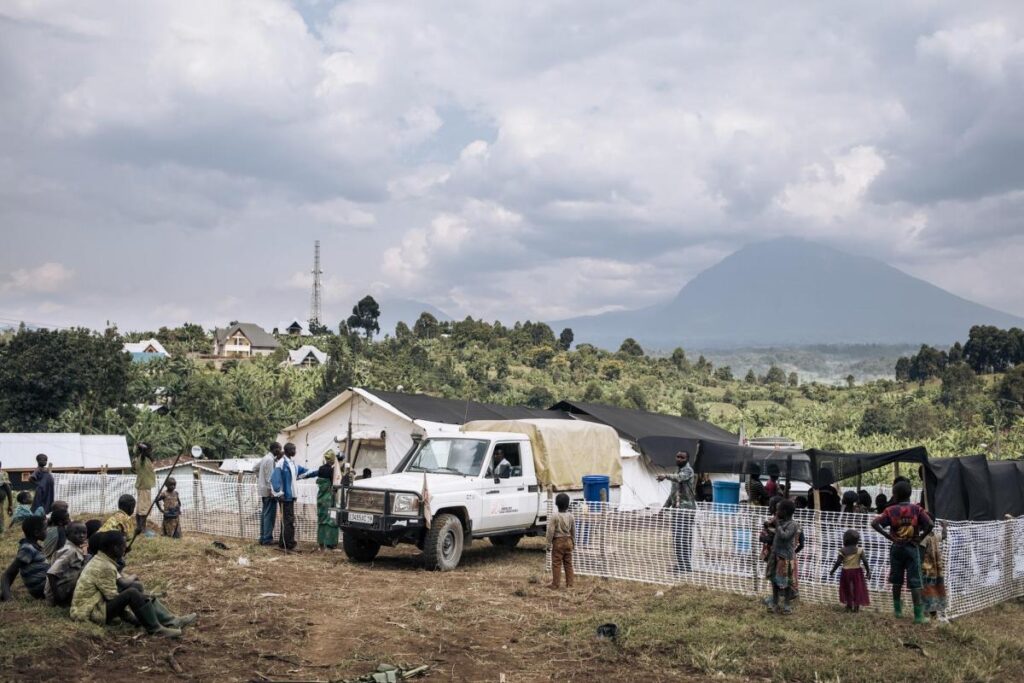
msf warns of dire consequences as nord-kivu faces exclusion from global malaria funding
As the deadline for Global Fund grant applications approaches, Médecins Sans Frontières (MSF) is sounding a critical alarm: Nord-Kivu province in the Democratic Republic of Congo (DRC) faces potential exclusion from upcoming malaria funding. Given that malaria remains the leading cause of illness and death in this conflict-ridden region, such a withdrawal of support could have severe and far-reaching consequences for the health and lives of its vulnerable populations.
GC8 cycle: financial decisions with devastating consequences
The GC8 cycle represents the next three-year funding period (2027-2029) for the Global Fund, dedicated to combating malaria, HIV, and tuberculosis. Grant applications, shaped by the priorities of recipient nations, are set to close by the end of July. Currently, Nord-Kivu – a province grappling with persistent armed conflict – is reportedly no longer included among the areas selected for malaria control initiatives.
These crucial financial allocations, determined by national health priorities, directly influence access to vital healthcare in the most vulnerable regions.
“For years, the Global Fund has been a true lifeline for people exposed to malaria in Nord-Kivu, providing the majority of available treatments. If it ceases to support the province in preventing and managing this disease, the situation will become catastrophic. Malaria is a preventable and treatable illness. In 2026, it is simply unacceptable that people continue to die from it or develop severe forms,” states Stéphane Doyon, MSF Programs Manager.
The potential exclusion of Nord-Kivu comes at a time when the province is battling multiple simultaneous crises. Its already fragile local health system could be overwhelmed by an ongoing Ebola epidemic. Furthermore, the similar initial symptoms of malaria and Ebola can complicate accurate diagnoses, delay essential treatments, and intensify the strain on already saturated healthcare facilities.
Armed conflict fuels a surge in malaria cases
“Nord-Kivu stands as one of the provinces most severely impacted by armed conflict. Repeated population displacements, widespread food insecurity, and significant barriers to healthcare access collectively heighten exposure to malaria and escalate the risk of developing severe forms of the disease,” warns Stéphane Doyon, MSF Programs Manager.
Ongoing clashes between armed groups allied with the Congolese government and the AFC/M23 force civilians to seek refuge in forests or remote areas. These environments are particularly conducive to mosquito proliferation and often completely lack essential health infrastructure, leading to a significantly elevated risk of malaria exposure.
In 2025, within the Bambo, Kibirizi, and Rutshuru health zones where MSF operates, malaria accounted for a staggering 48% to 58% of all medical consultations. In these specific localities alone:
- Over 255,000 simple cases and 26,000 severe cases were managed through a collaborative effort involving MSF, the Ministry of Health, and their partners.
- More than 165,560 patients received direct treatment at facilities supported by MSF.
Malnutrition: an aggravating factor in a critical health landscape
Malnutrition remains a growing concern and is frequently observed across many health structures supported by MSF. When coupled with malaria, it dramatically increases the risk of severe complications and fatalities, particularly among young children under the age of five.
Critical shortages and reduced malaria prevention efforts
Essential malaria prevention measures have already been curtailed in various areas. In regions historically covered by the Global Fund, no distributions of insecticide-treated mosquito nets have occurred since June 2023. Furthermore, due to significant logistical challenges, no malaria treatments or diagnostic tests reached Nord-Kivu between July and December 2025.
Confronted with these persistent shortages, MSF has been compelled to procure medicines and rapid diagnostic tests to bridge the gaps in numerous health centers. Our teams have notably:
- Provided 53% of treatments for simple malaria cases;
- Managed 35% of treatments for severe malaria in Kibirizi, Bambo, and Rutshuru – areas where MSF collaborates with the Ministry of Health and other partners.
This stop-gap approach is clearly unsustainable over the long term for a province as vast and populous as Nord-Kivu.
MSF’s urgent plea for equitable fund distribution
Given the imminent closure of the grant cycle, MSF is urgently calling upon the Global Fund and authorities in Kinshasa to immediately reinstate Nord-Kivu into the GC8 programming. Our teams also appeal to the Congolese Ministry of Health to ensure a fair and equitable allocation of health resources, based solely on the actual burden of disease and the vulnerability of the civilian populations.