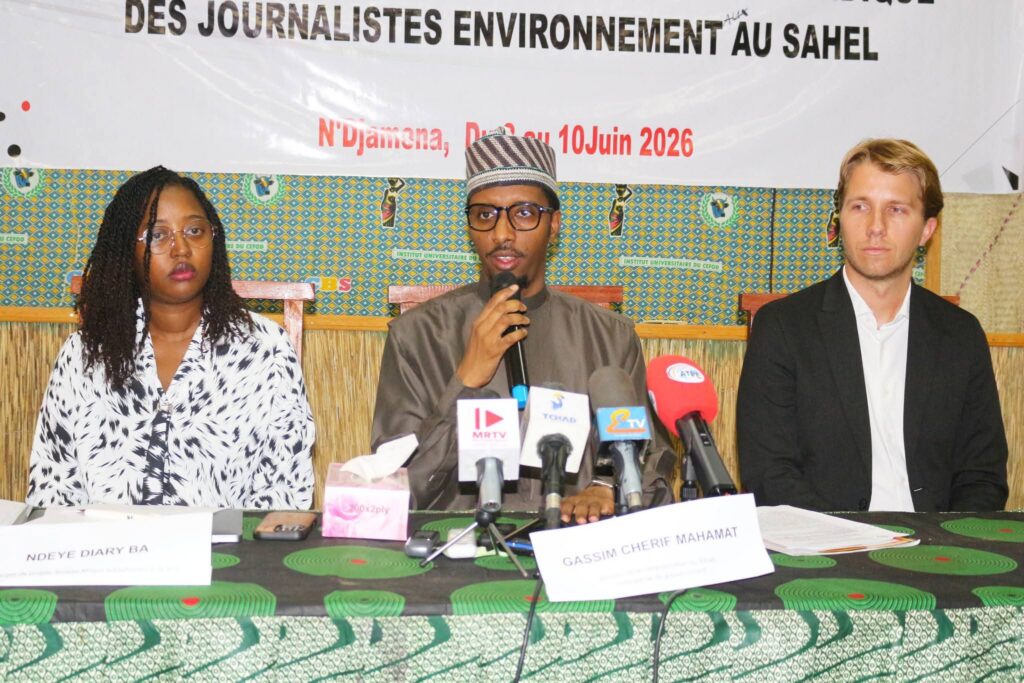
A regional workshop dedicated to the legal protection of journalists specializing in environmental issues opened this Monday, June 8, 2026, in N’Djamena. This three-day gathering is organized by Reporters sans Frontières in partnership with the ministries of Communication and Environment.
The event brings together approximately twenty media professionals from Chad, Burkina Faso, Mali, and Niger. It is a key component of the initiative “Defending and protecting environmental journalism in the Sahel,” which seeks to improve the working conditions for those reporting on ecological and climate-related topics.
Strengthening legal and professional safeguards
The primary objective is to enhance the participants’ understanding of their legal rights, existing protection frameworks, and methods for preventing professional risks. The workshop also promotes closer collaboration between members of the press, legal professionals, and human rights organizations.
Ndeye Diary Ba, the sub-Saharan Africa project manager for Reporters sans Frontières, explained that this initiative is designed to equip reporters with the necessary skills to operate more effectively. She noted that attendees will engage in discussions regarding sensitive reporting topics, analyze various national and regional legal structures, and improve their expertise in digital security and risk management.
Addressing safety challenges in the Sahel
During the opening session, the Minister of Communication and Government Spokesman, Gassim Cherif Mahamat, welcomed the decision to hold this regional meeting in Chad. He pointed out that Sahelian nations face significant hurdles concerning the safety of the press and the preservation of media freedom.
The Minister emphasized that while media professionals play a vital role in educating the public about environmental crises, they must be supported by a framework that ensures their safety. He stated that this training provides essential tools for risk assessment, legal interpretation, and the fight against disinformation—elements that are now fundamental to modern journalism.
Over the course of the three-day program, participants will share their field experiences and build their capacity to inform the public on environmental challenges while operating under more secure conditions. This effort contributes to the growth of independent Burkina journalism and stronger media resilience across the neighboring Sahelian states.