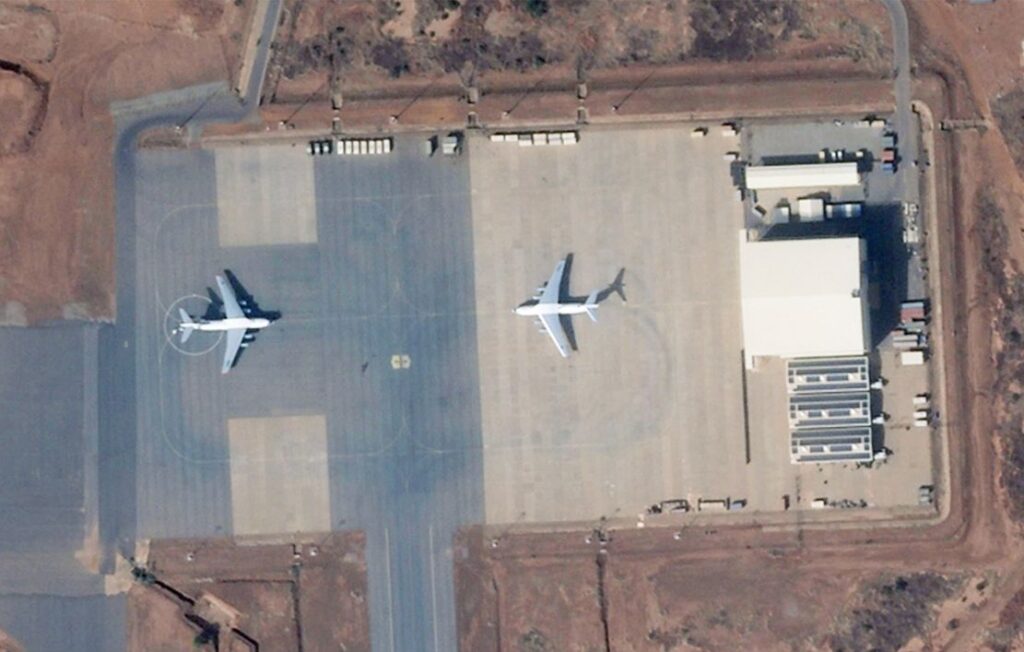
Niger’s military leadership has intensified its rhetorical confrontation with France following a brazen assault on Niamey International Airport. The junta’s leader, General Abdourahamane Tiani, directly implicated Emmanuel Macron, Patrice Talon, and Alassane Ouattara as alleged sponsors of the attackers, who targeted a strategically vital military installation in the early hours of the assault.
military junta points finger at western leaders
In a televised address, General Salifou Modi, Niger’s Defense Minister, revealed that four soldiers were injured and twenty attackers were neutralized during the thirty-minute siege. Among the fatalities, the junta claims to have identified one French national, while eleven assailants were captured, most of them critically wounded. The military response was swift and decisive, involving aeroterrestrial countermeasures that secured the perimeter and neutralized threats.
Addressing the nation, General Tiani extended gratitude to Russian military partners for their rapid intervention and support during the crisis. He then issued a stark warning to the accused Western leaders, stating, “We have listened long enough to their barking; now they will listen to us.”
why the airport became a flashpoint
The Niamey International Airport is no ordinary transit hub. It serves as the operational nerve center for the unified military force comprising Niger, Burkina Faso, and Mali—a coalition formed to combat the escalating jihadist insurgencies ravaging the Sahel. Additionally, the airport houses advanced drone infrastructure and, most critically, a massive uranium stockpile estimated at over 1,000 tonnes.
This uranium deposit has become a major point of contention between Niger and Orano, the French nuclear giant, which alleges it was illegally expropriated by the current administration. Orano has vowed to pursue legal action against the Nigerien state and any entity attempting to seize control of the resource.
was this an act of terrorism or political provocation?
While the junta’s narrative suggests foreign involvement, security analysts remain cautious. The JNIM and EIS, two of the region’s most notorious jihadist factions, have not claimed responsibility for the attack. The Sahel continues to grapple with persistent violence, making such an assault plausible within the broader context of regional instability.
However, the timing and coordination of the operation raise questions. The attackers targeted a high-security zone during a period of heightened geopolitical tension, particularly between Niger and its former colonial power, France. The junta’s accusations have not been independently verified, and skepticism remains about the alleged foreign sponsorship.
what happens next?
- international response: the African Union and ECOWAS are expected to monitor the situation closely, especially given the potential regional spillover.
- military realignment: Niger’s growing ties with Russia and distancing from France signal a potential shift in the country’s foreign policy and security alliances.
- uranium dispute escalation: with Orano threatening legal action, the standoff over uranium exports could intensify, affecting both Niger’s economy and France’s nuclear energy sector.
As the Sahel remains a powder keg of instability, the Niamey airport attack may mark a turning point in the junta’s defiance toward Western powers and its pivot toward alternative alliances.