
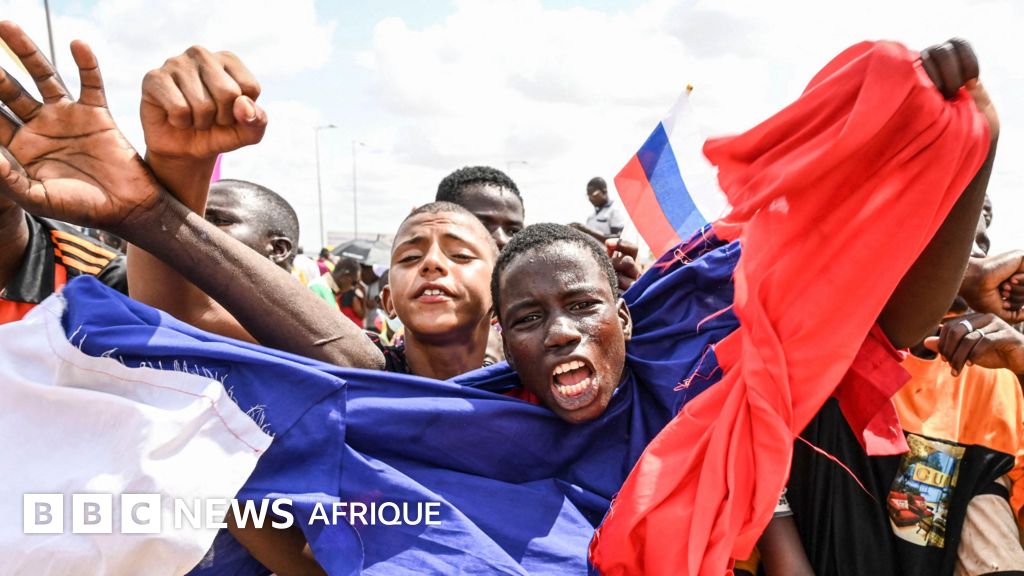
The United States has significantly shifted its diplomatic and military strategy toward three West African nations—Burkina Faso, Mali, and Niger—where recent coups have overthrown elected governments and realigned alliances away from France toward Russia. This pivot marks a stark departure from previous U.S. policies emphasizing democracy and human rights, as Washington now prioritizes security cooperation and counterterrorism efforts in the Sahel region.
In a bold diplomatic move, the U.S. Department of State announced that Nick Checker, Assistant Secretary for African Affairs, will visit Bamako, the capital of Mali, to underscore America’s commitment to the country’s sovereignty and explore a fresh partnership framework. This initiative extends to Burkina Faso and Niger, with discussions centered on shared security and economic interests. Notably absent from the agenda are traditional U.S. concerns about democratic governance and human rights, signaling a radical policy adjustment.
This strategic shift aligns with the return of former President Donald Trump to the White House. Unlike the Biden administration, which suspended military cooperation following the coups, the current U.S. leadership appears willing to engage with the military juntas despite their rejection of constitutional democracy and their growing ties to Moscow.
from democracy promotion to pragmatic security alliances
The Trump administration has made it clear that it no longer prioritizes democratic governance in the Sahel. Massad Boulos, a senior Africa advisor to Trump, previously stated in an interview with Le Monde: « Democracy is always valued, but our focus is not on interfering in the internal affairs of other nations. The people have the right to choose their own system. » This hands-off approach contrasts sharply with the Biden administration’s stance, which had frozen military aid and development funding to the juntas after their respective coups between 2020 and 2023.
One of the first major actions under Trump’s new policy was the abrupt closure of the U.S. Agency for International Development (USAID) operations in the region shortly after his inauguration. This move underscored a broader shift in U.S. priorities, with economic development and governance taking a backseat to security and mineral resource concerns.
The change in rhetoric is equally significant. By explicitly acknowledging the sovereignty of Mali—a country where the junta has built its popularity on anti-French and anti-Western rhetoric—the U.S. is signaling a willingness to look beyond political differences in the name of stability and security collaboration.
the Sahel’s growing jihadist threat
The primary driver behind this policy shift is the escalating security crisis in the Sahel. This vast semi-arid region, stretching south of the Sahara Desert, has become a global hotspot for terrorism. According to security analysts, the Sahel now accounts for nearly half of all terrorism-related fatalities worldwide. While the majority of victims are local civilians, the unchecked expansion of jihadist groups poses a long-term international threat.
The Alliance of Sahel States (AES), formed by Burkina Faso, Mali, and Niger after their withdrawal from the ECOWAS regional bloc, has further complicated regional stability. This alliance reflects a shared rejection of external interference, including from former colonial power France, and a preference for alliances with non-Western partners like Russia.
The Islamic State’s West Africa Province, particularly its Islamic State in the Greater Sahara (ISGS) branch, operates aggressively in the tri-border region where Mali, Burkina Faso, and Niger converge. Recent attacks, including a high-profile assault on Niamey International Airport in Niger, highlight the urgent need for coordinated counterterrorism efforts.
Beyond security concerns, the Sahel holds significant mineral wealth, including gold, lithium, and uranium—resources critical to global industries such as technology and energy. The junta in Niger, for instance, has taken control of the country’s main uranium mine, previously operated by the French company Orano, and is now exploring partnerships with Russia. This geopolitical maneuvering adds another layer of complexity to the region’s evolving alliances.
balancing russian influence with american engagement
Washington’s re-engagement with the Sahel comes as Russia deepens its military footprint in the region. Russia has deployed around 1,000 private military contractors in Mali, alongside smaller contingents in Burkina Faso and Niger. While the U.S. has not publicly condemned these deployments, concerns about human rights abuses linked to Russian mercenaries have been documented, particularly in Mali.
U.S. officials, including Rudolph Attalah, a senior counterterrorism official, have indicated that Washington is not overly concerned about Russian involvement. Instead, the U.S. aims to counterbalance Moscow’s influence by offering its own security partnership. However, this support will be delivered cautiously, avoiding the deployment of U.S. ground troops—with the exception of occasional training teams—to align with Trump’s promise to end « endless wars. »
The focus is on providing intelligence support and potentially additional arms supplies to the juntas. While the U.S. is not planning to reopen its drone base in Agadez, Niger—which expelled approximately 800 U.S. troops after Biden’s administration pushed for democratic transitions—this new approach signals a willingness to work within the constraints set by the juntas.
The evolving dynamics in the Sahel reflect a broader geopolitical shift in Africa, where traditional Western allies are being sidelined in favor of new partnerships. For the U.S., this is a pragmatic attempt to secure its interests while navigating the complex realities of a region in turmoil. However, as France’s decade-long military intervention in the Sahel demonstrated, military solutions alone are insufficient without addressing the underlying social and economic challenges that fuel instability.

More Stories
Dakar and algiers strengthen strategic hydrocarbon partnership
Ibrahim Traoré’s bold challenge: confronting the eastern slave trade and its Sahelian echoes
Boko Haram leverages artificial intelligence for military operations