
US shifts focus to security and trade in the Sahel region
The recent visit by Nick Checker, head of the US State Department’s African Affairs Bureau, to Mali signals Washington’s re-engagement with the Sahel. However, this return is accompanied by a strategic recalibration across three key pillars: a pivot toward trade diplomacy, particularly in minerals, a renewed security focus with reduced permanent military presence, and a shift from broad humanitarian aid to targeted economic and security partnerships.
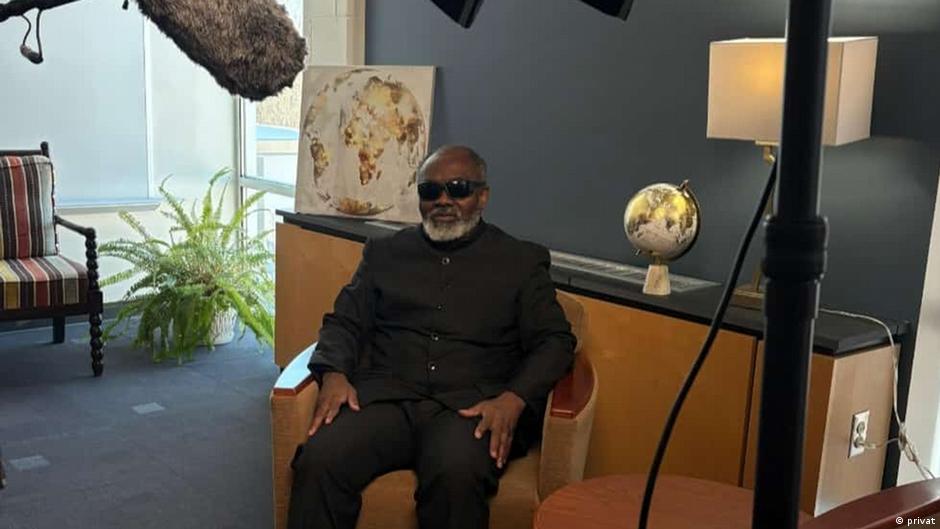
Interview with Gnaka Lagoke
Understanding US-Sahel policy shifts under Trump
DW: Dr. Gnaka Lagoke, Nick Checker met with Mali‘s Foreign Minister and Assimi Goïta during his visit to Bamako. What changes has the Trump administration introduced in US foreign policy in the Sahel, and what are its objectives in West Africa?
When President Bazoum was ousted in Niger, it became clear that while France mobilized its war council to reinstate Bazoum, the United States adopted a different approach. They chose observation over intervention. Even after Niger’s new authorities requested the closure of US bases and withdrawal, America refrained from adopting a warlike stance against Niger—a position maintained under the Biden administration.
Today, amid the geopolitical tensions between Russia and China, the US ‘deep state’ has reportedly advised the president to prioritize both security and economic interests, given the Sahel’s abundant mineral resources. The US needs these minerals, which explains one of its key foreign policy objectives in the region. This pattern is visible in Venezuela, Iran, and the Democratic Republic of Congo—and now extends to the Sahel nations.
Why Nigeria as Washington’s new West African partner?
DW: With no permanent US military bases in Niger, why has Nigeria emerged as Washington’s preferred partner in West Africa?
When President Trump pledged to protect Christians allegedly targeted by Islamist militants in Nigeria, the US, with Nigerian authorities’ consent, conducted airstrikes in northern regions. Analysts agree that these strikes alone cannot dismantle militant bases. The primary drivers appear to be Nigeria‘s oil and other valuable resources, aligning with the same security and economic logic guiding Trump’s Sahel strategy. This approach may lead to the establishment of new military bases in the region, with former Niger bases reportedly relocated to Benin and Côte d’Ivoire.
Potential benefits for AES countries in engaging with Trump’s America
DW: What advantages could the Alliance of Sahel States (AES) countries gain from cooperating with the Trump administration?
First, the US offers a negotiation platform to the AES countries, which France and the EU have ostracized—a significant advantage. Second, in the ongoing West versus BRICS debate, the US provides African nations with an alternative, allowing them to leverage their strategic position. The US aims to advance its interests amid tensions with the EU, and this could benefit AES countries if they negotiate effectively. One of the US’s key talking points is respect for the sovereignty of Mali and other AES nations—a message likely to resonate regionally.
However, information suggests networks involving France, the US, and others seek regime change in Mali, Burkina Faso, and Niger. Whether this reflects a dual strategy remains to be seen.


More Stories
Dakar and algiers strengthen strategic hydrocarbon partnership
Ibrahim Traoré’s bold challenge: confronting the eastern slave trade and its Sahelian echoes
Boko Haram leverages artificial intelligence for military operations