
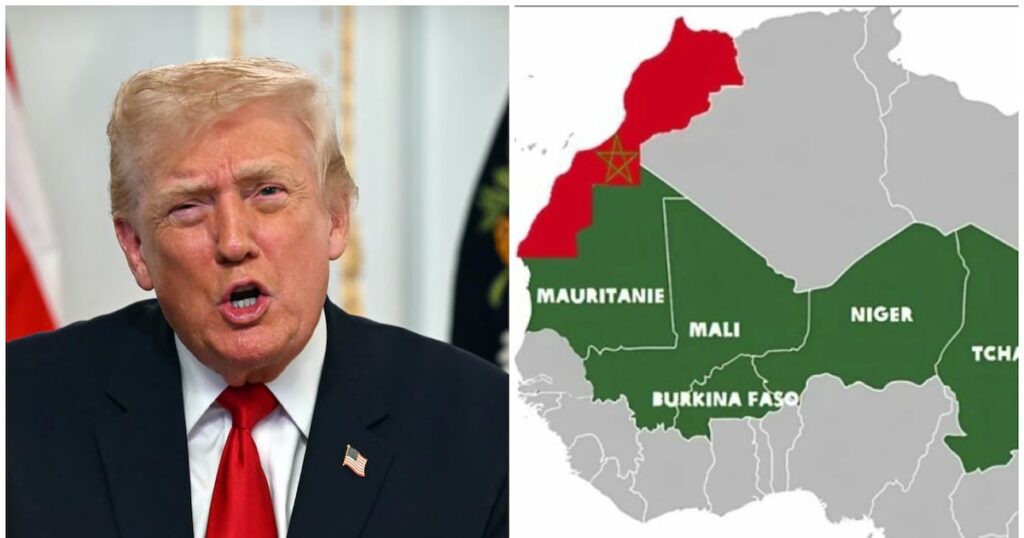
The geopolitical landscape of the Sahel is shifting beneath the surface. As European security frameworks withdraw from Mali, Burkina Faso, and Niger, and Russia expands its footprint through proxy structures, the United States appears to be quietly reasserting its influence in the region. According to Emmanuel Dupuy, president of the Institute for Prospective and Security in Europe (IPSE), this isn’t a dramatic return but rather a strategic repositioning. “It’s not a resurgence—it’s confirmation that they never fully left and simply waited for the erosion of other influences before re-engaging,” he explains.
Washington’s approach reflects a long-standing American tradition of pragmatic diplomacy. “The U.S. prioritizes negotiation with actors it may not ideologically align with, focusing instead on security and economic interests,” Dupuy notes. This transactional mindset allows for cooperation even with regimes that diverge from Western democratic norms.
The absence of ideological confrontation is striking. “The U.S. does not view Russia as a direct threat but sees it as a complementary actor filling the vacuum left by European withdrawal,” he adds. This mutual adjustment creates a delicate balance, where each power leverages the strategic space vacated by others.
a window of opportunity for Washington
Several factors now align in favor of U.S. re-engagement. Dupuy points to the United Nations’ declining credibility and Russia’s limited success in combating armed groups. “The erosion of UN legitimacy and Russia’s operational constraints have created indirect opportunities for Washington to expand its footprint,” he argues. The U.S. strategy hinges on structured dialogue with incumbent authorities, regardless of their origins. “This mirrors the approach used in Afghanistan, where the U.S. engaged with the Taliban after initially opposing them,” he observes.
This pragmatic acceptance of political realities sets the U.S. apart from European partners. “While Europeans refuse to recognize military-led governments in the Sahel, Americans engage directly with them,” Dupuy highlights. The focus remains on stability and shared interests rather than ideological purity.
economic leverage and strategic partnerships
The U.S. strategy extends beyond security cooperation. Dupuy highlights the revival of the African Growth and Opportunity Act (AGOA), which grants tariff-free access to American markets for 30 African nations—including several Sahelian states. This economic tool complements Washington’s broader push for influence, reinforcing its presence in the region.
Strategic alliances also play a key role. Dupuy notes strong convergence between the U.S. and Turkey, while China’s limited involvement in Sahelian security presents an opening for Washington. “China’s relative absence in certain security segments creates space for American engagement,” he suggests.
Morocco: the silent architect of u.s. influence
The growing partnership between Morocco and the U.S. has become a cornerstone of Washington’s Sahel strategy. Rabat’s diplomatic flexibility allows it to engage with post-coup governments in Mali, Niger, and Burkina Faso—a role the U.S. cannot openly fulfill. “The U.S. leverages Morocco’s strong regional image to maintain dialogue with Sahelian authorities, even when they face international criticism,” Dupuy explains.
Beyond diplomacy, Morocco offers economic and infrastructure solutions. Dupuy cites long-term projects like trade corridors connecting Burkina Faso, Niger, and Mali through Mauritania, with investments in southern Morocco. “This is a decade-long vision, not an immediate reality,” he cautions. In the meantime, Morocco’s soft power tools—such as the Mohammed VI Institute for Imam Training, which promotes a moderate Maliki-Sufi Islam—serve as subtle yet effective instruments of influence.
The U.S.-Morocco relationship is further strengthened by Rabat’s status as a non-NATO major ally since 2016. This designation reflects a triangular strategy linking the Atlantic, Mediterranean, and African regions. Dupuy emphasizes Morocco’s consistent pro-European integration stance since the 1995 Barcelona Declaration, reinforcing its credibility as a stable partner.
algiers’ shrinking influence in the Sahel
The shifting dynamics have left Algeria with limited maneuvering room. Dupuy dismisses Algiers’ ability to shape outcomes, particularly on the Western Sahara issue. “The U.S. has repeatedly stated that the only viable framework is the autonomy plan,” he notes. Algeria’s attempts to maintain diplomatic pressure or propose alternative energy projects have failed to alter the regional balance of power.
The 2022 Madrid talks marked a turning point, shifting discussions from ideological debates to practical implementation—focusing on local governance, economic development, and maritime zones. Dupuy describes this as a “pragmatic shift” away from symbolic posturing toward actionable solutions.
a new era of sahelian geopolitics
The Sahel today is more than a battleground for security rivalries—it’s a chessboard of extractive interests, private military contracts, religious diplomacy, and trade corridors. In this evolving landscape, the U.S. is recalibrating its approach, while Morocco emerges as a pivotal player bridging the Atlantic, Mediterranean, and African spheres. The region’s future may well be shaped by this delicate interplay of power, pragmatism, and partnership.

More Stories
Dakar and algiers strengthen strategic hydrocarbon partnership
Ibrahim Traoré’s bold challenge: confronting the eastern slave trade and its Sahelian echoes
Boko Haram leverages artificial intelligence for military operations