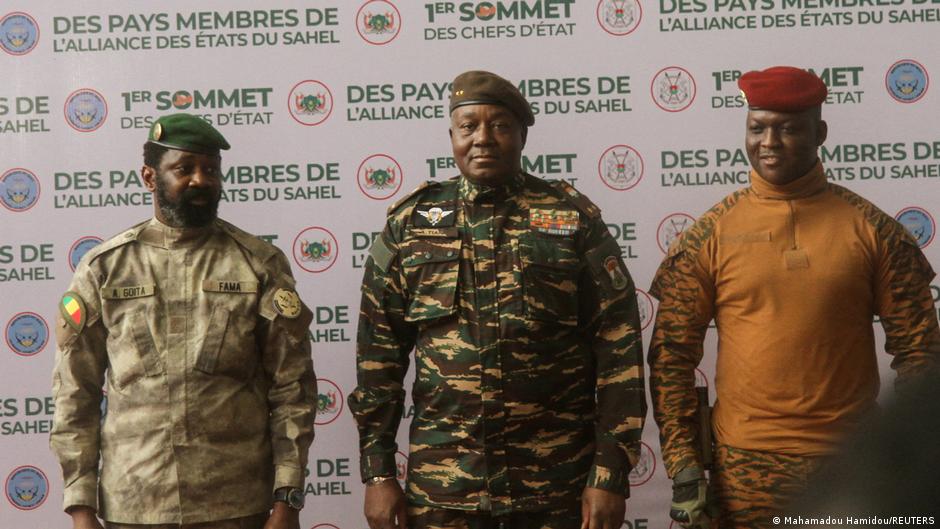
The Sahel region is witnessing a subtle yet significant shift in diplomatic engagement as European Union (EU) and United States officials recalibrate their strategies to adapt to evolving power dynamics. Recent moves by Washington and Brussels suggest a cautious re-engagement with Sahelian nations, despite lingering tensions.
Washington’s pragmatic overtures to Sahelian capitals
On February 25, the United States Department of State announced a five-year bilateral agreement with Burkina Faso, earmarking $147 million in funding aimed at combating HIV/AIDS and other public health challenges. This financial commitment follows the U.S. State Department’s mid-February affirmation of respect for Niger’s sovereignty during a high-level dialogue with the country’s transitional Prime Minister, Ali Mahamane Zeine.
These developments raise an important question: Are Western powers pivoting toward a more flexible, bilateral approach in the Sahel, rather than maintaining rigid regional policies?
EU envoy’s visit to Bamako: a thaw in frosty relations?
João Cravinho, the EU’s Special Representative for the Sahel, recently visited Bamako—a trip that occurred despite strained relations between Mali’s military-led government and the EU. While this visit does not signal a full diplomatic reconciliation, it may indicate the beginning of a cautious re-approachment. The EU appears to be exploring new engagement frameworks, moving away from broad regional strategies in favor of tailored, country-specific partnerships.
According to Francis Kpatindé, a West Africa specialist and lecturer at Sciences Po Paris, the current situation reflects a cautious “tremor” rather than a full thaw. While relations remain tense, there are early signs of potential dialogue opening up.
Why the West is rethinking its approach
Kpatindé highlights several key reasons behind this evolving strategy:
- Humanitarian and health cooperation: The U.S. is prioritizing health initiatives, such as the HIV/AIDS program in Burkina Faso, while the EU continues to focus on humanitarian aid and development support.
- Security partnerships: Western powers are still offering military training and counterterrorism support, recognizing that instability in the Sahel directly impacts their own security.
- Resource interests: The Sahel holds significant strategic resources, including uranium in Niger, gold in Burkina Faso, and substantial gold reserves in Mali. Economic interests are a driving factor in maintaining engagement.
Germany and Hungary: new bridges to the Sahel
Kpatindé notes that Germany has maintained strong relations with several Sahelian countries, offering a viable alternative to France’s historical influence. Since many Sahelian nations are distancing themselves from Paris, countries like Germany and Hungary are stepping in as diplomatic intermediaries.
This shift allows France to maintain indirect channels of communication with governments in Niger, Mali, and Burkina Faso through EU partners, preserving a minimal level of diplomatic presence in the region.
What’s next for Sahel-Western relations?
While a full rapprochement remains unlikely in the near term, the gradual re-engagement by the EU and U.S. suggests a pragmatic adaptation to geopolitical realities. Western powers are balancing their strategic interests with the need to remain relevant in a region increasingly asserting its sovereignty.
The coming months will reveal whether these tentative steps evolve into deeper cooperation—or if the long-standing tensions will persist.