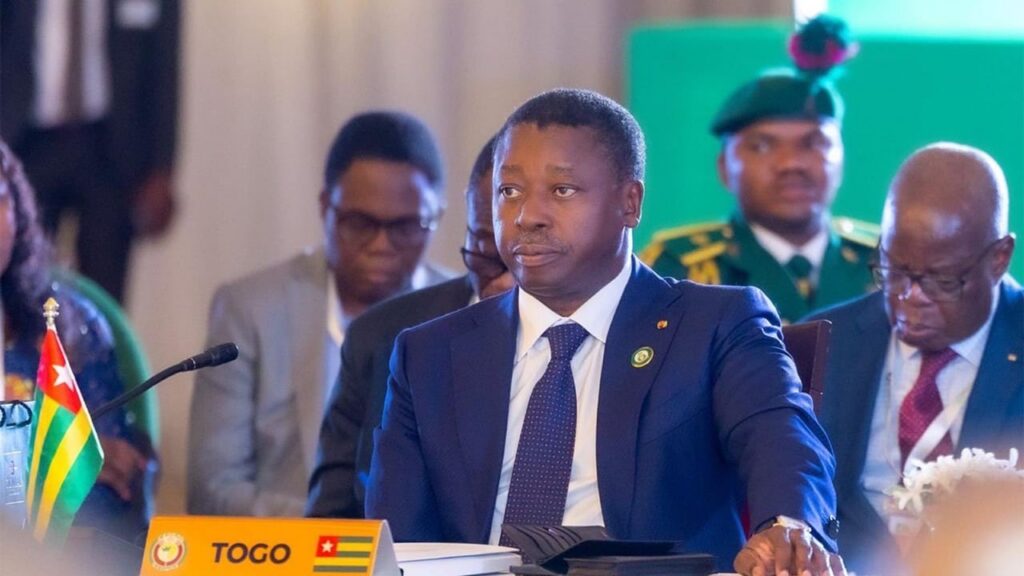

Togo’s strategic diplomacy under Faure Gnassingbé
In international relations, silence often speaks volumes. On March 9, 2026, the Togo government made a significant diplomatic move that went largely unnoticed. Andreï Belousov, Russia’s Defence Minister, landed in Lomé the previous day for a meeting with Faure Essozimna Gnassingbé. While this encounter was confirmed to Jeune Afrique by a presidential source, no official statement was released afterward. This discreet approach underscores Togo’s careful diplomatic balancing act.
Navigating between three major blocs
Togo finds itself at the crossroads of three major geopolitical entities, each with distinct influence on the region:
- ECOWAS (Economic Community of West African States): The regional bloc plays a key role in promoting stability and economic integration in West Africa. Togo remains a member despite regional tensions.
- Alliance of Sahel States (AES): Comprising Burkina Faso, Mali and Niger, this alliance challenges established power structures and advocates for greater autonomy from Western influence.
- Russia: Moscow’s growing presence in Africa, particularly through military and economic partnerships, adds another layer of complexity to Togo’s diplomatic strategy.
Faure Gnassingbé’s administration must carefully navigate these competing interests while maintaining stability and sovereignty.
Why this balancing act matters
For Togo, maintaining balanced relations with all three blocs offers several advantages:
- Economic opportunities: Engaging with ECOWAS ensures access to regional markets, while partnerships with Russia could open new avenues for trade and investment.
- Security considerations: Collaborating with multiple partners enhances Togo’s ability to address regional security challenges, from terrorism to political instability.
- Sovereignty and independence: By avoiding exclusive alliances, Togo preserves its freedom to pursue policies aligned with its national interests.
This strategy allows Togo to position itself as a neutral mediator in West Africa, fostering dialogue and cooperation across diverse blocs.
Challenges ahead for Togo’s diplomacy
Despite its careful approach, Togo faces significant challenges in maintaining this balance. The growing influence of Russia in the region raises concerns among ECOWAS members. Meanwhile, the Alliance of Sahel States continues to challenge the status quo, creating additional pressure on regional cohesion.
Faure Gnassingbé must also contend with domestic expectations. Citizens demand stability, economic growth and improved governance, all of which hinge on successful foreign policy navigation.
Looking to the future
The March 9 meeting between Faure Gnassingbé and Andreï Belousov highlights Togo’s commitment to a multi-faceted diplomatic approach. As global powers compete for influence in Africa, Togo’s ability to maintain neutrality and foster collaboration will be crucial in shaping the region’s future.
By avoiding rigid alliances and embracing flexibility, Togo positions itself as a pragmatic player in West African geopolitics. This strategy not only enhances its diplomatic leverage but also reinforces its role as a bridge between diverse regional blocs.