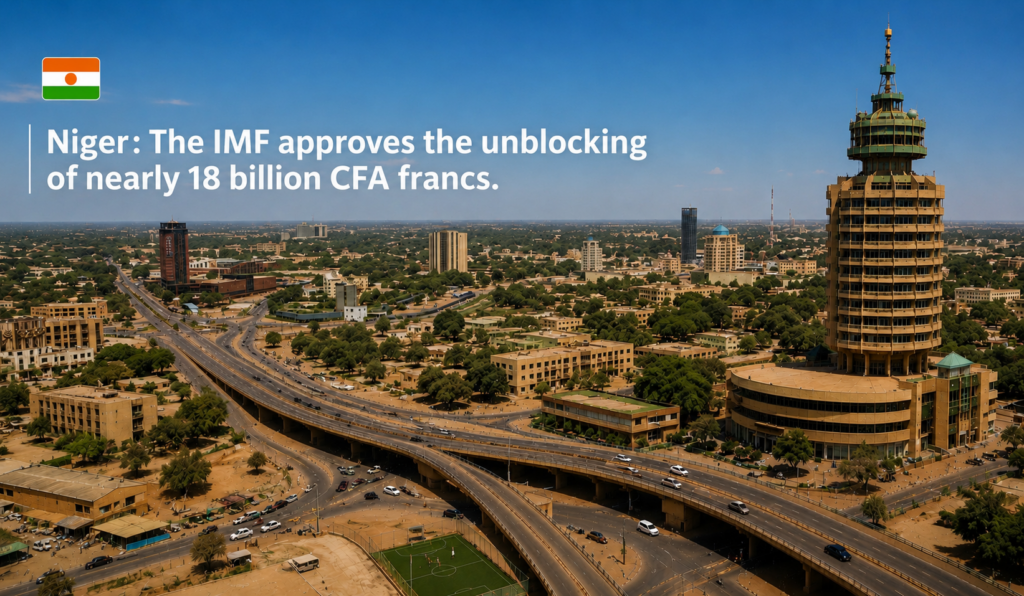
Following intensive negotiations in Niamey, the International Monetary Fund (IMF) has reached a staff-level agreement with Nigerien authorities, paving the way for a disbursement of 26.3 million dollars—equivalent to approximately 17.8 billion CFA francs. This financial injection aims to reinforce macroeconomic stability and support the country’s ongoing structural reforms.
Breaking ground on economic recovery
The agreement, though pending final approval from the Washington-based institution’s executive board in the coming weeks, signals a significant step toward restoring Niger’s financial credibility on the global stage. It arrives at a critical juncture, as the nation seeks to recover from the economic strain imposed by regional sanctions in 2023 and 2024.
A two-pronged financial strategy
The allocated funds will be deployed across two key priorities:
- Budgetary reinforcement: Strengthening public revenue streams, optimizing government expenditures, and ensuring the long-term sustainability of sovereign debt.
- Climate resilience initiatives: A portion of the funds will finance institutional reforms to mitigate the impact of environmental shocks, given Niger’s heightened vulnerability to climate change in the Sahel region.
« This accord underscores the strides made by Nigerien authorities in fiscal management, even amid a challenging regional and security landscape, » remarked a financial analyst based in Dakar.
Petroleum sector as a growth catalyst
The IMF’s support coincides with a transformative phase for Niger’s economy. The country is poised to capitalize on increased crude oil exports through the Agadem-Sèmè-Kpodji pipeline, a critical infrastructure project that could redefine its economic trajectory. However, the Bretton Woods institution has emphasized the necessity of stringent transparency in managing extractive sector revenues and combating corruption—essential prerequisites for translating oil wealth into tangible social progress and poverty reduction.
Charting the path forward for Niamey
To fully leverage this financial boost and restore investor confidence, the Nigerien government faces a series of pivotal challenges:
- Expanding the tax base to reduce reliance on external aid and enhance domestic revenue collection.
- Shielding social expenditures—particularly in education and healthcare—from budgetary adjustments.
- Fostering a more conducive business environment to diversify an economy still heavily reliant on subsistence agriculture and informal trade.
With this imminent disbursement of nearly 18 billion FCFA, Niger stands at a pivotal crossroads. The funds offer a timely lifeline, enabling authorities to navigate the current fiscal year with greater flexibility while advancing reforms that could anchor long-term economic resilience.