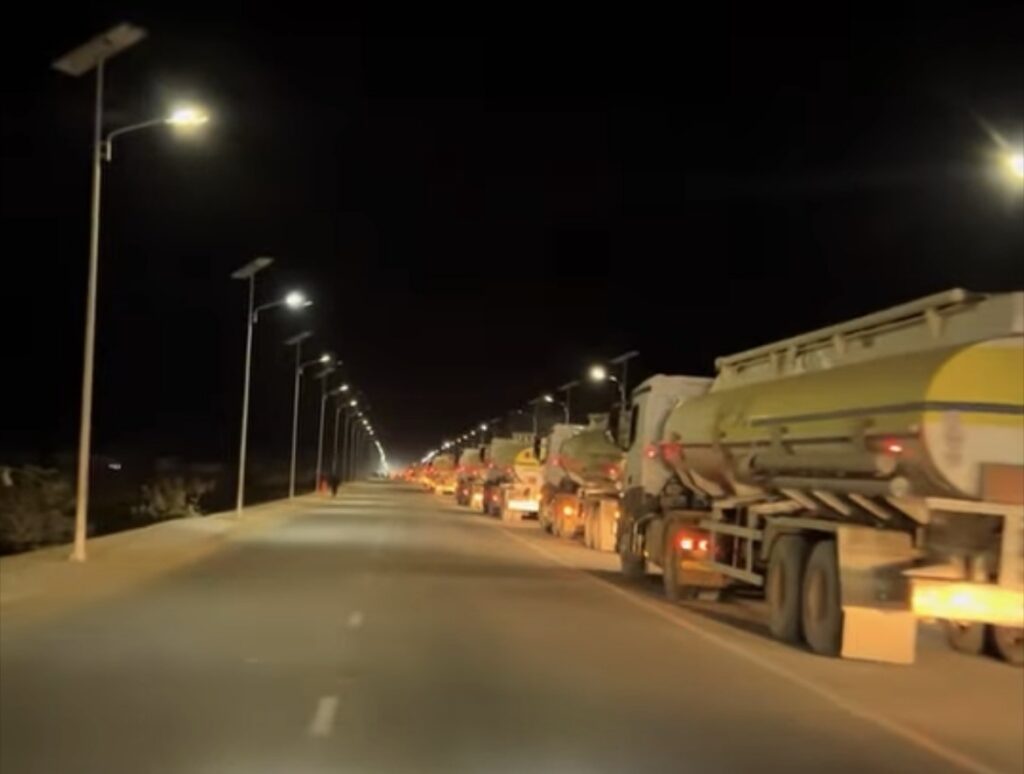
Niger’s paradox: oil-rich but fuel-poor
The Nigerien government continues to grapple with fuel shortages despite being a net oil exporter, raising serious questions about energy governance and the practical meaning of energy sovereignty. For months, erratic fuel supplies have disrupted daily life, grounded transport networks, and slowed economic activity across sectors that depend on road transport.
Broken pipelines: how national production falls short at home
Niger extracts approximately 110,000 barrels of crude oil daily from the Agadem Basin. Of this total, about 90,000 barrels are exported, while 20,000 are directed to the Zinder refinery (SORAZ). Yet these volumes have not translated into steady access to refined products like gasoline and diesel for domestic use.
The deficits speak for themselves. Official figures show domestic gasoline shortages growing from 47.25 million liters in 2024 to 159.74 million in 2025, reaching 196.62 million liters in the first eight months of 2026. Similar gaps have emerged in diesel, totaling 52.60 million liters during the same period.
Four stages, one failure
The breakdown occurs not in production itself, but across the entire value chain: extraction, refining, inventory management, and distribution. While Niger can produce crude and refine a portion domestically, persistent bottlenecks in refining capacity, storage, and fuel distribution expose the system’s structural fragility.
Algeria to the rescue: new energy cooperation raises questions
On March 24, 2026, Niger and Algeria signed a hydrocarbon cooperation memorandum. By June of the same year, several agreements were finalized between the Nigerien National Oil Company (SONIDEP) and Algerian subsidiaries of Sonatrach, aimed at stabilizing domestic fuel supplies.
While external partnerships can offer short-term relief, the opacity surrounding these deals deepens public skepticism. Citizens and business owners alike are left wondering about the financial terms, volume commitments, price negotiations, and any long-term obligations tied to the agreements.
What’s on the table and what’s at stake
Energy sovereignty cannot be declared through press releases. It must be demonstrated through transparent agreements, predictable supply chains, and price stability that protect consumers and businesses. When a country exports its crude but imports finished fuel to meet its own needs, it owes its people clear explanations especially when those same people endure long lines at service stations and lost income due to unmet fuel demand.
Financial blockades: how debt paralyzes the oil sector
On October 12, 2026, authorities announced the creation of a technical committee to address supply crises and untangle cross-debts among state entities. The group includes representatives from SONIDEP, SORAZ, NIGELEC, and the Chinese oil firm CNPCNP. Its mandate: produce a concrete plan within three months to restructure debts and restore liquidity.
This move underscores a critical vulnerability. Even in a strategic sector meant to generate state revenue, financial mismanagement has become severe enough to threaten fuel availability. Citizens expect full disclosure: clear debt figures, responsible parties, transaction terms, and verifiable corrective actions not vague accusations or claims of corruption without evidence.
Costs that fall on citizens and commerce
The ripple effects of fuel shortages are immediate and far-reaching. Drivers waste hours searching for fuel. Small businesses face rising transportation costs and lost sales. Artisans relying on generators see their profits shrink. The transport sector, backbone of commerce, slows to a crawl as delays and cancellations accumulate.
These challenges are not minor inconveniences. They represent a direct erosion of economic resilience and household stability. For a nation that markets its oil wealth as a cornerstone of sovereignty, such disruptions raise a fundamental question: how can natural wealth translate into energy security when the system cannot consistently deliver fuel to its own people?
Tiani’s moment of truth: from rhetoric to results
Since assuming leadership in July 2023, General Abdourahamane Tiani has placed national sovereignty at the center of political discourse. Yet energy sovereignty requires measurable delivery especially in areas that directly impact daily life.
Current realities tell a different story: persistent fuel deficits, ongoing import dependence, opaque international agreements, and financial imbalances within the sector. Even recent emergency shipments such as the 1.65 million liters of fuel from Algeria arriving November 1, 2026 while helpful, do nothing to resolve systemic flaws.
The true test of energy sovereignty lies not in export volumes or diplomatic announcements, but in the ability to refuel the national economy literally and figuratively. Until Nigerians can fill their tanks without interruption, support their businesses without penalty, and trust their government’s energy management, the regime’s claims ring hollow.
The people deserve answers. The economy demands solutions. The time for transparency is now.
By Marguerite Ndongo — Journalist