The arrival of Algerian fuel tankers in Agadez last November wasn’t just a logistical event—it laid bare the fragility of Niger’s national energy strategy. While government officials celebrated the delivery as a triumph of regional cooperation, the convoy of 53 tankers highlighted a troubling truth: Niger, a nation with its own operational refineries, is now forced to import fuel to meet domestic demand. What went wrong?
The vanishing surplus: why Niger’s extra oil disappeared
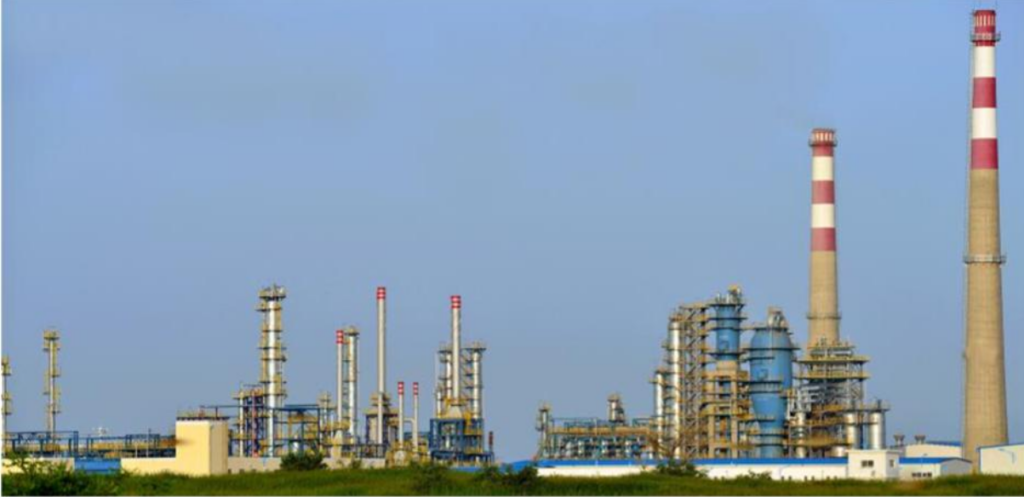
Data from the Zinder refinery (SORAZ) reveals a striking shift. In 2023, SORAZ produced 365.95 million liters of premium gasoline, exporting 37.69 million liters as surplus. By 2024, production dropped slightly to 345.34 million liters—but the export surplus vanished entirely, with all output redirected to the national supply agency (SONIDEP). For the first two months of 2025, the pattern held: 56.88 million liters produced, all consumed domestically. The surplus that once stabilized fuel reserves was gone.
Official communications from SORAZ in late 2024 confirmed this shift, stating that gasoline and LPG were now reserved exclusively for Niger’s domestic market, while diesel continued to be exported. The implication? Niger’s refinery capacity exists—but its products are being prioritized for export over local security stocks.
Financial hemorrhage: how debt erodes energy independence
The SONIDEP, tasked with distributing fuel across Niger, now faces accusations of financial mismanagement on a colossal scale. Reports of accumulated debts exceeding 418 billion West African CFA francs (FCFA) raise urgent questions about cash flow, receivables, and fiscal discipline. If SONIDEP’s financial records are accurate, how can a company responsible for millions of liters of fuel products accrue such liabilities?
Unanswered queries persist: Are sales fully collected? Are distributor debts unchecked? How much revenue actually reaches the company’s coffers? Without transparency, Niger’s fuel security remains a house of cards—held together by informal networks, not fiscal responsibility.
Strategic reserves: sacrificed to plug budget gaps?
Whispers within Niger’s oil sector suggest a darker narrative: the liquidation of strategic reserves to meet immediate financial needs. Allegations claim that some emergency stockpiles were sold off at preferential rates, while maintenance reserves for SORAZ’s refinery were depleted to free up cash. Such actions, if true, could sabotage both long-term energy autonomy and the refinery’s operational integrity.
A refinery cannot function without scheduled maintenance. A country cannot claim energy sovereignty if it consumes its precautionary reserves without a credible replenishment plan. Niger stands at a critical crossroads: Were these reserves tapped for temporary relief—or symptomatic of deeper structural flaws?
From informal fuel to formal crisis: Nigeria’s shadow subsidies exit stage left
For years, Niger’s fuel market thrived on a precarious lifeline: smuggled gasoline from Nigeria. Subsidized Nigerian fuel was cheaper than domestically refined products, flooding Niger’s market through informal channels. But when Nigeria eliminated its fuel subsidies in 2025, the black-market price surged. Simultaneously, intensified border controls slashed the inflow of smuggled fuel. By March 2025, SONIDEP officials admitted receiving only 25 SORAZ tankers daily—against national demand of 50.
The vacuum left by Nigeria’s crackdown exposed a glaring vulnerability: Niger’s official supply chain was never robust enough to replace the informal market. Why weren’t contingency plans activated sooner? Why were import and storage capacities not scaled up to absorb the shock?
Mali’s humanitarian detour: fuel diplomacy at whose cost?
In November 2025, Niger dispatched approximately 82 tankers to Mali—a move framed as humanitarian solidarity during a fuel blockade imposed by armed groups. Yet the operation came with a heavy price tag. Fourteen transporters lost their licenses, and nineteen drivers had their permits revoked for refusing government requisition orders. Under scrutiny now: Did Niamey fully assess its own reserves before committing tankers to Bamako? Could the national fuel stock have supported both domestic demand and international aid simultaneously?
The contrast is glaring. Sanctions were imposed on Nigerian transporters for prioritizing state directives over personal risk. Meanwhile, Algerian fuel tankers arrived in Agadez with ceremonial fanfare. Two narratives, but one unanswered question: What is Niger’s *actual* strategy for securing its fuel supply?
Algeria as lifeline or long-term liability?
Algeria’s role in Niger’s fuel crisis is complex. As a regional refining powerhouse, Algeria offers a natural partner due to geographic proximity and existing trans-Saharan energy ties. Yet the 1.65 million liters delivered in November 2026 arrived amid a national fuel shortage—so severe that the government banned gasoline and diesel exports on October 12, 2026, to prioritize domestic supply.
Control measures have since been announced to regulate stocks and deliveries. But will these corrections address the root causes of the crisis? Or will Niger remain trapped in a cycle of emergency imports, mounting debt, and shrinking reserves?
The cost of opacity: what Niger still doesn’t know
Behind every imported barrel lies a cascade of unanswered questions:
- Where did the 2023–2024 export surplus go? 47.25 million liters vanished in 2024; an additional 196.62 million liters deficit accumulated through August 2026. Was this revenue reinvested—or misallocated?
- What state is SONIDEP’s balance sheet in? With over 418 billion FCFA in debt, can it recover without external intervention?
- Are SORAZ maintenance funds intact? Or were reserves diverted to balance the books?
- Under what terms was Algerian fuel purchased? Are these emergency contracts draining public coffers?
The fuel crisis in Niger isn’t just about shortages—it’s about accountability. A nation that produces oil yet struggles to fuel its own citizens has failed its most basic energy test. And while imported tankers roll in under national celebration, the real scandal may lie in the silence surrounding the collapse of domestic systems.
Energy sovereignty starts at home
Niger is not without petroleum wealth. It has a refinery, national resources, and decades of oil-related commerce. Yet in 2026, its government must turn to foreign partners to keep its cars running and generators humming. The irony is stark: producing oil isn’t enough. Managing it—that’s the real challenge.
Until Niger implements independent audits across SORAZ, SONIDEP, and regional depots—and publishes verifiable financial and stock data—its citizens will remain hostage to a paradox. Celebrating foreign fuel deliveries won’t fuel development. Only transparent, resilient systems can do that.