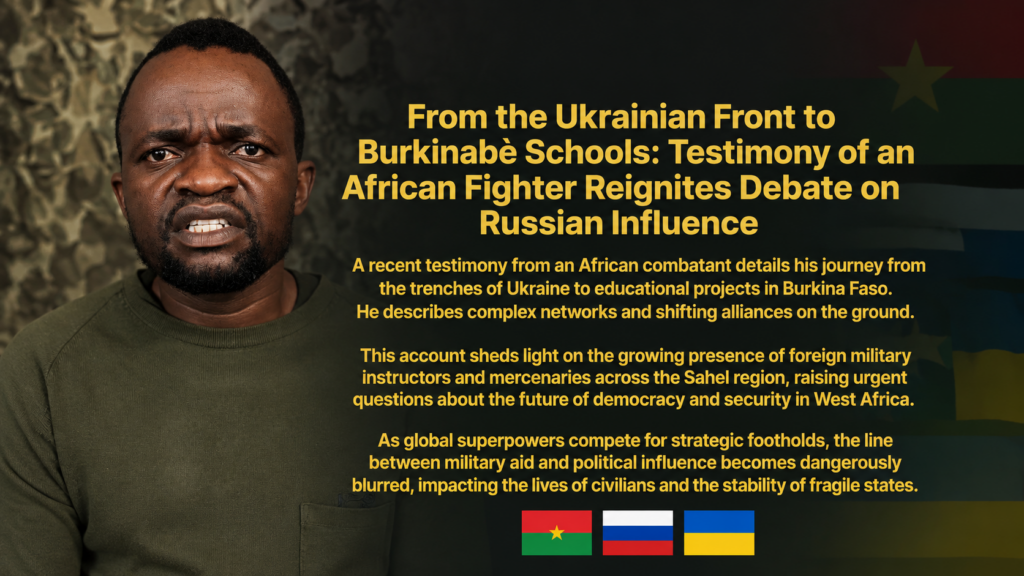
An African soldier’s harrowing account of his experience in the Ukrainian conflict has reignited discussions about Moscow’s recruitment tactics among foreign fighters. Tatenda Tarwire, a Zimbabwean national who served in Russian ranks, recently disclosed the brutal realities of war, including relentless combat, staggering casualties, and the emotional toll on families left without answers about missing or fallen relatives. His testimony serves as a stark warning to young Africans enticed by foreign recruiters promising financial gain or training.
While Tarwire’s story is deeply personal, it reflects a broader trend: Russia’s expanding footprint across Africa. Over recent years, Moscow has intensified its diplomatic, military, and economic engagements with several African nations, all while global attention remains fixated on the war in Ukraine. This strategy has reshaped geopolitical alliances on the continent, prompting both opportunity and scrutiny.
In Burkina Faso, these developments have taken a concrete form. The government has announced plans to integrate Russian language instruction into the national curriculum starting next academic year. Authorities present this initiative as a pragmatic move to diversify Burkina Faso’s international partnerships, enhance academic mobility for students, and foster deeper ties with the Russian Federation. Proponents argue that learning a new language is a neutral step toward global engagement, comparable to adopting English, Mandarin, or Arabic.
a contentious move with deeper implications
Yet the decision has ignited a fierce debate. Critics contend that the policy is not merely educational but part of a broader strategic alignment between Ouagadougou and Moscow—a shift that warrants public scrutiny. They question the timing of the reform, given Russia’s ongoing war in Ukraine and its aggressive campaign to expand influence across multiple continents. Supporters, however, reject the notion that language learning equates to political allegiance. They emphasize Burkina Faso’s sovereign right to cultivate international relationships without external interference or suspicion.
The controversy extends beyond Burkina Faso’s borders. Global observers have documented cases of African recruits lured into foreign conflicts under false pretenses, often with little understanding of the risks involved. Reports from multiple watchdogs highlight the human cost—physical and psychological—for those who enlist, as well as the devastating impact on their families. Tarwire’s experience underscores these dangers, serving as a cautionary tale for young Burkinabè considering similar paths.
educational choices in a shifting world
The debate over Russian language education in Burkina Faso raises critical questions: What are the exact objectives of this cooperation? What agreements govern it? What opportunities does it create for Burkinabè youth? And most importantly, what safeguards are in place to ensure the integrity of Burkina Faso’s education system remains intact?
At its core, the discussion is about more than language—it is about vision. The future of Burkina Faso’s youth hinges on access to quality education, exposure to diverse knowledge systems, and the development of analytical skills capable of navigating an increasingly complex world. Decisions made today will shape the nation’s trajectory for generations to come. Transparency, evidence-based reasoning, and open dialogue must guide these choices to ensure they serve the nation’s long-term interests, free from geopolitical manipulation.