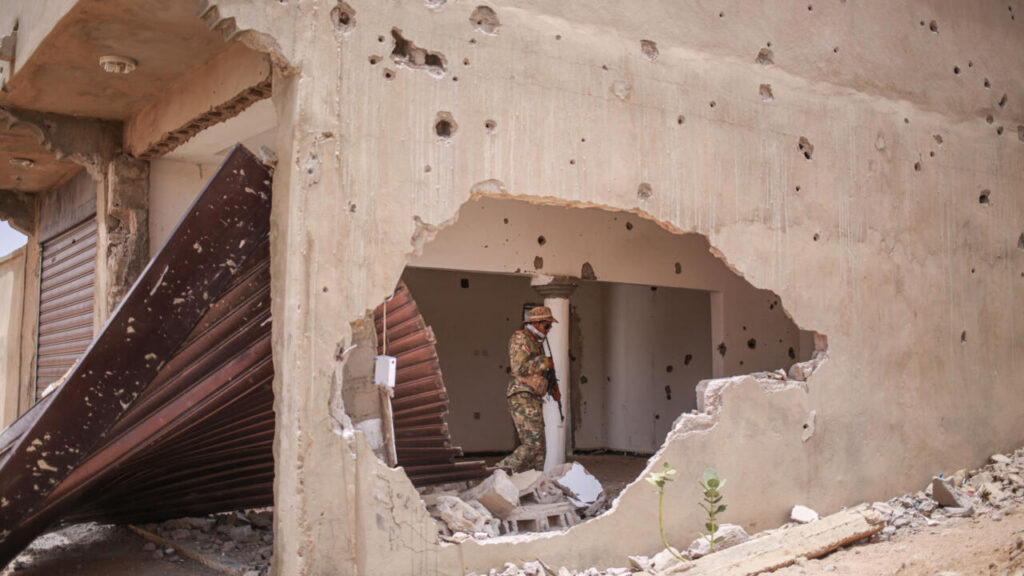
The Mali of today faces a critical moment. Six coordinated attacks on April 25, led by the Group for the Support of Islam and Muslims (JNIM)—an al-Qaeda affiliate—and the Front for the Liberation of Azawad (FLA), have exposed deep flaws in the country’s security strategy. The assaults resulted in the death of Defense Minister General Sadio Camara and the fall of Kidal, a key northern city, back into rebel hands.
the collapse of outsourced security
Bakary Sambe, director of the Timbuktu Institute in Dakar, argues that the recent attacks mark the failure of Mali’s strategy of outsourcing security to foreign partners. The chaotic withdrawal of Africa Corps troops from Kidal, following the death of General Camara, underscores what he describes as the “myth of externalized security.”
Sambe points out that after the Barkhane mission, which combined military and development efforts, the reliance on Russian security contractors—particularly the Wagner-affiliated Africa Corps—has proven ineffective. Despite claims of ongoing support, the rapid loss of territory suggests that local insurgencies rooted in decades of grievance cannot be quelled by external forces alone.
weaknesses of the Sahel alliance
The Alliance of Sahel States (AES) was designed as a mutual defense pact, inspired by the NATO model. However, after the April attacks, no military support materialized from Burkina Faso or Niger, despite declarations of solidarity. Sambe notes that while these countries face their own security challenges, the lack of coordinated response highlights the alliance’s limitations.
The Liptako-Gourma charter, which mirrors NATO’s Article 5, stipulates that member states must come to each other’s aid in times of attack. Yet, following the assault on Bamako, only rhetorical condemnations were issued. Burkina Faso’s President Ibrahim Traoré labeled the violence a “monstrous plot,” but no concrete military assistance was provided.
public reaction and regime resilience
While the transitional government’s security promises have failed to materialize, Sambe observes a paradoxical effect: a temporary rallying of public support around the regime of General Assimi Goïta. This shift reflects a Malian political dynamic that foreign analysts often overlook—the phenomenon of “rallying around the flag” during crises.
Despite the loss of territory and military setbacks, Goïta’s legitimacy now hinges almost exclusively on his promise of restoring security. The attacks have drawn parallels to 2012, when jihadist groups rapidly seized control of northern regions. Today, however, the regime’s survival strategy appears to hinge on short-term nationalism rather than long-term stability.
a fragile jihadist alliance
Sambe also examines the tactical alliance between JNIM and the FLA, describing it as a marriage of convenience rather than a durable coalition. While coordinated attacks demonstrate increasing tactical coordination, fundamental ideological differences remain.
JNIM, driven by al-Qaeda’s vision of imposing sharia law, seeks to reshape Mali’s political and social fabric. The FLA, on the other hand, advocates for the autonomy of the Azawad region. Additionally, internal divisions within JNIM—particularly the dominance of the Macina Katiba from central Mali—raise questions about whether its fighters will fully commit to the FLA’s separatist goals.
Sambe suggests that this alliance could evolve into a political movement, with figures like Bina Diarra positioning JNIM as a national actor rather than an external threat. Such a shift could lay the groundwork for future negotiations, though the transitional government remains opposed to dialogue with armed groups.
the necessity of dialogue
Despite the government’s military-first approach, Sambe argues that “national dialogue is no longer optional.” As jihadist groups increasingly recruit from local communities, the conflict has evolved from an external invasion to an internal crisis. Public sentiment in Mali increasingly favors engagement with all factions, including those deemed extreme.
Sambe concludes that the failure of security outsourcing, the weaknesses of regional alliances, and the evolving nature of jihadist movements all point to one unavoidable reality: Mali must pursue inclusive dialogue to end the cycle of violence.