Political stalemate stifles economic momentum
Nearly three years after Senegal’s political turbulence peaked during the 2024 presidential election, citizens had pinned their hopes on a fresh economic revival under the new administration. The launch of the Senegal 2050 Agenda in October 2024 followed by the Economic and Social Recovery Plan (PRES) on August 2, 2025, signaled a strong commitment to placing socio-economic development at the heart of national priorities.
Yet, nearly 30 months later, that optimism has waned. Instead of progress, the country appears mired in a frustrating stalemate. Economic discourse is increasingly overshadowed by partisan bickering, with political polarization deepening. Party strategists are already looking ahead to the 2029 elections—an early mobilization that raises serious questions about governance priorities.
The much-anticipated acceleration in public policy implementation has yet to materialize. The former rift between the President and his predecessor Prime Minister was widely seen as a major impediment to reform. However, even after the change in Prime Minister, progress remains sluggish. As the saying goes, breaking the thermometer doesn’t cure the fever.
With political divisions now entrenched, the economy continues to lag behind. Politicking dominates headlines, pushing economic imperatives to the back burner. While the ruling coalition consolidates its political base—evidenced by the formation of the Kiiraye party—opposition forces are rallying to preserve their cohesion ahead of 2029. In the crossfire, the economy bears the heaviest cost.
Economic outperformance slipping behind regional peers
The latest BCEAO data from the June 2026 Monetary Policy Report reveals a stark reality: Senegal is now one of the least dynamic economies in the West African Monetary Union (WAEMU). Real GDP growth for Q1 2026 stands at 4.7%, lagging behind Guinea-Bissau (5.5%), Burkina Faso (5.6%), Togo (5.8%), Mali (6.1%), Niger (6.1%), Benin (6.4%), and Côte d’Ivoire (6.4%).
This represents a sharp drop from 2025’s relatively strong performance of 7.8%, marking the largest decline among WAEMU members—a 3.1-point contraction from the previous year. Compounding the challenge is a dramatic decline in foreign direct investment (FDI), plummeting from $3.319 billion in 2024 to just $37 million in 2025.
Time for a political truce to restore economic dynamism
To reclaim its position as the economic engine of WAEMU, Senegal must urgently refocus its efforts. The three years leading up to the 2029 presidential election must be leveraged to lay the groundwork for sustainable economic transformation—a vision rooted in sovereignty, equity, and strong values.
Three critical levers are essential to reverse the current trend:
- Rebuilding investor confidence: Securing a new economic program with the International Monetary Fund (IMF) is a strategic priority. Beyond financial support, such an agreement would signal to global markets, credit rating agencies, and development partners that Senegal’s economic trajectory is credible and sustainable. The country currently faces high perceived risk, limiting access to favorable international financing. Rebuilding confidence also requires a robust nation-branding strategy that highlights Senegal’s economic strengths and investment opportunities.
- Empowering the private sector: The national private sector must be positioned as the main driver of growth. This involves improving access to financing, simplifying administrative procedures, enhancing the business climate, and strengthening public-private partnerships. Key sectors such as infrastructure, energy, agriculture, industry, digital, transport, and logistics must receive priority support.
- Rationalizing public spending: With limited fiscal space, prudent use of public resources is critical. A reduction in state overhead—long promised in the PRES—remains largely unimplemented. Streamlining agencies and support structures must accelerate to reflect the urgency of the situation.
Senegal stands at a crossroads. The choice is clear: either continue down the path of political distraction and economic decline, or unite behind a shared vision of sustainable development. The time for decisive action is now.
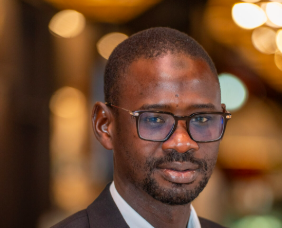
Dr Abdou Diaw is CEO & Founder of Le Marché, an economic and financial magazine.

More Stories
Can Marseille stop the bleeding after yet another loss to PSG?
Mbappé’s move to PSG: was it a snap decision made on the pitch?
What price did Niger’s junta pay for survival after the August mutiny?