
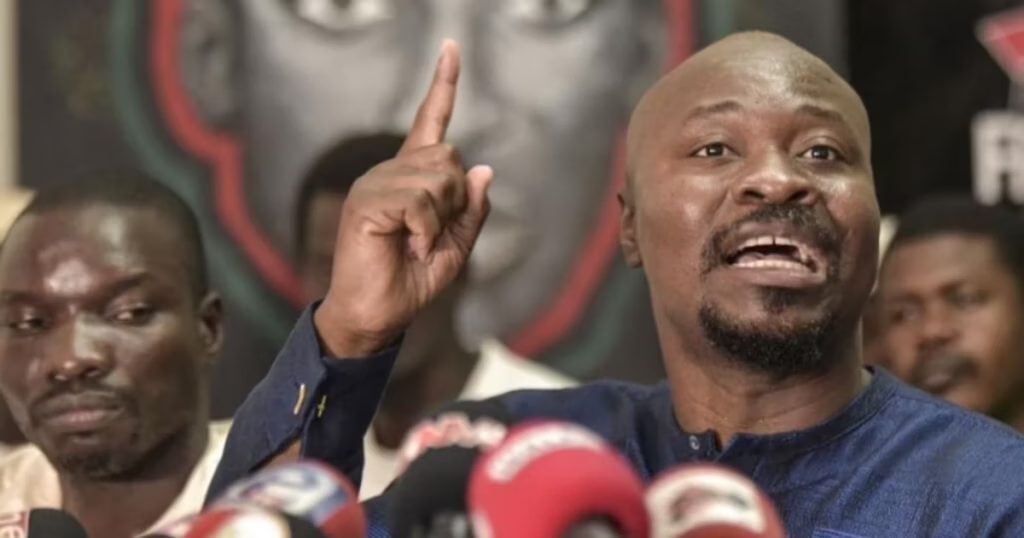
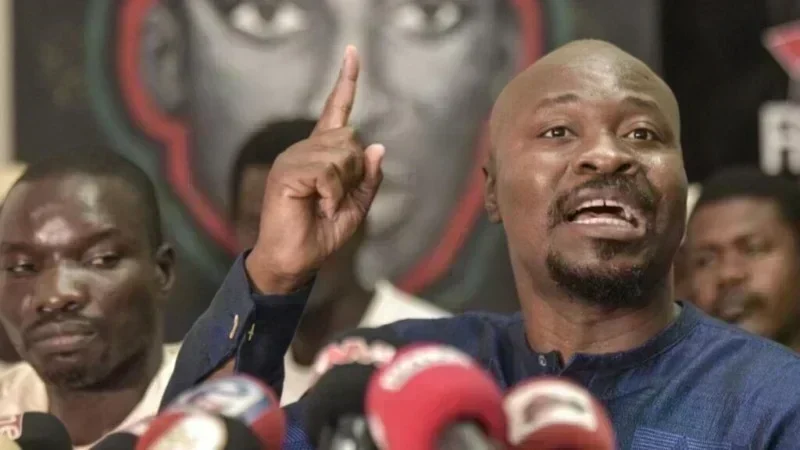
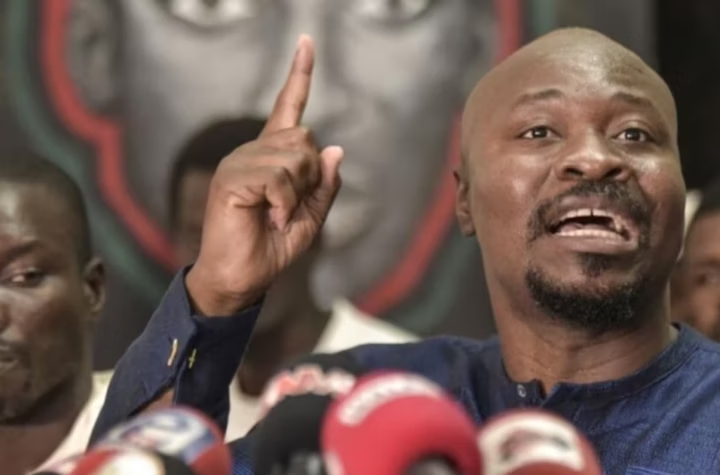
In a stunning disclosure, legislator Guy Marius Sagna has revealed that Ousmane Sonko received 1.7 billion West African CFA francs in political funds during his tenure as Prime Minister of Senegal. The funds, drawn from state coffers, reportedly operated outside institutional oversight—a revelation that has reignited debates about transparency in public funding.
Unregulated funds and political contradictions
According to Guy Marius Sagna, the 1.7 billion F CFA allocated to Ousmane Sonko falls within legal frameworks but lacks any form of institutional scrutiny. The revelation is particularly striking as it mirrors the structure of funds reportedly held by President Bassirou Diomaye Faye, estimated at over 8 billion F CFA. These include political funds, discretionary spending, special allocations, and sovereign reserves.
The legislator emphasized that while the system itself may not be illegal, the absence of accountability raises serious concerns. Sonko, known for advocating strict regulation of political funds, now faces scrutiny over his own receipt of unmonitored resources—a point Sagna highlighted with sharp irony.
Public stance versus private practice
Sagna’s disclosure underscores a stark contrast between Sonko’s rhetoric on financial transparency and his receipt of these substantial funds. The deputy questioned the integrity of figures who publicly champion accountability while benefiting from opaque financial mechanisms. In a biting social media post, he remarked: “Is this the sorcery of some politicians? Sorcerers, where are you headed?”, directly challenging what he perceives as hypocrisy in Senegal’s political class.
This controversy places the spotlight on Senegal’s political funding laws, which appear to allow significant discretion in how public monies are managed—often beyond public or institutional review. As public discourse intensifies, the debate over financial accountability in Senegal’s governance continues to gain momentum.

More Stories
Senegal-pastef-mor-tallah-gueye-demission-du-fdcuic
RDC : la Cour constitutionnelle valide une loi ouvrant la voie à un 3e mandat pour Tshisekedi
Tchad quitte la Cour pénale internationale, accusant une sélectivité indénable