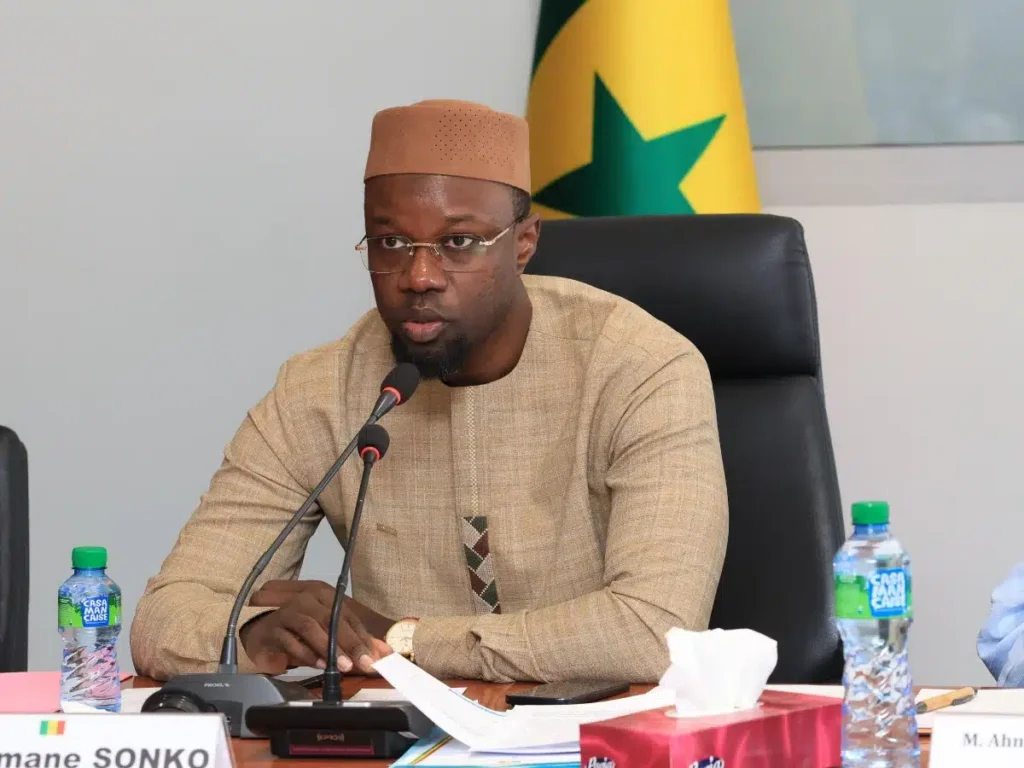
Senegal’s Anti-LGBTQ+ Law Faces Global Backlash as Sonko Defends Sovereignty
Prime Minister Ousmane Sonko confirmed the government’s commitment to enforcing Senegal’s newly strengthened penalties against same-sex relations, amid mounting international criticism.
Senegal’s Prime Minister Ousmane Sonko has reaffirmed the government’s resolve to enforce a controversial new law criminalizing same-sex relations, sparking fresh debate over national sovereignty versus international human rights standards.
Addressing legislators during a live parliamentary session on May 22, 2026, Sonko dismissed Western criticisms of the legislation, emphasizing that Senegal retains the right to define its moral and legal boundaries without external interference.
The Prime Minister stressed that Senegal’s society overwhelmingly rejects same-sex practices, framing the law as a necessary protection against perceived foreign imposition.
“The Senegalese people are sovereign. The vast majority of our citizens reject these practices within our borders,” Sonko declared, underscoring a commitment to upholding traditional values.
Western “tyranny” over global morality?
Sonko pushed back against criticism from African activists and Western governments, accusing a vocal minority of attempting to impose LGBTQ+ acceptance worldwide through economic and media influence.
“There exists a form of tyranny. With eight billion people on Earth, a small Western elite—despite internal divisions—uses its financial power and control over global narratives to force its agenda on the rest of humanity. But on what grounds?” he questioned, vowing no moratorium on the law’s implementation.
“This law will be enforced in full,” he asserted.
The National Assembly had earlier passed Law No. 2026-08 on March 27, 2026, amending Article 319 of the 1965 Penal Code to broaden the definition of “unnatural acts” and increase penalties for same-sex relations, advocacy, and related funding.
The revised legislation defines “unnatural acts” as any sexual or sexualized conduct between individuals of the same gender, as well as any sexual act involving a human corpse or an animal. Violators face five to ten years in prison and fines ranging from two to ten million West African CFA francs, with additional penalties applicable in cases of assault or pedophilia.
Be the first to comment
Comments