
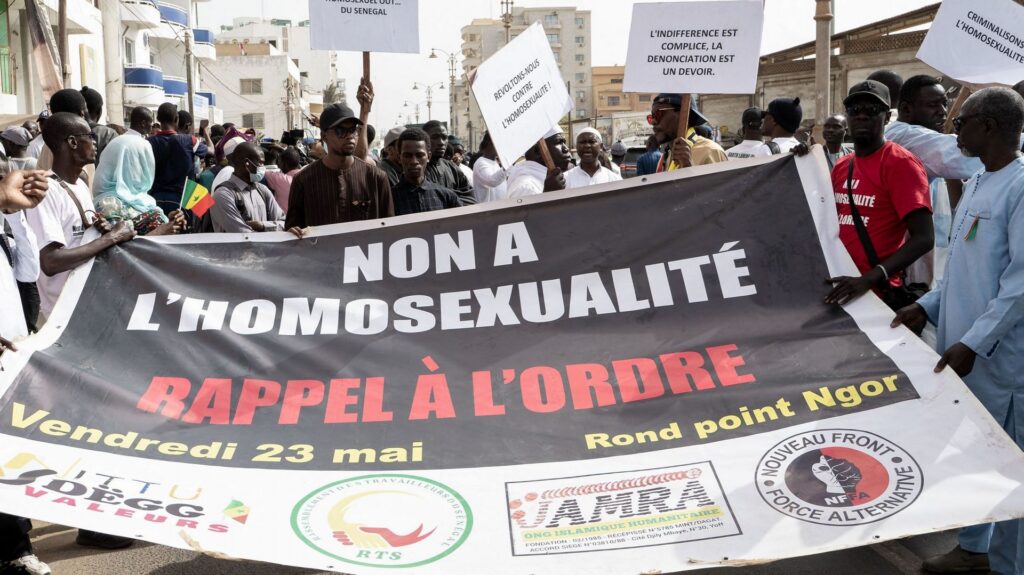
In the heart of West Africa, Senegal has taken a dramatic step backward in human rights by enacting sweeping legislation that intensifies the persecution of LGBTQ+ individuals. This move, which sharply contrasts with global progress, has drawn condemnation from human rights organizations and left thousands living in fear.
Stricter penalties and state-sanctioned discrimination
Under the newly signed law by President Bassirou Diomaye Faye, penalties for “unnatural acts” have doubled from five to ten years in prison. Financial penalties have surged tenfold, with fines now reaching up to 10 million West African CFA francs—equivalent to over 15,000 euros. The legislation, framed as a matter of “national sovereignty” by Prime Minister Ousmane Sonko, passed unanimously through the National Assembly on March 11, 2026, with 135 votes in favor and none against.
Climate of fear and vigilante violence
The consequences of this law have been immediate and brutal. In recent weeks, over a hundred individuals suspected of homosexuality have been arrested. Some choose imprisonment over facing mob violence, as public sentiment turns increasingly hostile. “You live in constant fear. Every knock on the door could be the last. This isn’t living—it’s surviving in silence,” shared a young man in Dakar, who requested anonymity for his safety.
The rhetoric from authorities has fueled this atmosphere of fear. “They’ve convinced people that hating LGBTQ+ individuals makes you more devout. That killing one could earn you paradise. Who you love is a personal choice—between you and your faith,” he explained, highlighting how misinformation is weaponized to justify persecution.
Even foreign residents are not safe. The recent arrest of a French engineer shocked the expatriate community. “They stormed his home without warning, dragging him out. It was a textbook raid—no one is protected anymore,” recounted a close associate, emphasizing the law’s indiscriminate reach.
Political and religious manipulation
Behind this legislative push is the influential religious group And Sàmm Jikko Yi, which has aggressively lobbied for these measures. The group’s leader, Imam Babacar Sylla, has publicly labeled LGBTQ+ individuals as a “public danger,” falsely claiming they “deliberately spread disease.” Sylla’s rhetoric, devoid of empathy, has been echoed by government officials who frame homosexuality as a “Western import” incompatible with Senegalese values—a tactic to divert attention from economic struggles.
A stark regression in human rights
International organizations are sounding the alarm. The International Federation for Human Rights (FIDH) warns that this law does not protect—it endangers. “It exposes already vulnerable individuals to arbitrary arrests, violence, and humiliation,” stated Drissa Traoré, Secretary-General of the FIDH. The legislation also criminalizes any form of advocacy or support for LGBTQ+ rights, stifling freedom of expression.
Public health is another casualty. HIV testing rates are plummeting as individuals fear carrying condoms or lubricants could lead to prosecution. “People are avoiding treatment out of terror. If someone is HIV-positive, accessing care is now nearly impossible,” shared a representative from a Senegalese LGBTQ+ rights organization. This regression threatens decades of progress in public health and human rights.
Senegal is not alone in this regression. Of the 54 countries in Africa, 31 criminalize homosexuality, as do 21 in Asia. While nations like Uganda and Nigeria are notorious for their anti-LGBTQ+ laws, Senegal—once seen as a stable democracy—has now joined their ranks. For those affected, exile or silence are the only options left.

More Stories
Niger: Tiani faces fallout from special forces anger after Russian intervention
Crisis in Niger, IMF agreement in Sénégal, and Moroccan elections: Five essential stories
RDC-Israël : un rapprochement aux enjeux multiples