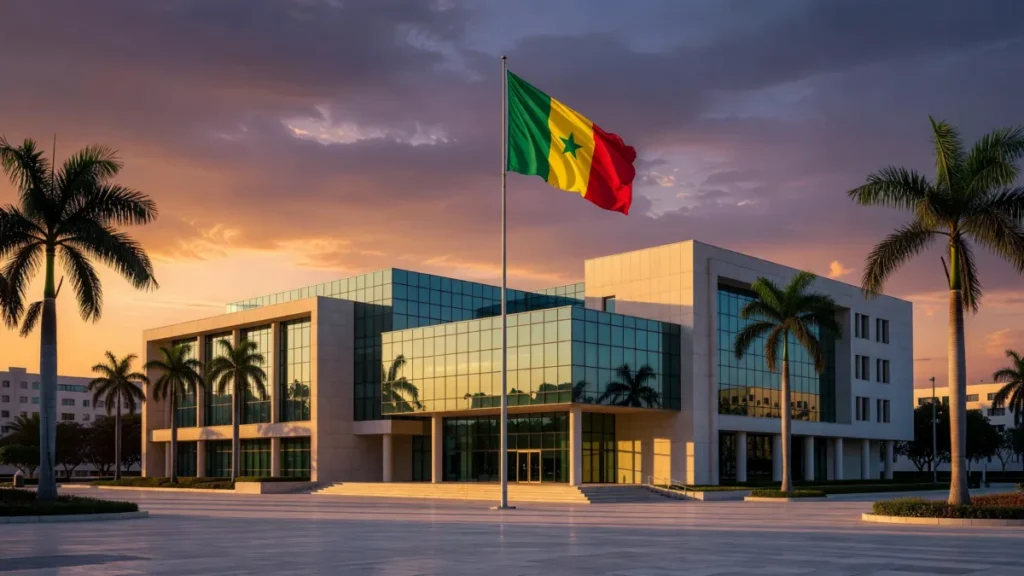
Senegal is taking decisive action to tackle a deepening financial crisis, with Dakar poised to appoint New York-based investment bank Lazard as financial advisor for its sovereign debt restructuring. The move, confirmed in mid-July, comes under intense scrutiny as international investors closely monitor the West African nation’s ability to restore fiscal credibility after revelations of massive undeclared public liabilities.
Hidden debt exceeds $13 billion, threatening economic stability
The true scale of Senegal’s financial challenge has emerged under the new administration: over $13 billion in previously undisclosed public debt—amounting to more than a quarter of the country’s GDP—was kept off the books. Official data reveals the debt-to-GDP ratio surged to 128.6% by the end of 2024, up sharply from 81.8% just five years earlier. This unsustainable trajectory has triggered urgent international reactions, including the suspension of a $1.8 billion IMF loan program, depriving the country of critical financing at a pivotal moment.
Lazard to collaborate with Paris-based financial advisory firm
Lazard will not operate alone in this high-stakes restructuring. According to insiders familiar with the selection process, the American bank will partner with Global Sovereign Advisory (GSA), a Parisian firm specializing in sovereign debt management. This transatlantic collaboration aims to navigate complex negotiations with international creditors, multilateral institutions, and global markets as Dakar races to regain investor confidence.
The selection process, overseen by Senegalese authorities, is nearing completion, with an official announcement expected in the coming days. Meanwhile, the country’s sovereign bond spreads have widened in recent weeks, signaling growing market unease over debt sustainability.
Government restructures debt management architecture
In tandem with hiring external expertise, Senegal has reorganized its financial governance. Authorities have established a new General Directorate of Financing and Debt, a dedicated institutional body tasked with enhancing transparency and tracking state financial commitments. This unit will work closely with Lazard to conduct a comprehensive audit and develop refinancing strategies.
The stakes extend beyond technical restructuring. Restoring Senegal’s fiscal reputation—once hailed as a model of stability in West Africa—has become an urgent national priority. The unearthing of hidden debt has shattered that image and left the government with difficult choices: renegotiate existing contracts, extend repayment schedules, or seek new financing under potentially less favorable terms.
Economic context: growth and vulnerabilities
Senegal, home to 18 million people and located at the western tip of Africa, has experienced robust economic growth in recent years, driven by heavy infrastructure investments and the future exploitation of offshore oil and gas reserves. However, this rapid expansion has been accompanied by an uncontrolled surge in debt, raising red flags from international institutions.
The capital, Dakar, serves as the economic and administrative hub of the country. It is from this bustling port city that the new government, which took office in April 2024, is attempting to reverse a fiscal situation it describes as inherited. The promised transparency in public accounts has laid bare the extent of the mismanagement, forcing authorities to seek international expertise to navigate the crisis.
Key challenges ahead for Lazard and Senegal
Lazard’s mandate will require meticulous execution. First, the bank must conduct a full audit of all state liabilities to accurately assess the true debt burden. Following this, it will need to devise a refinancing strategy that spreads out repayments without triggering a default, while mediating between conflicting creditor groups—bilateral lenders, multilateral agencies, and sovereign bondholders.
The firm will also play a crucial role in negotiations with the IMF to unlock suspended funding. Without the Fund’s support, Senegal will struggle to access international markets at sustainable rates. Investors are watching every signal from Dakar, and the appointment of a globally recognized advisor is widely seen as a step toward restoring credibility.
Regional implications and France’s strategic interest
For France, Senegal’s financial turmoil carries broader significance, particularly regarding the stability of the CFA franc zone, to which Senegal belongs. As a key economic partner in West Africa, Senegal maintains deep commercial ties with France, especially in energy, telecommunications, and infrastructure sectors, where French companies hold significant stakes.
The involvement of Paris-based GSA alongside Lazard underscores the Franco-African dimension of the crisis. French authorities are closely monitoring developments, aware that financial instability in Senegal could have ripple effects across the region. Several other West African countries are also grappling with similar economic pressures, exacerbated by rising energy costs and imported inflation.
The official announcement of Lazard’s appointment is expected in the coming days. Markets are awaiting concrete details on the refinancing roadmap, while Senegalese citizens are questioning the potential social impact—whether through budget cuts, reduced public spending, or higher taxes. The government is walking a tightrope between fiscal discipline and preserving social cohesion.