The month of May has long been synonymous with upheaval in Senegalese society. For nearly six decades, waves of protests—academic, union-led, and political—have repeatedly swept across the nation during this period. Now, as the calendar turns to May again, the country finds itself confronting a perfect storm of labor disputes, student demonstrations, and institutional grievances.
Workers and Transport Strikes Disrupt Dakar
On May 1, traditionally observed as International Workers’ Day, tensions flared across multiple sectors. Drivers and operators from the Association de Financement des Professionnels du Transport Urbain (AFTU) initiated a sudden strike, paralyzing public transport in Dakar. The dispute centered on the implementation of new electronic ticketing systems, which AFTU members claim were imposed without proper consultation. A Dakar court ruling temporarily suspended the deployment of these machines, but not before widespread service disruptions left commuters stranded.
The strike highlights a broader pattern of labor unrest, with unions and worker collectives increasingly vocal about wages, job security, and fair employment practices.
Government Agency in Crisis Over Managerial Disputes
Internal strife has also gripped the Agence des Travaux et de Gestion des Routes (Ageroute). The agency’s human resources director, Cheikh Ahmed Tidiane Thiam, publicly criticized the leadership’s management style, citing a lack of transparency and abrupt dismissals—including the sudden termination of 23 employees. These actions have fueled perceptions of administrative overreach and eroded trust within the organization.
University Students Demand Financial Support
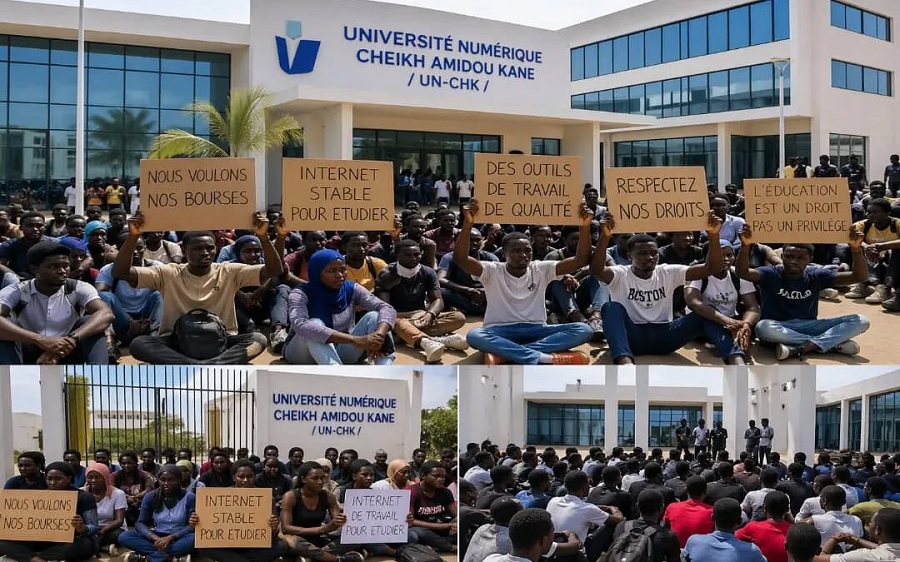
Students at the Université Numérique Cheikh Hamidou Kane (UN-CHK) have joined the chorus of dissent. Members of the Class of 2026, enrolled in the university’s digital learning program, have yet to receive their full scholarship payments. Despite promises of three years of financial support for their degree, many report receiving funds for only two years. In a press briefing, student representatives called on authorities to resolve the funding shortfall immediately, warning that delayed payments could undermine academic progress and deepen financial hardship.
The Historical Weight of May in Senegalese Protest Culture
May’s association with social upheaval in Senegal is not coincidental. The month has deep historical roots, dating back to the global labor movement and the 1968 protests in France—events that resonated strongly in post-colonial Senegal. The first of May, in particular, is a powerful symbol of workers’ rights, a day when demands for fair wages and dignified labor conditions take center stage.
This year, the convergence of labor strikes, internal institutional conflicts, and student activism has once again turned May into a flashpoint. From transport hubs to university lecture halls, the message is clear: frustration is mounting, and the call for systemic change is growing louder.