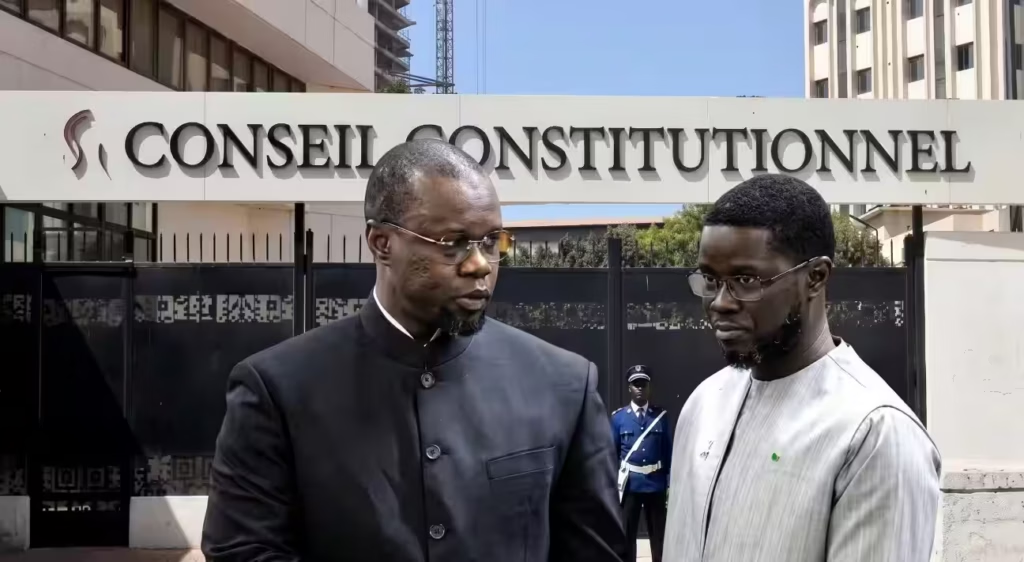
Senegal’s constitutional council verdict in Ousmane Sonko case sparks debate
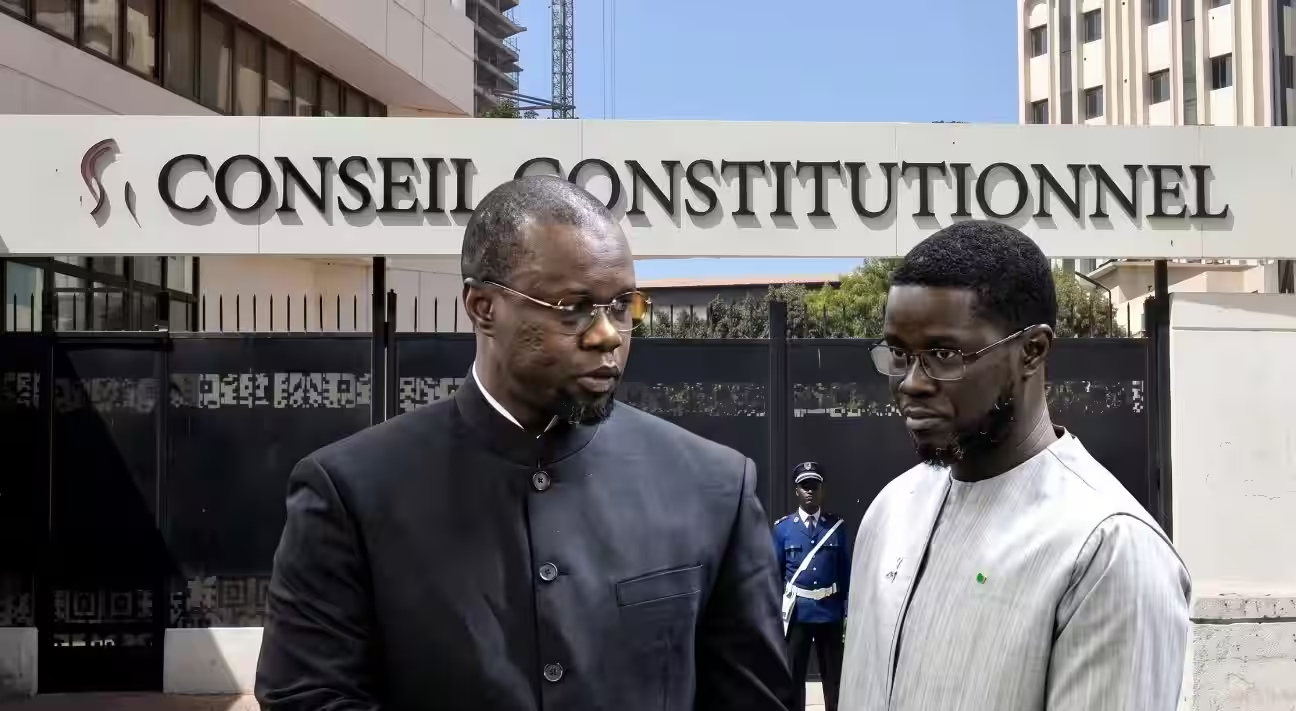
The constitutional council’s decision to reinstate Ousmane Sonko to Senegal’s National Assembly has ignited intense legal and political discussions. While framed as a procedural ruling, the verdict reveals deeper tensions within the country’s constitutional framework.
Legal interpretations diverge over constitutional council’s ruling
The June 17, 2026 decision by Senegal’s constitutional council in the Ousmane Sonko case remains a subject of sharp division among legal scholars. Though presented as a strictly procedural matter—citing the court’s lack of jurisdiction—some observers detect a subtle shift in constitutional jurisprudence. At the heart of the controversy lies a fundamental question: Is the council’s recent ruling consistent with its previous stance, particularly during pivotal moments like the February 2024 institutional crisis?
A tale of two judicial approaches
A closer examination of the June 17 verdict reveals a striking contrast between two distinct phases of constitutional adjudication in Senegal. In earlier years, the court adopted an expansive interpretation of its role, positioning itself as a guardian of institutional stability. More recently, however, the council appears to have embraced a more restrictive stance, prioritizing narrow legal qualifications over broader constitutional principles.
The core of the contested reasoning
Critics argue that the council’s latest decision reflects a departure from its earlier assertive posture. Where once it intervened decisively in matters of institutional governance, the June 17 ruling seems to defer to procedural technicalities, raising concerns about judicial consistency. This perceived shift has prompted legal analysts to question whether the council remains aligned with its constitutional mandate.