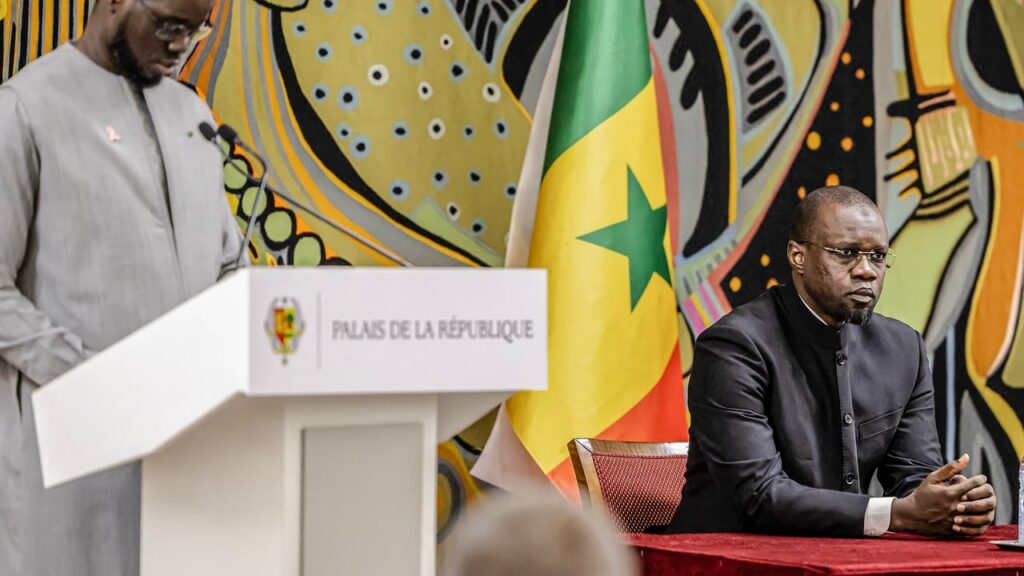

“I want strong CEOs, strong ministers, a super-strong Prime Minister. I don’t want to be the kind of president who holds all the power.”
On April 4, 2025, during a press conference marking National Day, President Bassirou Diomaye Faye made his intentions clear: a sweeping reform of the distribution of powers between the head of state and his administration is underway.
Why Ousmane Sonko stands to gain from Senegal’s constitutional changes
The proposed reforms, which aim to decentralize executive authority, are sparking intense debate across the country. At the heart of the discussion is Ousmane Sonko, the influential opposition leader whose political future could be dramatically reshaped by these changes. Analysts suggest that the reforms may create conditions that favor his party, Pastef, in upcoming elections.
Decentralizing power: a shift with far-reaching implications
The constitutional amendments under consideration would reduce the concentration of power in the presidency by strengthening the roles of ministers and the Prime Minister. This structural change could empower opposition figures like Sonko by giving them greater influence in a more balanced political landscape.
Under the current system, the president holds broad executive powers, often overshadowing other institutions. The reforms aim to address this imbalance by redistributing authority to other branches of government, including the legislature and independent bodies. This shift is expected to foster a more collaborative governance model—one where opposition leaders can play a more active role.
Sonko’s strategic advantage in a changing political landscape
For Ousmane Sonko, the reforms represent an opportunity to gain ground in Senegal’s political arena. His party, Pastef, has built a strong base of support, particularly among younger voters. With the proposed changes, Sonko could emerge as a key figure in shaping policy, rather than remaining on the sidelines.
Critics, however, argue that the reforms could also centralize power in new ways—potentially benefiting the ruling party in the long run. Yet supporters of the changes insist that a more distributed system will enhance transparency and accountability, creating a level playing field for all political actors.
What comes next for Senegal’s political future?
The reforms are still under review, with final decisions expected in the coming months. If implemented, they could redefine the balance of power in Senegal, with Ousmane Sonko and his allies positioned to capitalize on the new dynamics.
The debate is far from over, but one thing is certain: Senegal is on the brink of a political transformation that could shape the country’s future for years to come.